Sink-or-Float Science: A Buoyancy Game for Pool Time
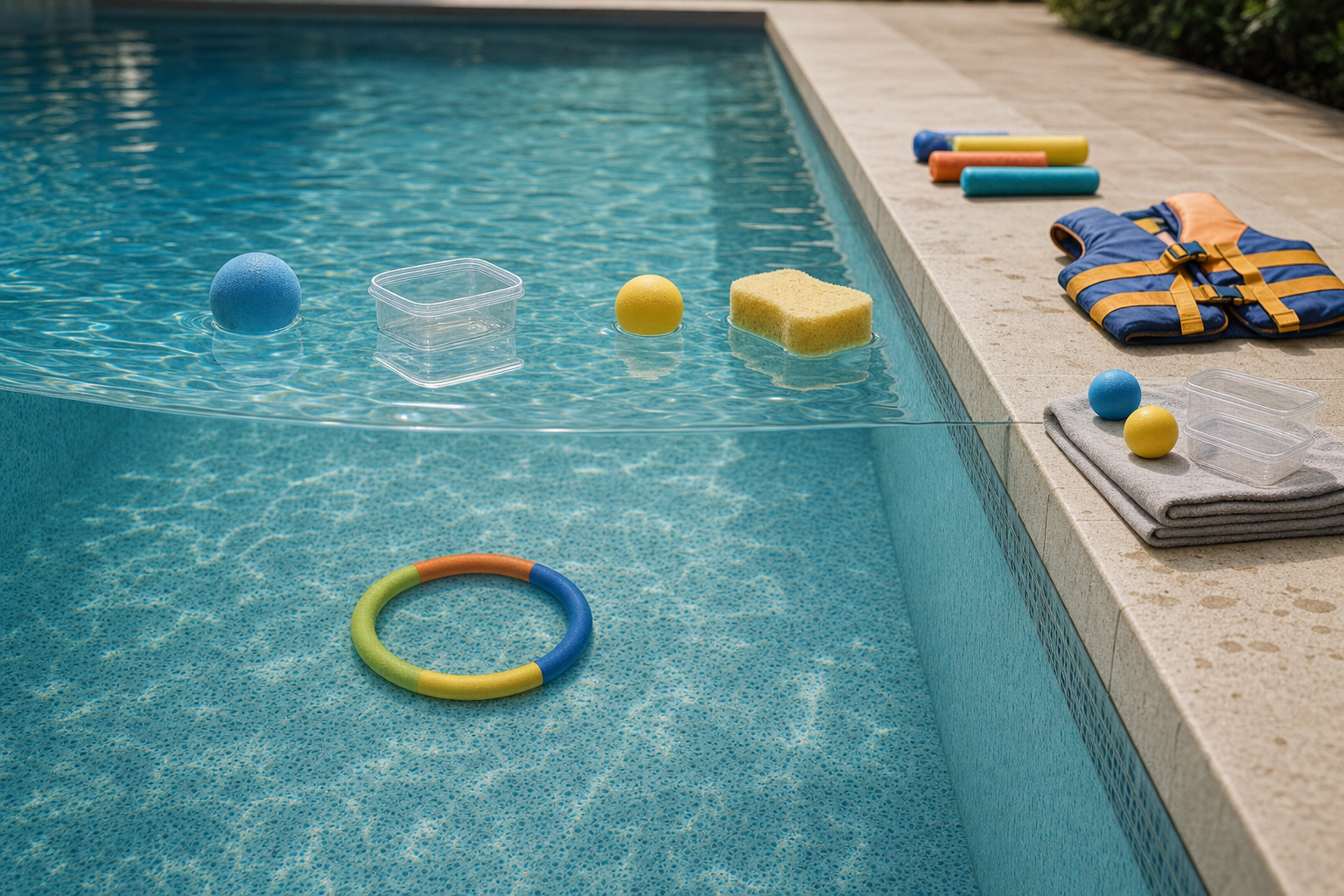
Imagine this: you toss a soft foam ball into the pool and ask your 6-year-old, “Will it sink or float?” They guess, you test, and suddenly pool time becomes a lab where physics meets body movement. You’ll learn just how lungs, floating techniques, and smart prompts help children grasp buoyancy—and stay safer in the water.
Understanding Buoyancy: Lungs and Body Position
Buoyancy is the upward force that water exerts on anything submerged. If something is less dense than the water it displaces, it floats; if it's denser, it sinks.(kentuckyteacher.org) Kids often think heavy equals sinking and light equals floating, but it’s really about density—how much stuff is stuffed into a given space, and whether there’s trapped air helping to push up.(stratfordlibrary.org)
Here’s where lungs come in. Your lungs fill with air, adding volume without adding much weight. That makes your body less dense and helps you float. Lying back with open chest, chin up, spine aligned, arms and legs relaxed creates that ideal position. Learning a back float or a relaxed vertical position gives kids confidence to rest in water when tired.(healthychildren.org)
Turning Pool into a STEM Lab with “Sink-or-Float Pool Game”
Want an easy, fun way to teach buoyancy experiment for kids? All you need are pool-safe soft items like foam toys, rubber balls, empty plastic containers (lids secured), and maybe a sponge. Always ask permission from the lifeguard before bringing objects into the pool.
Start with prediction: which objects will sink, which will float? Let kids hypothesize. Then test: drop them in, see what happens. Finally, explain: what made items sink—was it weight, density, shape, or air trapped inside? Connect that to their bodies: when lungs fill with air, the body floats; when holding breath out or curves in body, you sink more. Let children try lying back, floating vertically, or trying to sink by exhaling, then floating by inhaling. These hands-on activities make science real.
Around the middle of your group’s swim session—when attention is good—consider building it into an ongoing storyline. For example, align with the swim lessons or water safety programs you use. If you follow something like the 10-Week Plan from swimy.org to build fundamental water skills, you can use sink-or-float experiments in early weeks to reinforce comfort in the water and body awareness. Linking experiments and safety drills makes learning stick naturally.(ultimatescouts.com)
If you want a structured way to help your child progress at home, the 10-Week Plan guides you step by step.
[[ctakid]]
Simple Prompts That Teach Science and Safety Together
As you play, ask questions that help learning: “What if you hold air in your lungs—can you float more easily?” “Can you sink just one leg by exhaling and still keep your head above water?” Encourage kids to notice shape: “Does this toy float better on its side or standing up?” This invites thinking about displacement and density.
Talk about safety: always stay within arm’s reach of weak swimmers, especially when testing objects. Remind kids: ask lifeguard permission before using toys or items, only use soft, easy-retrieved objects, never sharp or heavy. Use these moments to teach respect for pool rules and awareness of surroundings—crowded lanes mean fewer items and more space.
Best Practices & Avoiding Pitfalls
Don’t overload the pool with toys—they become hazards in crowded swim lanes. Keep all items within easy reach. Avoid letting objects drift to deep ends where retrieving them becomes risky. Soft items only: foam, rubber, soft plastics. No metal, no breakables.
Always supervise closely. Even when a lifeguard is on duty, active parental or caregiver supervision matters. According to the CDC, drowning is a leading cause of injury among children aged 5-14, and pool toys or floatation devices can create a false sense of safety.(cdc.gov) Use properly fitted life jackets when needed—not just inflatables or arm floaties—and choose them to support floating positions safely.(cdc.gov)
What Kids Gain and Why It Matters
When children play sink-or-float games, they build curiosity, scientific thinking, and body awareness. They connect breathing and lung capacity to buoyancy. They practise back floats and vertical floating, skills that are vital if they ever need to rest in water. As parents, you see more resilient swimmers who know how to stay safe and think about what’s happening underneath the surface—not just swimming toward toys.
Quick Guide: Doing It Right
Before starting, check with the lifeguard that your planned play is okay. Gather a few soft, pool-safe items. Ask kids to predict sink or float, test, explain. Then transition to body position: stand vertically, try lying back, notice inhaling vs exhaling. Use prompts that link experiment to safety: staying calm, keeping head up, resting when needed.
Want to see examples of buoyancy experiments, density lessons and fraction activities for kids? Great resources already exist that lay out structured ways to explore floating and sinking with everyday items.(beyondpenguins.ehe.osu.edu)
With this game, your pool time becomes a mini STEM lab that teaches real science, builds water confidence, and strengthens safety awareness. Float, breathe, experiment—and make every splash count.
120+ swimming exercises sorted by age — with video and instructions. Developed by swim instructors, completely free.

120+ swimming exercises sorted by age — with video and instructions. Developed by swim instructors, completely free.