Pool Handrails: Help or Hazard? Toddler Water Safety Tips
Why the Handrails Matter More Than You Think
Toddlers aged 12–36 months are constantly testing balance, exploring textures, and pulling themselves up on anything nearby—including pool handrails. When the baby grabs pool rail, it’s often because they think it’s steady support, a way out of the water, or simply itching to explore. But without careful guidance, friends of exploration like mouth contact, finger pinches, slips, and unsafe climbing turn rail interaction into danger.
The American Academy of Pediatrics (AAP) emphasizes that young children around water always need close, constant supervision—specifically, keeping caregivers within arm’s reach giving what they call “touch supervision.” Swim lessons can begin once kids turn one year old, but those lessons are just one layer in a broader strategy that must include adult vigilance, pool barriers, and water competency—not just swimming strokes.(healthychildren.org)
Common Risks: Mouths, Fingers, Slips & Climbs
Toddlers often see the rail as a jungle gym. They climb it, hang from it, even try licking it. These behaviors carry risks. Mouth contact can expose children to germs and pathogens that survive on surfaces or in pool water, like MRSA or diarrheal-causing organisms. The CDC warns that surfaces like handrails may act as "contaminated objects or surfaces" and that touching them then touching the mouth or nose increases infection risk.(cdc.gov)
Then there’s finger pinching: the metal joint between rail sections, connectors, or where the handrail attaches to steps can trap or crush tiny fingers. Slips happen because wet metal is slippery—and toddlers are still mastering balance. Climbing rails or using them improperly to get in or out of the pool yields falls or even head injuries.
Turning Touching the Rail into Skill
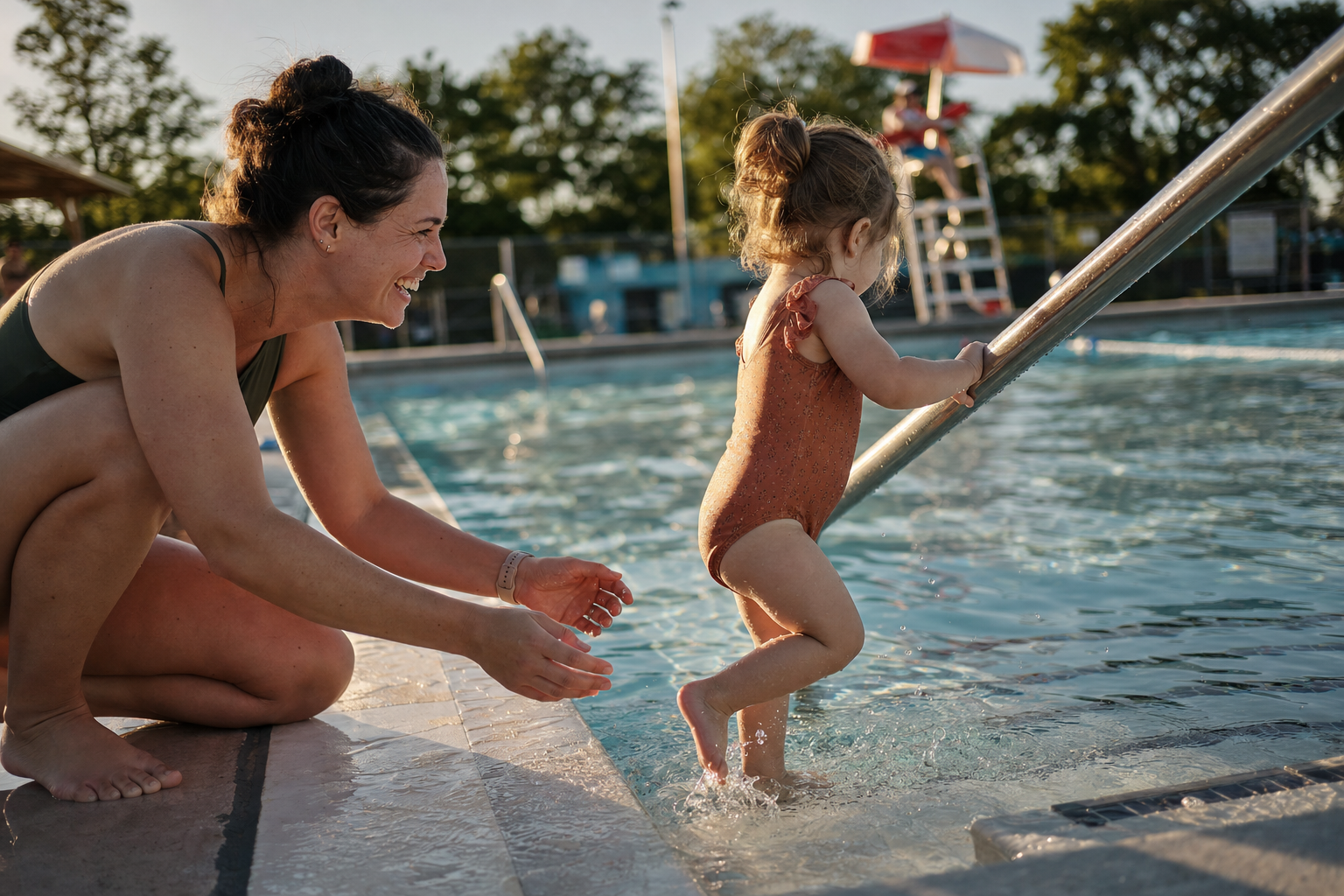
Instead of simply saying “don’t touch,” parents can show toddlers how to use pool rails safely. Use the rail as a teaching tool. For example, when your toddler walks down pool steps or a ramp, let them hold the rail—always with you within arm’s reach—to build balance and confidence. Progress slowly from fully supported holding to letting them use one hand while you guide with the other. Elsewhere in water-child education, you’ll find structured programs like the “10-Week Plan” from swimy.org, which include repetition and support over time in using walls and rails for safety.(swimy.org)
If you want a structured way to build water confidence at home, the 10-Week Plan guides you step by step.
When teaching safe entries—sliding in feet first, sitting, turning to face the water, then holding a rail—it gets more than just physical strength. Your child develops body awareness for what’s safe near water. As they grow, you can add drills like “turn to wall”—skills that emphasize finding safety and returning to support rather than always seeking escape.(waterwisekids.com)
How to Guide Rail Behaviors Safely
[[ctababy]]
Set expectations early: teach that rails are for balance and exit—not climbing or chewing. Use verbal cues like “rail helper” or “hold and step” to help toddlers understand function. When they reach for the rail, always respond—but guide them to use it properly, gripping where it’s safe and avoiding joints or fixtures that pinch. Keep your own hands free to catch them or help.
Be strict about supervision. The AAP’s updated drowning prevention policy states that even toddlers who are mobile require touch supervision—an adult must be within arm’s reach and attentive.(publications.aap.org) No phone distractions, no turning away to talk—protect eyes on child at all times.
Rail licking: gently but clearly discourage putting the rail in mouths. Offer alternatives like a clean water toy or teether, and wipe rails regularly when home. Watch for cracks, rough metal, or rust that could harm gums. Soap-and-water or pool-grade disinfectants help, especially on public handrails.
Don’t let kids hang or climb on rails. Rails are designed to support steady grips—not full body weight or swinging. Prevent access to ladders when you can; during non-swim times, remove or lock ladders or gate off areas with rails that invite climbing. Good pool fencing rules also contribute.(publications.aap.org)
How Handrails Fit Into Broader Water Safety
Learning to swim—or gaining basic water competency—should start around age one, according to the AAP. But even when toddlers and preschoolers take classes, swim lessons alone do not equate to safety. Water competency includes swim skills, yes, but also knowing entry and exit techniques, learning to get back to a wall, turn around in the water, and respond when unexpected situations arise.(publications.aap.org)
Handrails are part of the environment that shapes safe habits. When parents model proper use—holding rails for support, not climbing, keeping mouths off—they reinforce water competency beyond swimming lessons. Train children gradually to use rails correctly, but always with your hand or another adult supporting until coordination is strong.
Bottom Line: Rail Safety Done Right
Pool rail toddler lesson should be seen as a chance to build safety—not avoid germs. With close supervision, consistent boundaries, and smart habit building, handrails move from hazard to tool. Parents can teach toddlers to use rails correctly: safe grip, no climbing, no licking, always with support. Pair this with day-to-day preventive actions: cleaning rails regularly, checking for pinch points, choosing pools with safe fixtures, and enrolling in swim classes once your child’s first birthday passes.
Toddlers will naturally explore, balance, fall, and try new skills. Guide them gently but with clarity so that teaching handrail use becomes one more way to help keep them safe around water—slipping less, staying out of harm’s way, and growing confident in the pool without risking more than fun.
120+ swimming exercises sorted by age — with video and instructions. Developed by swim instructors, completely free.

120+ swimming exercises sorted by age — with video and instructions. Developed by swim instructors, completely free.