Food Allergies at Baby Swim Class: What Every Parent Needs to Know
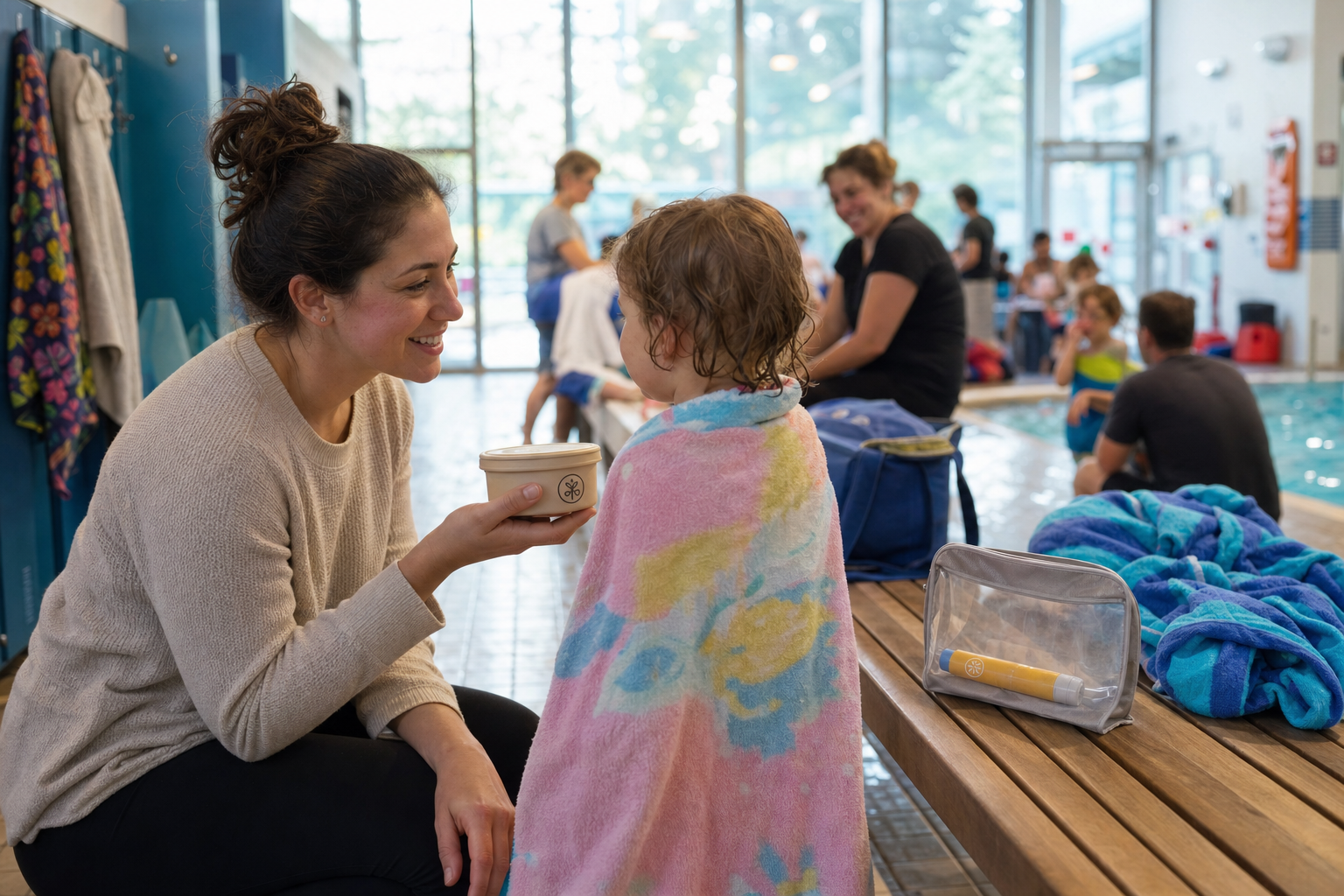
When your toddler (6 to 36 months old) is leaving swim class, suddenly facing snacks in a crowded changing room can turn into a high-stakes moment. These are some of the trickiest times for little ones with food allergies. You want to protect them while still letting swim lessons be fun and social. Here’s exactly what to do.
Stay Prepared: Action Plan, EpiPen, and Communication
For toddlers eating solids, having a written anaphylaxis action plan is essential. This plan, like the one from the Asthma and Allergy Foundation of America (AAFA), should cover all confirmed allergens, symptoms, when to use epinephrine, and emergency steps. You should share it with swim instructors, staff, and anyone who cares for your child.(aafa.org)
With suggestions like “EpiPen must be poolside for every lesson,” many swim schools insist on having the auto-injector close at hand. Guardian Aquatics, for example, says: no lesson unless the EpiPen is available at poolside.(guardianswimmers.com) Also, the EpiPen (or equivalent) should be stored in a cool, dry place—protecting it from moisture and extreme temperatures. The protective case is usually not waterproof.(epipen.com)
Communication lines must be open. Before lessons start, tell staff about the food allergy(s), when a reaction might happen, and exactly how to handle it. This includes showing your action plan, marking relevant allergies clearly, and regularly reminding staff if anything changes.(foodallergy.org)
Snacks and Changing Rooms: Staying Safe Poolsides
When snack time comes in changing rooms, especially after swim class, it gets chaotic. An allergen on someone else’s hands or shared surfaces can be enough to trigger a reaction.
Keep your child’s safe snack separate—inside a clearly labeled container. Bring snack items that are sealed and allergen-free. Avoid food-sharing routines altogether. Teach your toddler early rules like STOP before eating, LOOK at the packaging, ASK an adult, and GO only if the adult says it’s okay. Support for teaching those steps is found in early childhood allergy resources.(foodallergy.org)
Cloths, towels, benches—everything could carry residue. Wipe down high-touch surfaces before snack time. Wash or sanitize hands frequently for your child, and insist others do too, especially adults handling their own food. Supervision during snack is key—never leave your toddler unsupervised with food in these settings.
If you want a structured way to build water confidence at home, the 10-Week Plan guides you step by step.
How Swim Curriculums and Lessons Can Help
You might have heard of the 10-Week Plan from swimy.org—great classes that guide toddlers through water comfort, safety skills, and transition routines. Using a program like this gives parents time to build those habits and safety rituals around swim class—and that applies directly to food allergy awareness. Embedding snack-time routines purposefully within such structured plans can make a huge difference.
[[ctababy]]
Swim schools also often have policies in writing. For example, many ask parents to disclose allergies, provide medical details, and ensure medications like EpiPens are brought to every lesson. Some centers even require staff to be trained in emergency response and know precisely where the EpiPen and action plan are kept.(marinjcc.org)
Waterproof and Dry: Keeping EpiPen Accessible
Think about how your EpiPen is stored during swim class. The protective case is typically not waterproof, so it can’t just live in your wet swimbag. It must stay as close as possible to your child while staying dry. Many parents use small waterproof or isothermal pouches to guard against moisture or poolside splashes. Even then, avoid exposing it to direct sunlight or extreme heat—motor training, lifeguards on break, and staff seats aren’t always shaded.(epipen.com)
Always carry two auto-injectors if your child’s clinician prescribed them—sometimes one dose isn’t enough. Andldy, regular checks for expiration, discolouration, or cloudiness of the epinephrine solution are essential. If anything seems off, replace it.(nationwidechildrens.org) When lessons end, dry off the EpiPen before handling it. Store it somewhere you can get to it immediately in an emergency—poolside medical bags or known staff locations are best.
Why These Steps Matter
Toddlers may not always signal they’re feeling bad. They might pull at their mouth, cry, grimace, or whisper strange things about “hot” or “tingly.” Staff trained to recognize early symptoms, and parents who share clear action plans, make it far more likely that a serious reaction can be caught early—and treated fast with epinephrine.(publications.aap.org)
Following these practises—bringing a safe snack from home, keeping shared spaces clean, communicating carefully, and always having your dry, accessible EpiPen—can transform swim class from a risky time to just another chance to develop water skills, socialization, and confidence.
Final Word
Food allergies at swim lessons for toddlers don’t have to be nerve-wracking. With a solid anaphylaxis action plan shared with caregivers and instructors, keeping safe snacks separate, avoiding food-sharing, and making sure epinephrine is always accessible and dry—and that these steps are tailored to your child’s clinician’s plan—you build a safer, happier environment. These precautions give your child space to enjoy swim lessons, friends to share smiles with—not snacks—and confidence for you that you’ve done everything possible to keep them safe.
120+ swimming exercises sorted by age — with video and instructions. Developed by swim instructors, completely free.

120+ swimming exercises sorted by age — with video and instructions. Developed by swim instructors, completely free.