Two Kids, One Pool: Supervision and Engagement That Actually Works
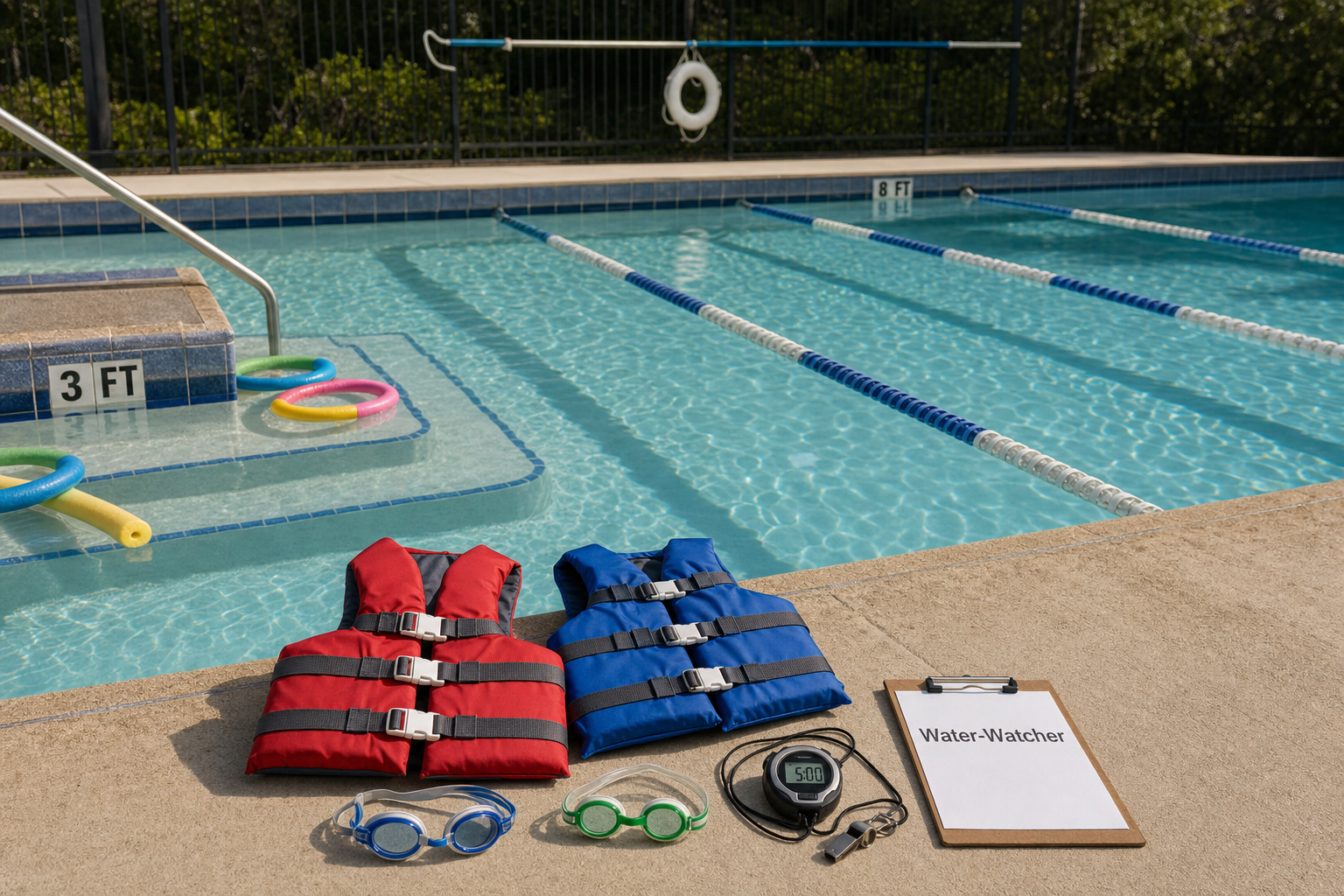
If you’re a solo parent juggling a three- to twelve-year-old pair in the pool, you know exactly how chaotic it gets when both need full attention—but from different skill levels. What works best is a strategy that keeps each child safe and feeling noticed. Here’s what your water safety plan should include right now: zone the pool, rotate your focus blocks, pre-plan mini-tasks for the waiting child, and always use a designated Water-Watcher. Read on for real tactics that make pool supervision with siblings manageable and meaningful.
Why Close, Constant Supervision Matters from CDC
According to the Centers for Disease Control and Prevention, you must supervise children closely and constantly when they are in or near water—even when a lifeguard is present.(cdc.gov) Kids who can swim still need someone within arm’s reach, especially the weaker of the two. Drowning can happen silently and fast.(cdc.gov) Also, using properly fitted life jackets in open water or natural settings adds a crucial safety layer.(cdc.gov)
In short: supervision isn’t optional. It’s your first line of defense. And when supervising siblings with different swimming levels, you’ll want a plan that ensures neither feels neglected and both are always within safe proximity.
Solo-Parent Pool Strategy: Three Moves That Change Everything
Zone the Pool: Divide and Conquer
First, mentally divide the pool into zones: shallow end, stairs, mid-pool, deep end, and any water features or returns (where jets or water come back into the pool). Always place the weaker swimmer in the shallow or stair zone and far from returns or ledges where momentum can drag them. Never assume weaker swimmers will intuitively avoid these hazards. This reduces risk and lets you better monitor their safety.
Alternate Focus Blocks: Rotate Attention
Set short, timed “focus blocks” where you give full, undivided attention to one child while the other does a less risky or semi-structured activity nearby. For example, devote five minutes to working with the stronger swimmer at the deep end, then swap; now your focus is with the weaker swimmer at the shallow end while the stronger child collects diving rings or practices floatation on the side. This rotation helps both kids feel seen and builds their confidence. It also gives you a predictable rhythm to prevent fatigue and lapse in supervision.
Pre-Plan Mini-Tasks for the Waiting Child
Even when one child needs more attention, the other should have something to do. Before you even poolside, gather tasks the waiting sibling can do safely: fetch a towel, toss soft pool toys, collect empty plastic cups, practice blowing bubbles at the edge, count pool tiles, or help “Surface Safety Counts” game. These mini-tasks keep the waiting child engaged and near your view rather than wandering. They help avoid jealousy or restlessness and keep both children close enough so that if something happens, you're already watching.
If you want a structured way to help your child progress at home, the 10-Week Plan guides you step by step.
[[ctakid]]
Water-Watcher Plan: One Adult, One Job
Designate yourself—or another trusted adult—as a Water-Watcher when the kids are in the pool. That means no phone, no hot tub, no distractions. You are anchored like a lifeguard. The CDC strongly emphasizes that adult supervisors avoid distracting activities because drowning happens quickly and quietly.(cdc.gov) Keep in mind: lifeguards watch many swimmers; they protect large zones but aren’t focused only on your kids. Your Water-Watcher responsibility is just one pair of lives, which makes it more precise.
Use a simple rotation with lifeguard-like breaks so you don’t burn out. Three roles: active Water-Watcher, assistant (handles mini-tasks, keeps the “waiting” child busy), and support (fetch life jackets, towels, snacks). If alone, switch between active and assistant every few minutes so everyone gets attention and supervision stays tight.
What Lifeguards Cover—and Don’t
Sometimes parents assume that lifeguards reduce their need to supervise. Lifeguards protect static jurisdictions: public pool zones, certain swim hours, behavior enforcement. They can’t see every child in every moment—especially siblings at different levels who move between zones. Relying exclusively on lifeguards leaves gaps. The CDC states that supervision should continue even when lifeguards are present.(cdc.gov) Remember, a lifeguard might see someone in trouble—but not until something has gone wrong. Your proactive rotation and designated Water-Watcher makes prevention possible.
Skill-Building That Helps Pool Time Flow
To reduce how much at-risk time there is with the weaker swimmer, build water competency early. Enroll them in formal lessons so they gain basic skills.(cdc.gov) Once kids can float, glide, enter and exit safely, pool time becomes more flexible. Use regular lessons or routines and follow plans like the 10-Week Plan from swimy.org to improve skills steadily. Include life jackets in open water sessions for safety while still giving the weaker swimmer a sense of progress.(redcross.org)
Common Pitfalls—and How to Avoid Them
A frequent mistake is placing the weaker swimmer near strong currents, water returns, diving boards, or deep zones. These features magnify danger. Always keep them far from these areas unless they have sufficient skill (and you are paying full attention). Another pitfall is supervising from hot tub, phone, or chat groups while thinking you’re “keeping an eye.” Distractions kill. You must be physically present, alert, arm’s length where needed. Also, avoid “false safety” props like floaties or foam toys—these can slip off, drift, or create overconfidence. The CDC warns: life jackets are protective devices; air-filled or foam floatation isn’t a substitute.(cdc.gov)
Putting It Together: A Sample Pool Afternoon Routine
You arrive at the pool around 2pm. You divide the pool into zones; you place weak swimmer in shallow zone, stronger one near mid-pool for diving rings. Start 5-minute focus block with weak swimmer—fully hands-on, practicing blowing bubbles or learning kick strokes. Meanwhile, strong sibling does a pre-planned task: fetch lane lines, count tiles. Swap blocks. Use pre-planned mini-tasks to keep waiting child busy. Designate yourself as Water-Watcher in rotation with resting blocks. No phones, no hot tub breaks until swim time is over. Use properly-fitted life jackets as required, especially in open water settings. Lifeguards are there, but you assume primary responsibility. With this rotation, both kids feel seen, safer, and you stay in control without burning out.
Final Word
Pool supervision with siblings aged three to twelve doesn’t have to feel impossible when you use zone division, alternate focus blocks, mini-tasks for waiting kids, and a designated Water-Watcher. Use life jackets where needed, stay clear of glitz-features until safety is built up, and never substitute lifeguards for close parental supervision. With consistency, both children stay safer and feel valued—and you gain confidence in managing swim time in a sane, structured way.
120+ swimming exercises sorted by age — with video and instructions. Developed by swim instructors, completely free.

120+ swimming exercises sorted by age — with video and instructions. Developed by swim instructors, completely free.