First School Swim Gala: The Calm Parent Playbook
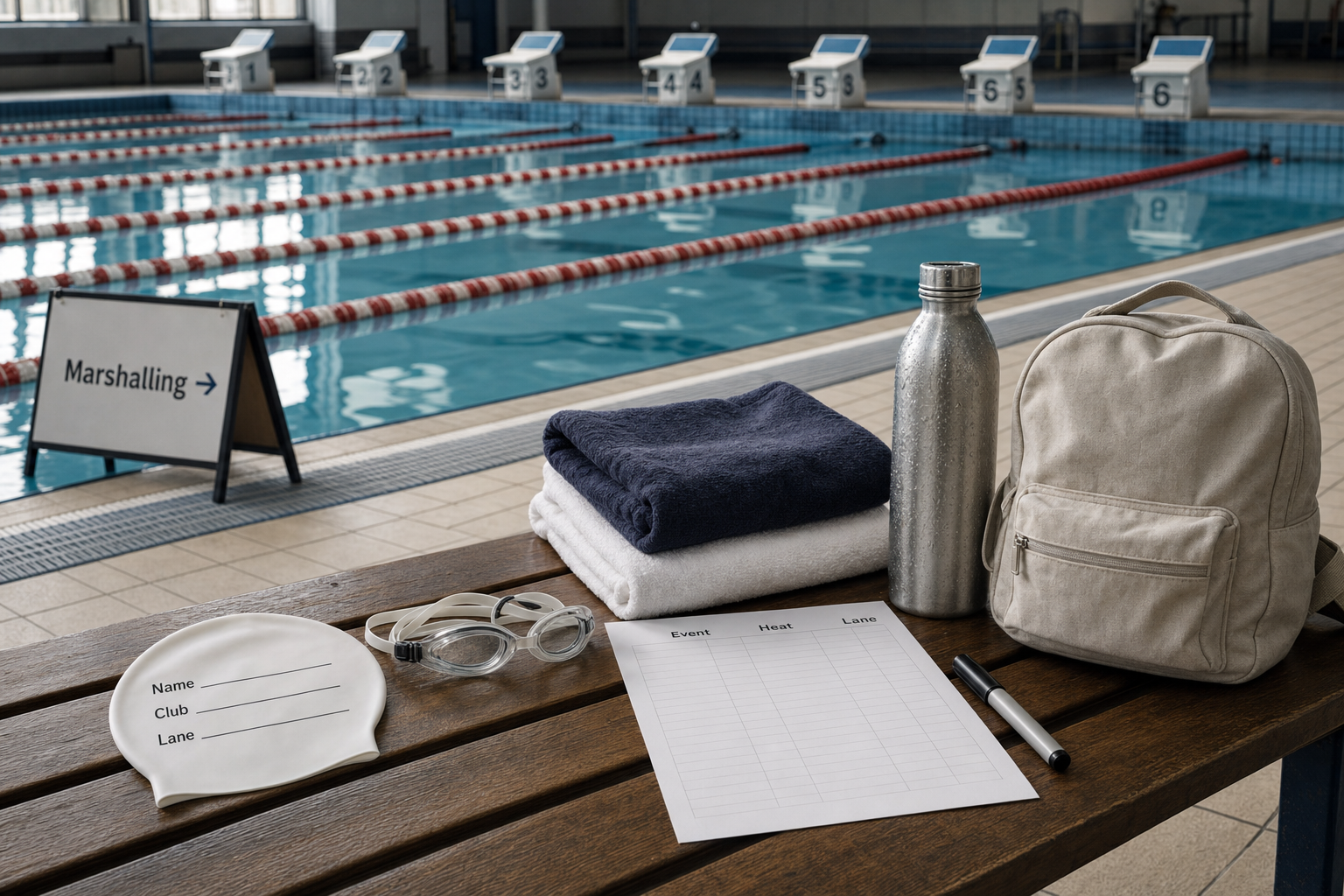
Want your child to arrive at their first swim meet confident and excited? Here's your hands-on school swim gala guide. Read on to learn about heats and marshaling, basic warm-ups, what causes DQs, what to pack—and how you, the parent, can stay calm, keep the timeline, avoid over-coaching, and make the day smooth.
What are Heats, Marshalling & DQs
Heats are groups of swimmers in one event grouped by similar entry times. The slowest heat goes first; fastest swimmers swim in later heats. Even if your child finishes first in Heat 1, someone in Heat 3 might swim a faster time and take the top age-group spot. This structure ensures fair competition and avoids overwhelming matching across ages. (fsst.org.uk)
Marshalling is when swimmers are called to an area (“marshal”) before their race. It's where names are checked, and kids are organized by event, heat, and lane. A marshal then leads them to the starting blocks when it's time. If your child misses marshaling, they’ll miss their heat. Always know when to report—often this is two events before theirs. (static1.squarespace.com)
DQ means “disqualified.” A disqualification happens when a swimmer breaks a rule—maybe their turn or stroke wasn’t legal, or they stood up too early, touched with wrong hands, or kicked improperly. Judges and stroke/turn officials watch each race closely. DQs are common for first-time competitors; the best response is learning rather than blaming. (gomotionapp.com)
Warm-Up Basics and When to Arrive
To swim your best, arrive early—aim for at least 15-20 minutes before warm-ups. This gives time for check-in, changing, finding your team’s area, maybe using the bathroom, and gathering gear. Rushing causes stress—and even the body needs time to wake up. (sandiegofamily.com)
Warm-ups for ages 7-12 are simpler than adult ones but still structured. First, do some easy laps to get loose. Next, stroke drills or kicks to activate muscles. Near the end, do a few short bursts or starts (especially if your child has sprint or dive events). Keeping warm on deck between events matters—wet swimmers get cold fast. (swimming.org)
An excellent tool to prepare at home is the ten-week plan through the 10-Week Plan from swimy.org (designed for school swim gala guide style preparation). This helps kids build endurance, practice starts, and get used to racing while giving parents structure. Use it in the weeks leading up to the gala so your swimmer feels ready. Swimy’s 10-Week Plan
What Parents Need to Pack & Label
Packing right turns a long, chaotic day into a manageable one. Bring two swim caps and two goggles—gear breaks at the worst moment. Always label everything with your child’s name. Include at least two towels, one for warm-up and one for between events. Wet swimsuits dry slowly between races, so a dry layer helps. (swimoutlet.com)
[[ctakid]]
Also pack comfortable warm clothes—hoodie, sweatpants, socks. Pool decks are humid and cold, especially early or between sessions. Drinks and food are essential: water plus healthy snacks that provide steady energy—fruit, trail mix, sandwiches. Avoid sugary treats that lead to crashes. Entertainment items like cards, books or quiet games will help handle long gaps between events without stressing your child or yourself. (swimoutlet.com)
Extras to remember: chair for parents, sunscreen if outdoors, plastic bag for wet gear, a print or screenshot of the heat sheet or programme, and perhaps a Sharpie to mark event, heat and lane on your child’s arm so they can self-check when near marshaling. (static1.squarespace.com)
Simple Etiquette & Pitfalls to Avoid
Early arrival isn’t just about your swim; it’s part of good meet etiquette. Arriving late risks missing warm-ups, heats, and marshaling. Trying to rush a child to swim when they haven’t warmed up raises risk of injury and gives them less confidence. Always leave time. (sandiegofamily.com)
Hydration matters. Kids often forget to drink during hours of waiting. Bring refillable bottles and encourage sipping. Parents should model calm and quiet support instead of over coaching from the stands. Too many instructions or critiques can distract a young swimmer. Post-race debriefs with coach are ideal. (swimdeets.com)
When your child gets a DQ, respond with understanding. Ask coaches what rule was broken. Learning strengthens future races. A disqualification does not define effort—it reveals which rule or turn‐technique needs attention. (gomotionapp.com)
Putting It All Together: Timeline for Swim Gala Day
On morning of the gala: check bags twice the night before. Eat a solid breakfast. Wear team gear or costume under clothes that are easy to slip off.
When you arrive: find team/base area. Check in. Locate heat sheet and highlight your child’s events. Find warm-up time with coach. Ensure your child warms up physically (easy strokes, drills, maybe a few sprints) and mentally (encouragement, calm breathing).
Between events: keep your child warm and hydrated. Wait for marshaling when announced. They’ll leave one or two events before theirs. Help them take off extra clothes and put on cap and goggles. Cheer, but avoid critiquing from stands.
After each race: remind them to warm down if available. Gather feedback from coach. Note time and place. Praise effort. Even if the result wasn’t perfect, consistency, confidence, and enjoyment matter. When home, lay out gear for wash so you're ready for next gala.
Take this school swim gala guide, use it to demystify heats, marshaling and DQs, pack smart, help your child warm up well, and avoid the usual pitfalls. The best goal? First-timers finish the day proud, parents relaxed, and everyone excited for the next meet.
120+ swimming exercises sorted by age — with video and instructions. Developed by swim instructors, completely free.

120+ swimming exercises sorted by age — with video and instructions. Developed by swim instructors, completely free.