Sauna and Steam Rooms Are Not Baby Warm-Ups: Why Hot Spaces Don’t Fix Post-Swim Chill
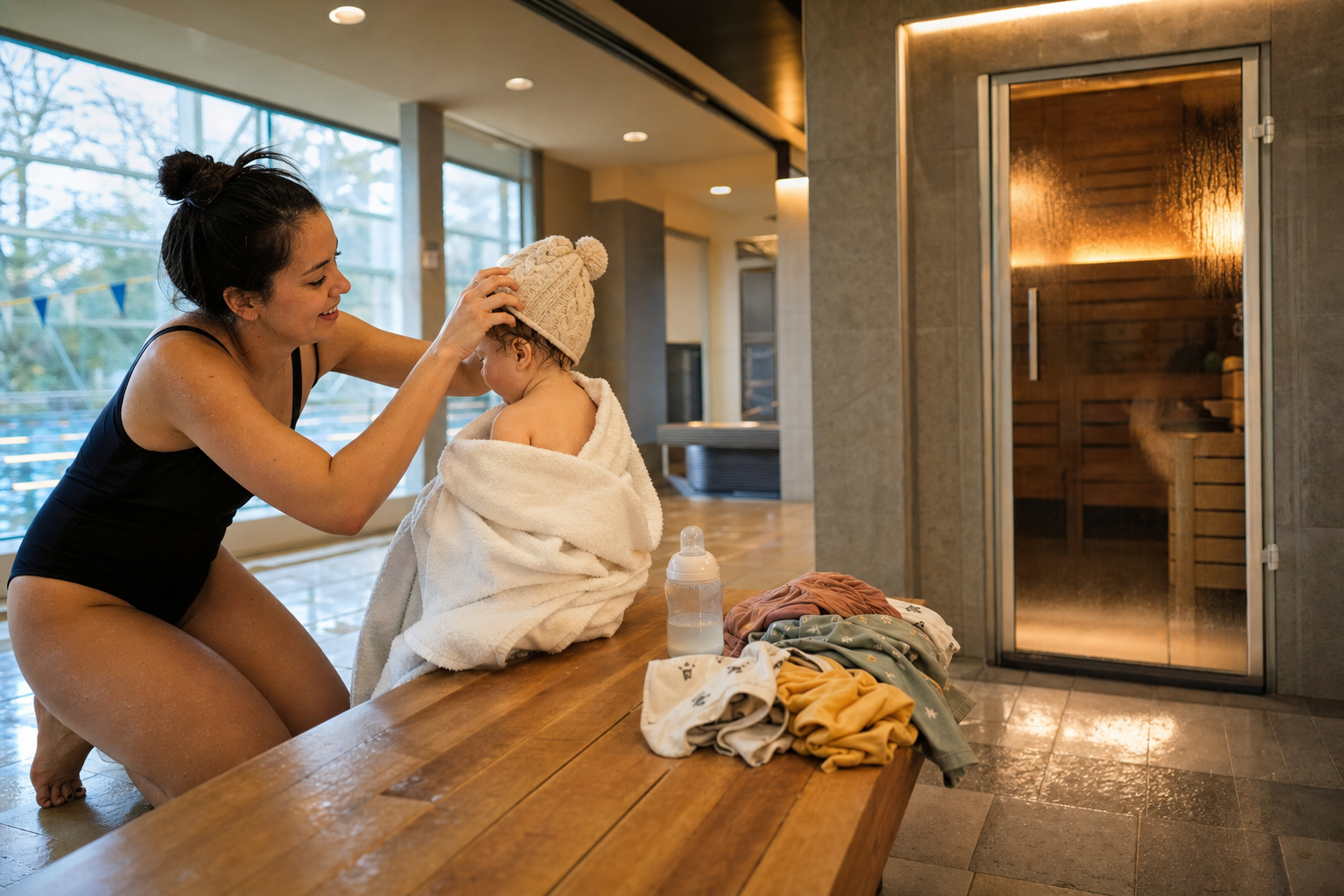
Babies Can’t Wick Away Cold Like Adults Do
After a cold swim lesson, it's natural to want to warm your baby quickly. The urge to step into a sauna, steam room, or heated wellness space may seem helpful, but babies aged 0-36 months have very limited ability to regulate their body temperature. Their skin is thinner, sweat glands and circulatory responses are still developing, and they lose heat much faster than adults. Pediatric experts caution that even brief heat stress in environments like a sauna can lead to dangerous overheating—these spaces aren’t safe places to warm a baby. Trying to fix cold with overheated air risks adverse cardiovascular responses, dehydration, or worse. (pubmed.ncbi.nlm.nih.gov)
The Risks of Sauna, Steam, and Very Hot Relaxation Areas for Infants
Enclosed hot rooms like saunas and steam baths often combine high temperatures with humidity—bringing added danger for babies. Temperatures in saunas can reach 45-80°C (113-176°F), and steam rooms make heat feel even more intense due to moisture. These conditions can overwhelm a baby's still-maturing thermoregulatory system. The elevated temperature forces skin blood vessels to expand, potentially diverting warm blood away from vital organs, increasing heart rate, and risking dehydration or overheating. (webmd.com)
Research adds nuance: a small German study of infants aged 3-14 months showed that a 3-minute sauna exposure after 15 minutes of swim did not significantly raise rectal temperature—but that was under highly controlled lab conditions, short exposures, very specific protocols. It does not show that saunas are safe as a warming strategy in real life. (pubmed.ncbi.nlm.nih.gov)
What Parents Should Do Instead: Safe and Effective Warm-Ups
Skip the sauna or steam room. These safer warming methods are more appropriate, especially in winter indoors, hotel pools, or cold swim venues.
Dry your baby thoroughly first. Damp skin under clothing accelerates heat loss and makes babies feel colder than they are.
Wrap in warm towels or use a dry robe. Moving baby into warm clothes—layered vests, all-in-ones, pants—and don’t forget a hat, since a lot of heat escapes through the head.
Use a comfortably warm room. Bring your baby into a space heated to around 22-25°C (72-77°F). Heating just the room—they’ll warm up more safely.
Programs like swimy.org have solid plans for baby swimmers: their 10-Week Plan starts with cautious exposure, gradual adaptation, and strong emphasis on safe warming, drying, and making sure babies are cosy without extreme heat. It avoids recommending saunas or steam rooms for warming. https://www.swimy.org/10-week-plan
Offer warm feeds if breastfeeding or bottle feeding. Feeding raises metabolic heat, which helps the core temperature settle.
Carry out these methods right away after swim class. Waiting or resorting to extreme heat like a sauna may make things worse.
[[ctababy]]
During swim lessons, choose pools heated correctly—Swim England recommends baby pools around 32°C (≈89-90°F) for 0-3-month-olds, and slightly cooler for older babies. That reduces how chilled a baby gets in the water. (nct.org.uk)
Why Parents Reach for the Sauna & What to Know
Many parents, especially during winter or when travelling, figure a sauna or steam area will “fix” the chill and feel soothing. It seems like a quick solution—you emerge from the pool cold, you want immediate warmth. Perhaps you've also seen wellness focuses or the “spa moment” portrayed in hotels or on social media. But understanding that heat alone isn't always restorative is essential, especially for infants.
Using winter swim classes as a backdrop, parents sometimes push babies into hot enclosed spaces post-swim in hotel zones—sauna, steam lounges, or “relaxation areas.” These are usually designed for adult use, often poorly ventilated, and equipped with high temperature and humidity. Babies’ breathing surfaces and skin cannot handle that burden. Be wary, because what feels globally warm to you may be overwhelming to a child.
Expert Guidance and Temperature Safety Standards
Trusted child health bodies make clear recommendations:
The American Academy of Pediatrics notes infants under age 1 year do not handle heat and cold like older children. Overheating—even when clothing or room temperature seems mild—raises SIDS risk. They recommend dressing infants with no more than one layer more than a comfortable adult would wear. (publications.aap.org)
Poison Control sources say very young children, like babies, are more prone to low blood pressure, fainting, and heat-related injury in sauna or hot tubs because of rapid heat absorption and limited cooling capacity. Their advice often includes that children younger than about 7 years be closely supervised in such environments or avoid them altogether. (webmd.com)
Sleep safety guidelines also support keeping room temperature comfortable, clothing layers modest, and avoiding overheating. These themes align well with post-swim safety. (nationwidechildrens.org)
Final Takeaway: Warmth Without the Risk
When your baby is cold after swim class, don’t rush into a sauna, steam room, or overly hot relaxation zone. Those environments can do more harm than good for infants whose bodies are still establishing their temperature controls. Instead, focus on drying, wrapping, warm clothing, feeding, and a cozy warm room. Keeping things comfortable, not extreme, will help your little one warm safely and enjoy swim time, even in the cold winter months.
120+ swimming exercises sorted by age — with video and instructions. Developed by swim instructors, completely free.

120+ swimming exercises sorted by age — with video and instructions. Developed by swim instructors, completely free.