How to Read a Baby Swim Lesson Plan: What Happens Week by Week
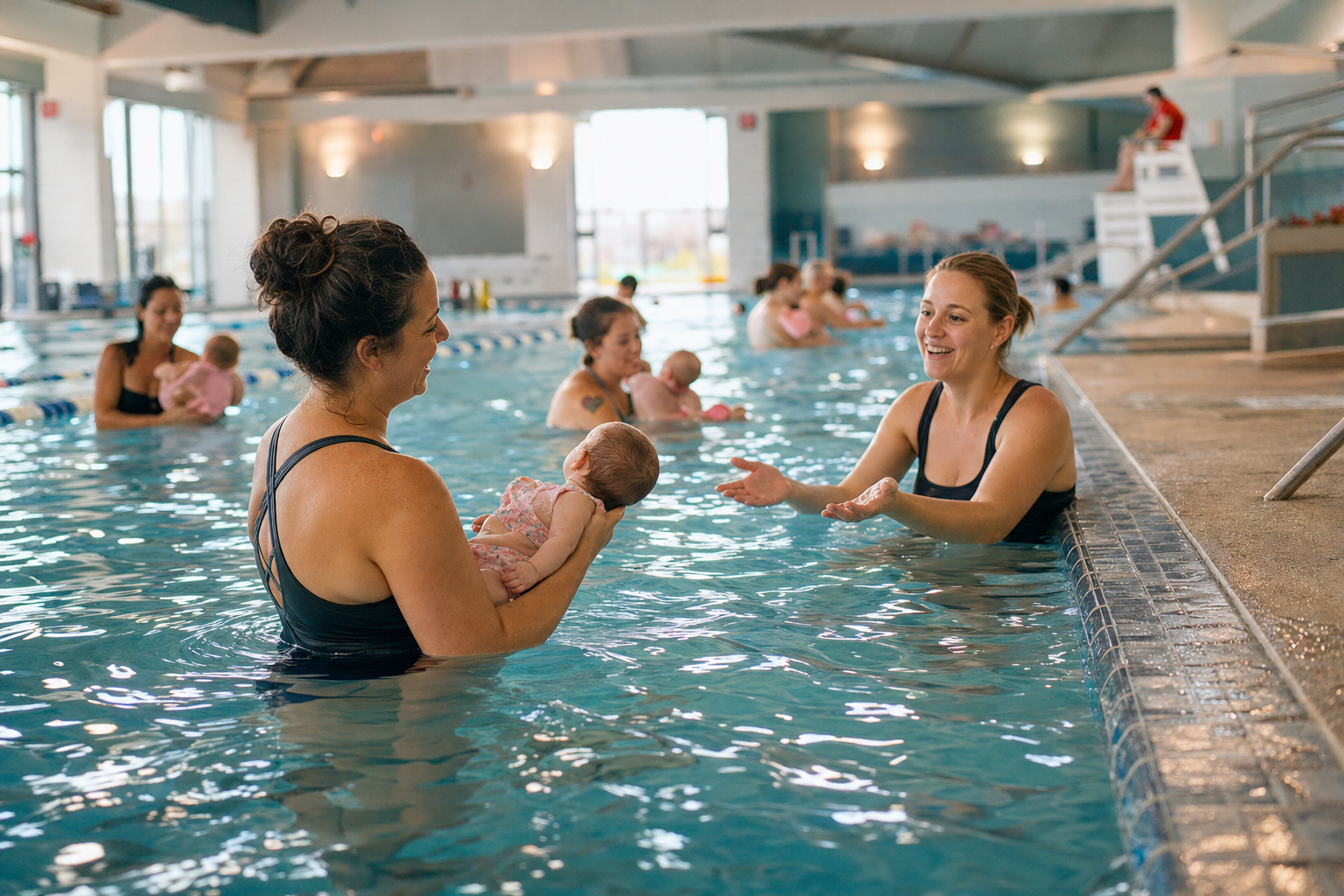
To feel confident enrolling your little one aged 4-36 months in a baby swim class, you really need to see what a baby swim lesson plan looks like. Parents often know the name of the class but not what actually unfolds week to week. This guide shows how to ask for a simple lesson plan and how to judge whether activities carefully build comfort, safe entries, caregiver holds, floating exposure, and exit habits—without rushing your child.
What You Should See in a Weekly Plan
From week 1 through week 10 (or longer), a thoughtful parent-and-baby swim class will gently introduce your child to the water and gradually increase skills. Early lessons should focus on water entry, caregiver holds, basic movement, floating exposure, and exits. Around weeks 4-6 you might see more confident floats, simple submersions (face dips), gentle kicks, and learning to move arms in water. By weeks 8-10 there may be more structured routines: practicing floating independently with support, entering and leaving the pool safely without panic, and responding to simple cues. If you hear instructors talking about a “10-Week Plan,” that refers to a structured progression that some swim schools use—and if possible ask to see it so you can evaluate whether each lesson includes those core skills.
Key Skill Areas and How to Spot Them
Comfort & Familiarity
Early lessons should prioritize making water feel safe. You should hear about games or songs involving face splashes or bubbles. Caregiver holds should be clear: front-tummy support, back support, face-to-face. Watch for pacing: children under 12 months should never be pushed too fast. The water temperature should be warm—ideally 87-94 °F (30-34 °C) for infants and toddlers. HealthyChildren.org highlights the importance of an age-appropriate atmosphere so that your baby feels secure during lessons. (healthychildren.org)
Safe Entries and Exits
A good lesson plan includes teaching how to both enter and exit the water safely. That means guided pool deck entry (no tossing or handing babies down), caregiver supports when stepping into the water, and exit drills at the side or via steps. Even very young children benefit from learning where to grab, how to climb or step out, using walls, or ladders. Over time, exit habits should become more confident.
Caregiver Holds
Parent or caregiver must be in the water, providing “touch supervision”—always within arm’s reach. The holds should change over time: at first, full support holding with both hands; later, more freedom so babies can explore floating or kicking independently but always with support nearby. Instructors should coach parents on how to hold, when to let go briefly, and how to read baby’s cues. (waterwisekids.com)
If you want a structured way to build water confidence at home, the 10-Week Plan guides you step by step.
Floating Exposure
Floating is a cornerstone: back floats are learned first (supported), then slowly front floats, rolling, gliding. Floating exposure means letting the baby feel buoyancy, supporting the head and body, then gradually giving more support until baby accepts floating without being held under arms all the time. These lessons often introduce small amounts of submersion later, once the baby is calmer, but always with consent and safety. (swimrightacademy.com)
Exit Habits and Safety Cues
Most plans include practicing exits from week one, even if it’s just climbing out while held. Cue learning is important: recognizing when to stop, listen, wait to enter the water, or when to move to the side. Verbal and visual cues help build safety habits. Also required is feedback—your instructor should tell you when your child is ready to move on or needs more time, rather than expecting all babies to keep pace with a fixed schedule. (temeculaca.gov)
[[ctababy]]
What to Ask When Evaluating a Curriculum
Ask the instructor or swim school five clear questions: Can I see the week-by-week plan? How do you ensure water is warm enough? What holds will caregivers use? How and when do you introduce floating and submersion? What exit skills will my child learn? A good curriculum will include parent participation, age-appropriate pacing, warm water, and ongoing feedback. According to the American Academy of Pediatrics, formal swim lessons should begin at about age 1, but classes for under-1s can still offer bonding and water familiarity—just without rushing toward stroke or survival goals. (publications.aap.org)
How to Recognize a Plan That Rushes or Skips Critical Steps
If the lesson plan promises to teach swimming strokes in the first few weeks for a 6-month-old, or if floating, safe entry/exit, caregiver support, or water comfort are missing or only briefly mentioned, those are red flags. Also problematic if there's no plan to adapt pace based on infant cues or if the class size is large with little parental involvement. Any curriculum that lacks clear progression from comfort to floating to exit habits is likely pushing too fast. (publications.aap.org)
Putting It All Together: Sample Weeks at a Glance
A well-designed baby swim lesson plan could look like this: Weeks 1-2 focus on water entry, warm water, caregiver holds, bubbles and gentle kicks. Weeks 3-4 gradually add floating and submersions (face dips) and safe exits. Weeks 5-6 build on floating, holding body position front and back, introducing simple arm reach or kick sequences. Weeks 7-10 move to more independent floating with support, confident entries and exits, responsiveness to cues, and readiness to move toward independent swim strokes down the road.
With this structure, you can see whether “parent and baby swim class activities” in your program align with what experts recommend. What matters is that the plan carefully builds comfort, holds, floats, entries and exits—without forcing your baby ahead of their readiness.
Safety Caveats You Must Know
A solid program keeps you in the pool with your child, uses age-appropriate pacing (especially under 4 years), ensures warm water, and provides clear feedback. The AAP requires “touch supervision” for all under-4s and emphasizes that lessons should be part of multiple layers of drowning prevention (supervision, barriers, life-jackets, etc.). (healthychildren.org)
When you know what to look for—a weekly plan that introduces skills in balance, float, safe entry, and exit—you can choose a baby swim lesson plan that builds confidence and safety. Always ask for the curriculum. Trust your baby’s pace. And enjoy each splash together knowing safety, trust, and fun go hand in hand.
120+ swimming exercises sorted by age — with video and instructions. Developed by swim instructors, completely free.

120+ swimming exercises sorted by age — with video and instructions. Developed by swim instructors, completely free.