Lane Lines Aren’t Climbing Ropes: Teach Kids Pool Etiquette (Ages 5–12)
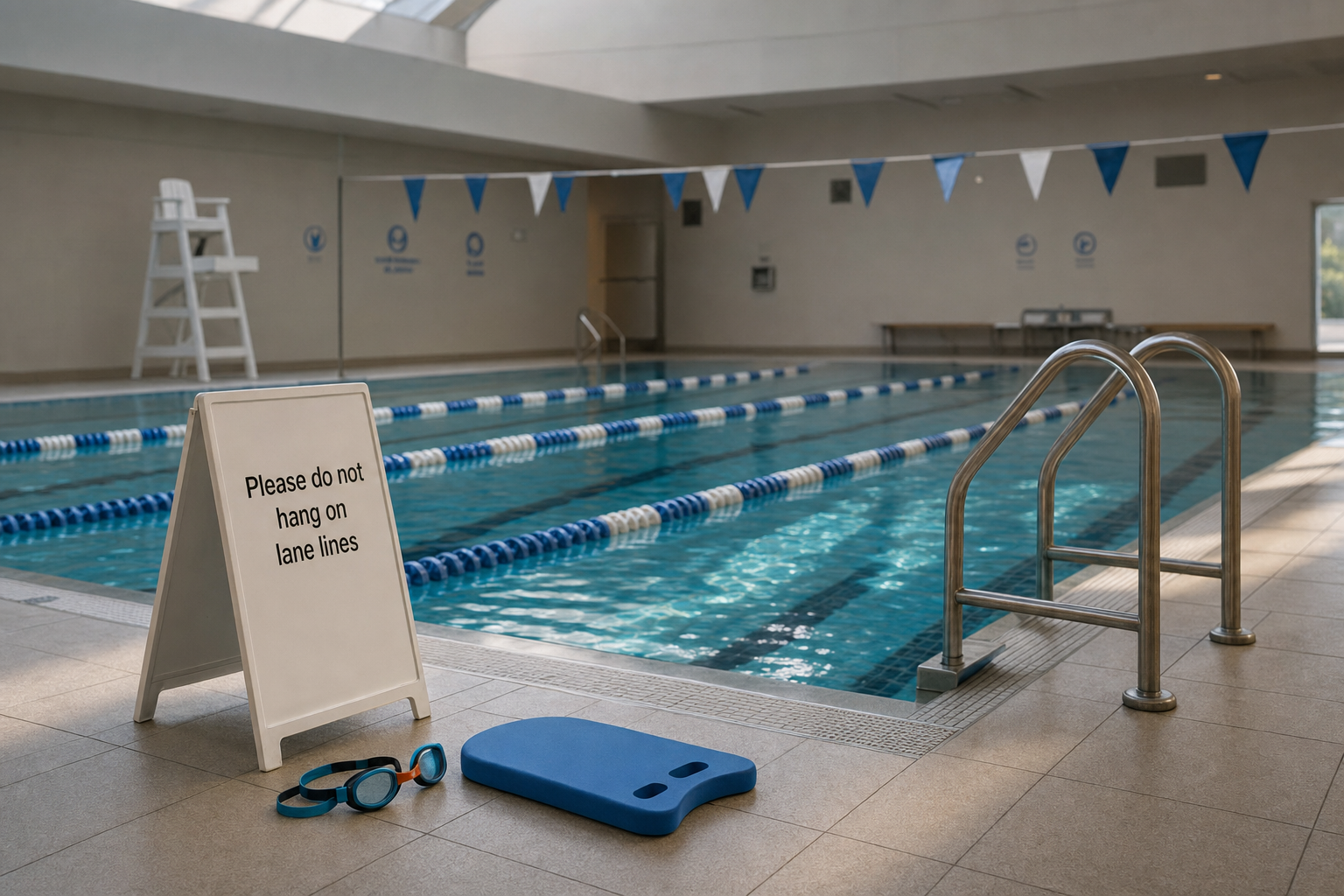
Nothing sours a family swim or lap session faster than someone dangling from the lane line. For children ages five to twelve, hanging or sitting on pool lane lines isn't just naughty—it’s risky. Let’s jump right in with what parents need to teach (and what kids need to know), so your child knows pool lane line rules kids can understand, and your trips to the YMCA or community pool stay safe and fun.
What Parents Must Tell Kids (Two-Minute Briefing)
First things first—give your child a quick spiel before entering the pool. It should cover three essentials: why the rule exists, what to avoid, and what to do instead.
Tell them that fingers can get pinched or trapped in the lane hardware—that the lane line is not a rope to climb or hang from. Explain that lane lines can snap or pull anchors loose, which can hurt their hands or even someone else nearby. They also block lap swimmers who need each full lane to swim straight without obstacles. Mention that lifeguards set these rules, too—when the authority on duty says make space, kids must listen. Safety depends on cooperation.
Next, go over the “no hanging on lane ropes” rule directly. Clarify that even a quick swing or sitting position stretches or stresses the lane dividers, and disrupts lap swim zones. Reinforce that lap swimmers aren’t there to dodge or swim around lines; everyone deserves room.
Finally, model respect for shared space. Keep your own hands away from lane hardware, follow lifeguards’ instructions, and steer clear of misbehaviors like rule-testing when things get boring. Sometimes children push boundaries—parents need to steer without drama.
Why Lane Line Rules Matter for Ages 5-12
Kids at this age are naturally curious and active. Still, there are three big reasons the “no hanging on lane ropes” rule is crucial:
Safety of fingers and limbs: The hardware at ends of lane lines or the connectors can pinch fingers or snag clothes. If a child jerks on a floating segment, the tension might snap components—leading to cuts or worse.
Risk of snapping, anchor damage, and accidents: Lane lines are engineered for wave control and swimmer flow. They are not designed for supporting weight. If pulling or hanging occurs, the lines or anchors can fail. Pools like those managed by the YMCA strictly forbid hanging on lane lines to prevent such hazards. (ymcacolumbus.org)
Blocking lap swimmers and flow of pool traffic: Lap lanes are for continuous, uninterrupted swim. Hanging or sitting in those lanes forces lap swimmers to weave around or stop, increasing collision risk. Every pool policy we saw makes clear that lap lines are not for resting or play. (aaymca.org)
If you want a structured way to help your child progress at home, the 10-Week Plan guides you step by step.
How to Teach Good Pool Etiquette and Shared Responsibilities
Children learn most by seeing, practising, and being praised. Years in swim programs teach this well—use progressions, gentle reminders, and routines. You might notice online programs that offer guided approaches like the 10-Week Plan from swimy.org, which helps build lap endurance, speed, and lane awareness. By following a structured path, kids get clearer why they can’t hang on ropes and how swimming with respect for shared space makes swimming a better experience for everyone. (You’ll want to check that out.) (swimy.org)
[[ctakid]]
Here’s how to embed good habits: before pool visits, review what follows. During swim, spot examples of good behaviour—praising when your child enters a lane properly, or waits patiently. When you see someone ignoring the rules yourself—maybe sitting on the lane line during family swim—use that as a teachable moment. Explain what’s wrong, how it affects others, and what better behavior looks like.
Also, boredom can lead kids to test rules: swinging from ropes, splashing in lap lanes, or testing patience with lifeguards. Be ready with alternatives. Suggest games or exercises that don’t break rules – stretching, kicking, races across the shallow end where allowed.
What YMCA Pool Etiquette Looks Like in Practice
Most Y pools have clear, posted rules: "No hanging on ropes or lane lines," "Hanging on or sitting on the lane lines," or similar wording appears regularly. (ymcacolumbus.org) Pools also emphasize obeying lifeguards—those who issue commands to clear a rope or leave a lane are doing so for safety. Show kids that following lifeguards is non-negotiable.
When your child is in lap lane swim or sharing lanes, encourage lane etiquette: swim on your side, don't stop in the middle, rest only at walls or corners—not mid-lane. Respect pace and swimmers around you, remember hand gestures or tapping for overtaking rather than crowding or shouting. These are behaviors backed by swim groups and facilities across the US, UK, and AU. (bestswimschools.org)
How to Fix Common Pitfalls Before They Happen
Many issues stem from families modeling the wrong behavior or letting pool time drift. If parents sit on lane lines, children see that behavior normalized. If nobody enforces rules, kids assume hanging or splashing is okay.
Set expectations early: explain rules before leaving home. Remind during swim when needed. Use your voice calmly but firmly when setting boundaries—for example, “hands off the rope.” After swim, reinforce with praise when your child follows rules—this builds internal respect, not just rules out of fear.
When rules are tested, walk away from escalation. Talk later. If boredom sets in, plan ahead—activities that reward staying in designated lanes, or focus on skill-building rather than idle play in lap lanes.
What Parents Should Say When No Lane-Line Rule Is Enforced
You may arrive at a pool where families or children are allowed, during “family swim,” to use lap lanes for casual swimming. Be sure of what’s allowed at your facility. If rules differ, teach your child to adapt. If lifeguards ask lines to be cleared, your child should comply—even if others aren't. Respecting lifeguards’ instructions is part of good pool etiquette. It’s always better to follow instructions than to argue, especially if safety is at risk.
Respecting pool lane lines isn’t about rules for rules’ sake. It’s about safety: avoiding pinched fingers, snapped ropes, and the frustration of lap swimmers blocked mid-lane. When your child learns that shared space deserves care, great swim trips become more peaceful, safer, and more fun—for everyone. Teaching good pool etiquette, especially “no hanging on lane ropes,” builds habits that keep families safe year-round.
120+ swimming exercises sorted by age — with video and instructions. Developed by swim instructors, completely free.

120+ swimming exercises sorted by age — with video and instructions. Developed by swim instructors, completely free.