Pull Buoys for Kids: Sizing, Placement, and Bodyline Basics
Want your 6–12 year old swimmer to glide through the water with sleek hips and balanced kicks—without becoming dependent on a pull buoy? Here’s how to get the buoy size right, position it properly, and make smart choices about when to use it and when to let them swim without it.
Finding the Right Size: “kids pull buoy size”
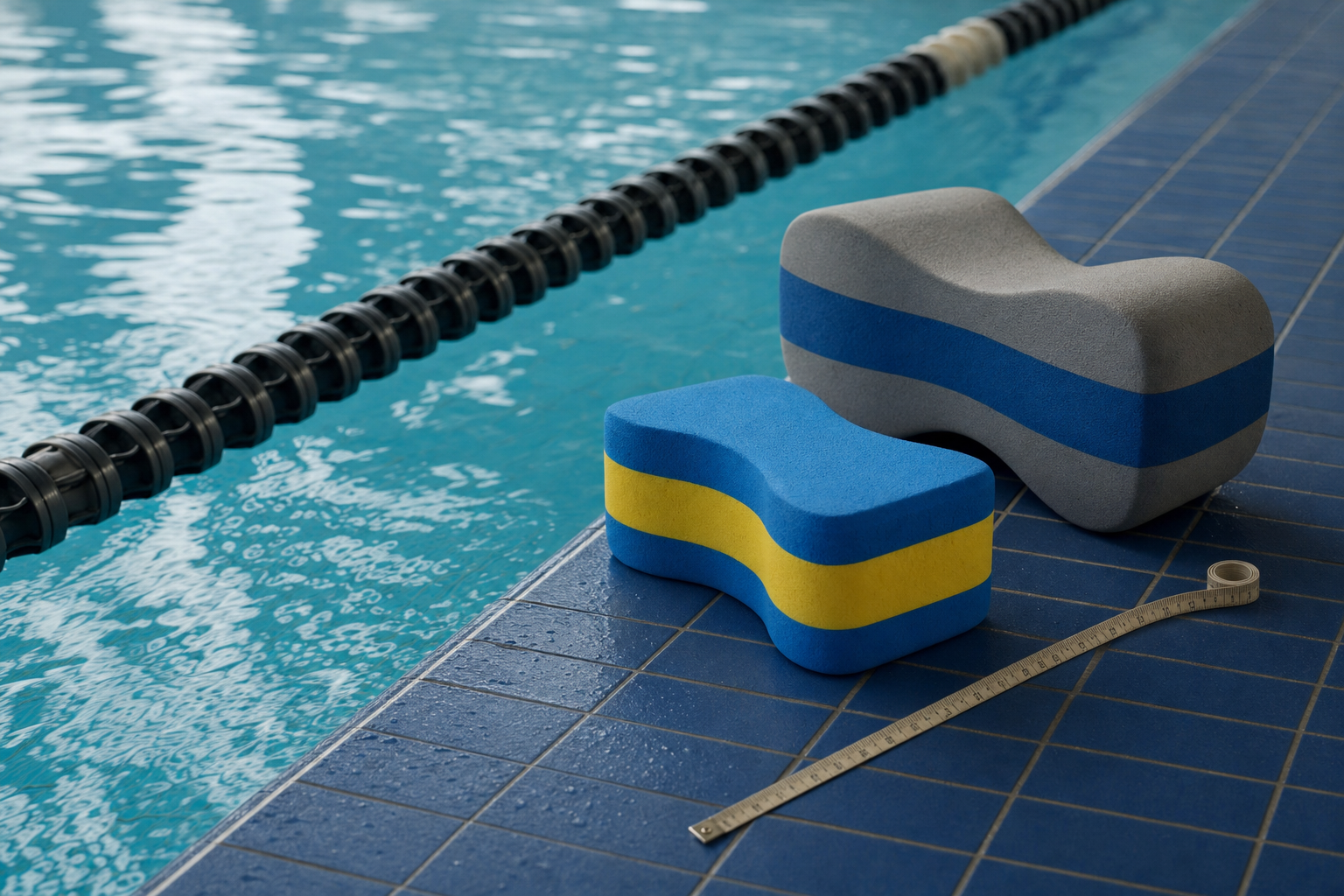
For kids aged 6 to 12, choosing the correct pull buoy size is essential. A junior-sized buoy is ideal. It should be scaled down compared to adult versions so it doesn’t produce too much lift and risk pushing hips and torso too high, which leads to an arched back and an unnatural posture. According to guides from SwimOutlet, children and petite people “should get pull buoys in smaller sizes; either ones designed specifically for juniors, or merely in a smaller size” to maintain balance and bodyline. (swimoutlet.com)
One example is the Finis Junior Pull Buoy, which is intended for “universal junior size (approximately till 12 years of age)” and helps maintain correct body position by fitting properly between thighs or ankles. (swimaholic.co.uk)
Positioning the Buoy: How to place it for bodyline, not buoy dependence
Where the pull buoy is placed affects bodyline the most. Between the upper thighs, close to the groin, is ideal. It keeps the hips and legs lifted without feeling uncomfortable. If it’s placed too low—near the knees—the legs droop, hips sink and drag increases. Swim Jim explains that “placing the pull buoy between the upper thighs … will ensure that their hips, buttocks and legs remain up to or just under the water’s surface, significantly reducing drag.” (swimjim.com)
Also, pay attention to the buoy’s shape: many are figure-eight foam blocks with one end wider. Make sure the wider end is under the body. That side offers more buoyancy towards the thighs, helping maintain a flat, streamlined bodyline. (swimoutlet.com)
Using the pull buoy between the ankles or calves can be useful as a short drill to test core strength or highlight sink at the hips. But for kids with weaker core strength, that placement should be rare and brief—just a few meters—to avoid hinging at the waist or over-relying on arm work. (swimoutlet.com)
Technique for Children: correct bodyline, not buoy reliance
Key parts of pull buoy technique include keeping the back flat (no arch), core engaged, head neutral, and arms driving forward. Wide scissor kicks, arched backs, or high legs do nothing but mask poor core alignment. Many articles warn that a large buoy or misplacement will cause arched posture and shoulder strain. (eatsleepswimcoach.com)
If you want a structured way to help your child progress at home, the 10-Week Plan guides you step by step.
When using the buoy, the child must still maintain a flutter kick—even minimal—for balance. Completely eliminating the legs for long stretches can hide weaknesses that need fixing. TYR’s “Pull Buoys: What and Why” guide explains that it's okay if the feet move slightly with each stroke helping with balance; the idea is to use upper body for propulsion, not rely fully on buoyancy. (usms.org)
[[ctakid]]
When to Use, When to Skip: smart set design & transitioning off buoy
Use pull buoys sparingly—no more than about 20–25% of any swim session. They are training tools, not crutches. To build strong technique, alternate sets with and without the buoy. As one veteran source puts it, “pull buoys should make up no more than a quarter of the session.” (swimming.org)
Design sets that pair pull buoy usage with short kick or scull drills. For example, begin with pull sets to bring awareness of bodyline, then follow with short kick-only sets to re-learn balance without buoy. Or include “pull for 25m, swim without buoy for 25m, holding same posture.” Practice in the structure of swim sets helps kids internalize posture so they stop relying on the buoy. (reddit.com)
Some swim programs offer structured curriculum plans that layer in advanced tools like pull buoys when children are ready. One such tool is swimy.org’s 10-Week Plan, which incorporates exercises including the pull buoy to gradually teach rotation, bodyline and balanced kick while avoiding over-dependence. (swimy.org)
Common Pitfalls: what to watch out for
Arched backs happen when the buoy raises hips too high or kids push the buoy forward to compensate. Wide scissor kicks often result when the buoy takes over balance and kids try to spread legs for stability. Both issues add drag and reduce efficiency.
Another danger is kids using buoy for the whole workout. That leads to upper body strength improving, but the kick falls behind. Over-reliance results in weak hips and legs, and when the buoy goes, everything drops—literally. (swimming.org)
Lastly, avoid ankle bands for novices. Strapping legs together removes any kicking feedback and can cause hips to drop without them realizing. Best to use natural thigh placement first, then only brief ankle placement under supervision when core is already strong. (swimswam.com)
Putting It All Together: sample plan
Here’s how a weekly plan might look: two swim sessions include pull buoy work:
- Warm-up (with buoy): 100m pulling practice (arms-only), focus on straight bodyline.
- Main set: alternate pull-buoy laps with kick-only laps—use buoy for no more than half that set.
- Drill set: scull or rotation drills without buoy to reinforce balance.
- Warm-down: swim without buoy, emphasizing what was learned under buoy—hips up, core engaged.
Parents watching their child in these sets will see hips lifted and kick steady when buoy used, then see if posture holds when swimming free.
Pull buoys can be fantastic tools for young swimmers when sized right, positioned well, and used with intention. Kids who learn feel for streamlined hips, balanced kick, and solid bodyline now will grow into stronger, faster swimmers later. And with careful set design and gradual weaning off buoy dependence, they won’t rely on it entirely—just enough to build good habits, then let their own bodyline shine.
120+ swimming exercises sorted by age — with video and instructions. Developed by swim instructors, completely free.

120+ swimming exercises sorted by age — with video and instructions. Developed by swim instructors, completely free.