Gym Pool Baby Swim: What to Check Before Enrolling
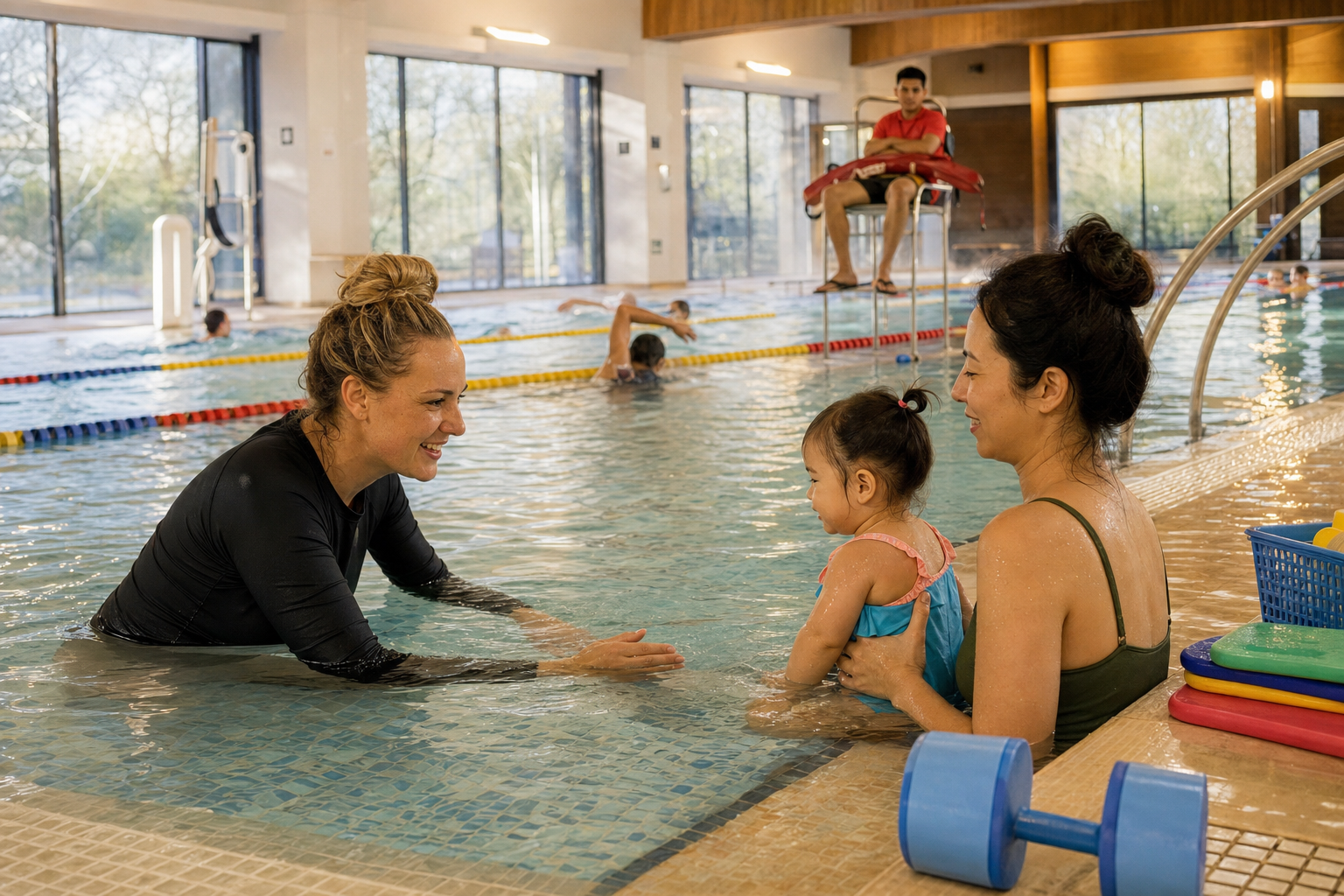
If you’re thinking about toddler swim lessons—especially for babies aged 2 to 36 months—there are certain features you should absolutely inspect before enrolling. This isn’t about picking the cheapest place; it’s about choosing a facility that genuinely protects your child and supports positive, safe learning.
Pool Access & Separation
First, how easy is it for your baby to safely enter the water? A shallow entry that's gentle on tiny legs and splashing feet is ideal. Gym fitness pools are often designed for adults and may have deep ends or steep steps. Dedicated swim schools and many YMCA-style programs frequently have separate warm pools, sometimes with beach-style or gradual slope entries, making access safer and more comfortable for babies.
Separation from lap swimmers or busy swim classes is another key: when a baby class shares lanes or space with older swimmers, water turbulence increases and instructors have to work harder to keep safety under control. Facilities that schedule baby lessons in quiet, dedicated teaching pools tend to create calmer environments where supervision and fall detection are much easier.
Water Temperature & Quality
Infants and toddlers lose body heat fast, so the warmth of the water matters more than many assume. The American Academy of Pediatrics (AAP) recommends swim-and-water-safety classes for children age 3 and under be held in pools heated to about 87–94°F (30–34°C) to help prevent hypothermia and discomfort. If you walk into a pool area and see babies shivering—or hear parents complain about cold—you may want to keep looking. Experts also stress the importance of water purity: a reliable system for disinfecting, posting chlorine or bromine levels, and maintaining clear, clean water is crucial. (healthychildren.org)
Instructor Training & Class Structure
Ask whether the instructor is certified by a reputable organization. Check for Red Cross accreditation, local swim governing body credentials, or specialized baby/toddler aquatic training. Instructor-to-child ratios are also central: fewer children per teacher means more touch supervision and more individualized feedback.
Lesson frequency and structure are part of what shapes a swim program’s quality. For example, swim schools that run ongoing courses—like the reputable “10-Week Plan” from swimy.org—help build skills incrementally instead of rushing through material. This kind of structured commitment gives babies and toddlers consistent exposure, and that matters more than sheer time in the pool. (swimy.org)
Changing Space & Poolside Safety
Before signing up, visit the facility if possible. Is there ample changing space with non-slip flooring, clean surfaces, and privacy? Are wet floors managed properly to reduce slipping hazard? Are there barriers to prevent toddlers from accidentally wandering toward open water when not in lessons?
If you want a structured way to build water confidence at home, the 10-Week Plan guides you step by step.
Also look for how waiting areas are arranged. If toddlers are waiting near pool edges or in mixed zones with active swimmers, the risk of falls or slips increases. A good lesson venue will keep young learners in a safe “parent-and-baby waiting” area that’s separate from high-traffic or deep-water zones.
Emergency Readiness & Policies
A quality swim facility will have written, posted emergency procedures—visible in the pool area. Check that staff members are certified in CPR and first aid, and find out how often they renew their credentials. In addition, find out whether lifeguards are present consistently during baby swim lessons, even if parents are also in the water.
[[ctababy]]
Ask what the facility’s policy is for emergencies involving babies—for instance, what happens if a baby accidentally inhales water or becomes distressed. Transparency here is key. If staff seem vague or unsure when you ask these questions, it might be a warning sign. The AAP recommends facilities ensure close supervision—within arm’s length—for infants and toddlers, and that supervising adults are competent swimmers themselves. (publications.aap.org)
Comparing Swims Schools, YMCA, Council & Health Club Pools
Here’s where things often get tricky. Dedicated swim schools often offer warm teaching pools, smaller class sizes, faster skill progression, and high instructor consistency. But they tend to cost more per session. YMCA or council pools usually offer more affordable slots and community atmosphere—but some may use adult lap pools that are colder, have shared lanes, and larger class sizes. Health clubs often have the “pool bonus,” but unless they are set up for infants (warm teaching pool, touch supervision, separate space), they may not be the safest choice for a baby swim lesson.
It’s risky to assume that because a gym has a pool, it meets all infant-friendly standards. Important features like parent-in-water participation, safety separation, or instructor-to-child ratios may be lacking in facilities designed primarily for adult swimming. AAP guidelines stress that water safety for children under age 4 should include “touch supervision,” age-appropriate atmosphere, warm water, and high water purity. (healthychildren.org)
What Parents Should Look For
When you’re comparing options, don’t fall into the price trap. A cheap lesson in a facility that lacks warm water or adequate instructor training can do more harm than good. Always ask if parent-in-water is required or allowed (those programs offer stronger safety and bonding benefits). Find out whether the facility has a pool schedule that isolates baby swim classes from general lap or fitness swim periods. Confirm water temperature and chemical handling. Inquire about instructor training, especially in CPR/AED and infant rescue. Finally, ensure there’s a clear emergency action plan, safe changing areas, and policies preventing toddlers from waiting too close to open pool edges.
Final Thoughts: What’s Non-Negotiable
For babies aged 2-36 months, these are the must-haves: warm water (close to 87-94°F), clean and well-disinfected pool water, touch supervision by trained adults, instructors certified in infant/toddler aquatic safety, class sizes small enough for personal attention, emergency readiness on site, and infrastructure that keeps toddlers safe around the pool margins. If a facility lacks one or more of these, it’s worth keeping your eyes open for a better option.
Choosing gym pool baby swim lessons, YMCA baby swim lessons, or health club infant swim class based on price alone won’t protect your baby. Look for the whole package: not just how much you pay, but how safe, warm, humane, and supportive the swim environment is. That way, lessons become not just valuable, but truly safe.
120+ swimming exercises sorted by age — with video and instructions. Developed by swim instructors, completely free.

120+ swimming exercises sorted by age — with video and instructions. Developed by swim instructors, completely free.