Bathroom Breaks Without Leaving Baby Poolside
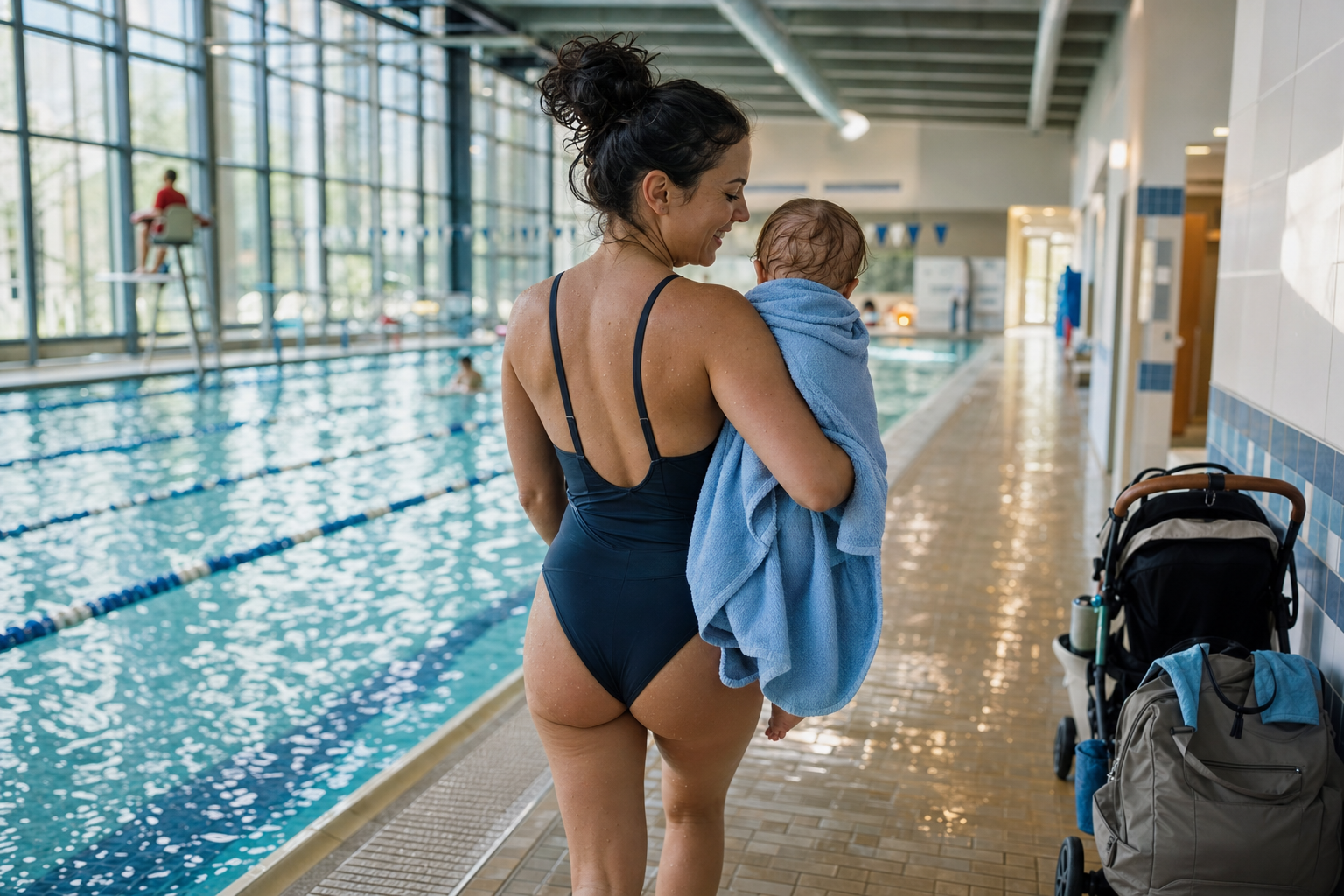
When you’re swimming alone with a baby aged 0-36 months, urgent poolside bathroom or diaper moments will happen. Having a calm plan will keep both of you safe and keep your pool time peaceful. A strong rule to follow: leave the water together, always keep your baby with you, and never hand supervision over to a sibling, stranger, or distracted adult. These steps ensure safety, trust, and less stress for you both.
Why Supervision & Leaving Together Are Non-Negotiable
The American Academy of Pediatrics (AAP) makes it clear: never leave an infant or toddler alone or in the care of another young child when near water—not even for a moment. Close, constant supervision, ideally with touch supervision where the caregiver is within arm’s reach, saves lives.(publications.aap.org) If you need to leave the pool for a bathroom break, exit together rather than passing off care to someone else. Distractions or divided attention have been linked to many tragic drowning incidents, so having one adult in charge—and no hand-offs—is vital.(publications.aap.org)
Planning Bathroom & Changing Logistics Before Swim Time
Preparation starts before setting foot in the pool. Pack a swim diaper, regular diaper, wipes, plastic bag for dirty items, a towel for dry exits, and an extra change of clothes. Know where the nearest restroom or parent change room is. If there are changing tables in the pool facility, make sure they are clean and private. Choose swimwear that’s easy to slip off quickly for both yourself and your baby.
When changing diapers, CDC guidance says to “change diapers away from the poolside to keep germs from getting in.”(cdc.gov) Having a stroller or portable changing pad nearby can make that exit smoother. Always keep one hand on your baby—even when changing topside—to prevent any sudden slips or roll-offs.(cdc.gov)
The Calm Rule in Action: Pool Bathroom Break Process
When you feel a bathroom break or diaper change is urgently needed, follow this sequence: signal to your baby (laugh, splashes, calm voice), leave the water promptly, wrap the baby in a towel, take them with you—don’t pass them to another child or distracted adult. Remain physically close, supervising with your hands or arms. Once finished, return together to the water. Minimizing time outside the pool for pee or diaper work helps you get back to fun quickly—and safely.
Investing time in swim lessons helps both physical safety and confidence. AAP recommends swim lessons once children are ready—after their first birthday—and stresses that lessons do not replace supervision. Touch supervision remains essential—that means being in the water with your infant or toddler and within arm’s reach.(healthychildren.org) For parents who want a structured way to build calm routines around swimming, you may want to look at the 10-Week Plan from swimy.org, which shows how to build water familiarity, diaper-changing routines, and safe bathroom breaks into your regular swim sessions.https://www.swimy.org/10-week-plan
[[ctababy]]
If your baby has been in a swim diaper, remove it immediately when you're out of the water to prevent leaks and infections. A swim diaper is for solid waste and pool rules, not for full protection like regular diapers provide. Position changing supplies in order (clean to dirty) and avoid putting baby on surfaces that aren’t cleanable. Always wash your hands and your baby’s hands after changing. CDC guidelines note that taking bathroom breaks and checking diapers “every hour” helps reduce illness and keep pools hygienic.(cdc.gov)
Incorporating Swim Training & Expert Resources
What the Research & Experts Say (0-36 Months Specifics)
According to the AAP’s updated “Prevention of Drowning” policy, infants, toddlers, or weak swimmers must have a supervising adult who is within arm’s reach and provides touch supervision in or near water. Leaving young children alone or in the care of another child near bathtubs, pools, or bodies of water is explicitly forbidden.(publications.aap.org) The Healthy Children site reminds parents that babies can drown in just 1-2 inches of water and it can happen silently and quickly.(healthychildren.org) Never assume a swim diaper, float device, or another child’s watchfulness is enough.
Every practical tip matters. Knowing how to hold your child safely, exit the pool without slipping, having dry clothes prepared—these details matter when you’re alone. Always be the one accountable. If an older sibling or passing adult offers help, a kindly declined offer is better than broken supervision.
Bringing It All Together: Confidence & Calm
Swimming sessions with a baby can be joyful, exciting, messy, and unpredictable. By planning logistics (locker, towel, changing table, restroom route), sticking to the calm rule (leave water together, never transfer care), and following expert supervision guidelines, you build trust—for yourself and your child—that safety is predictable.
Before your next swim, visualize the exit: baby wrapped, supplies close, exit path known. Make bathroom breaks part of your water routine from the start. That way, when urgency strikes, you both glide through with safety and smile intact—because that’s what swimming alone with baby should feel like: safe, enjoyable, and always together.
120+ swimming exercises sorted by age — with video and instructions. Developed by swim instructors, completely free.

120+ swimming exercises sorted by age — with video and instructions. Developed by swim instructors, completely free.