After Starting Solids: Pool-Day Changes for Babies 6–12 Months
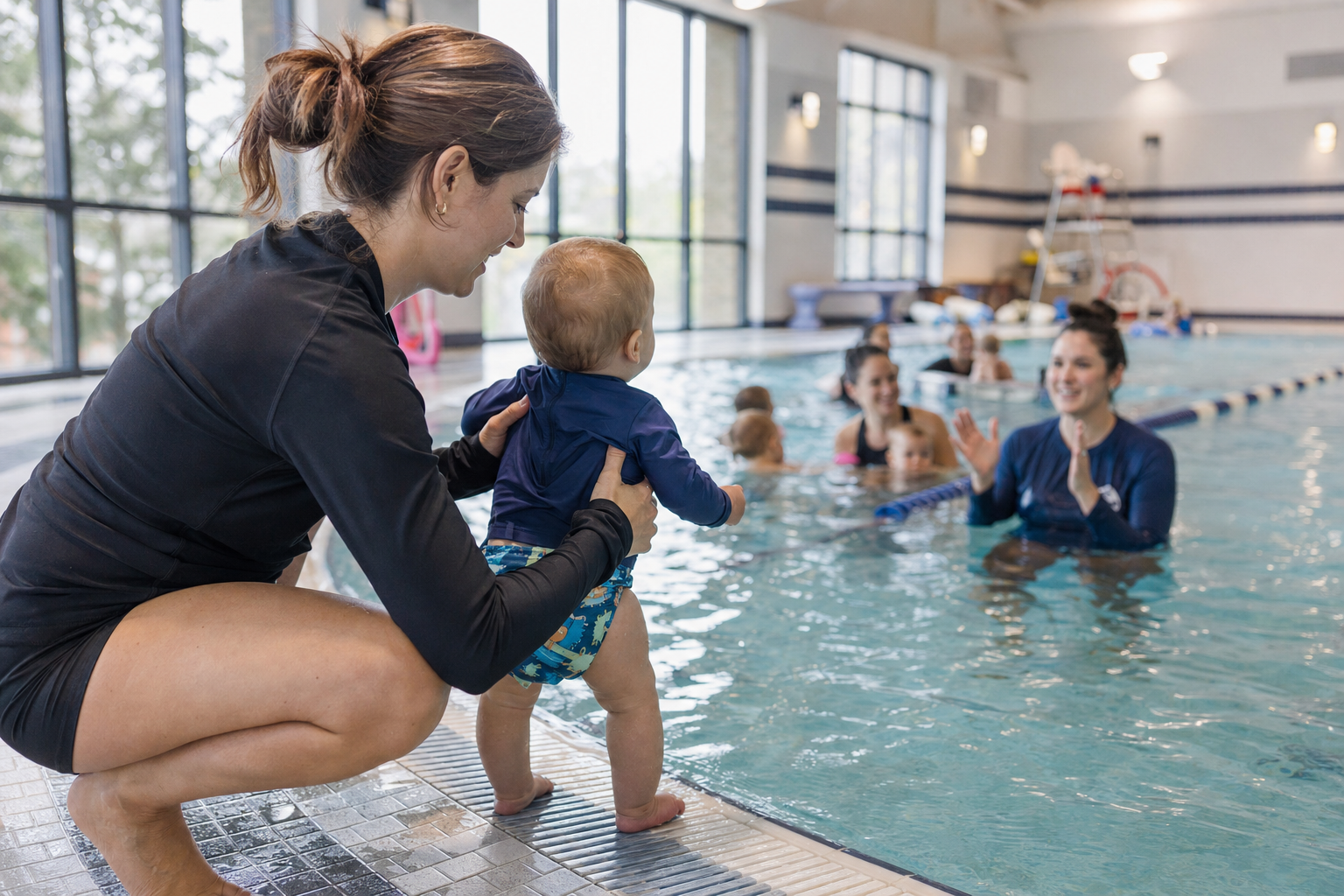
You’ve just started solids with your baby (6-12 months or a toddler with sensitive digestion), and swim day is around the corner. What changes when solids become part of feeding routines? Let’s get straight to the most important stuff—so you can avoid messes, reflux, and stress.
Changing Digestion: Timing, Poop, and Reflux
When babies begin solids, their digestive systems shift. Stool timing changes from mostly liquid and frequent to more solid, which means bowel movements may happen less often but be more urgent. Reflux can adjust too, especially after introduction of denser or new solid foods. Signs like spitting up or fussiness may spike after meals or when baby lies flat. Medically, reflux tends to ease between 9 and 12 months as muscles develop, but solid chunks or high-acid foods might irritate things. Experts advise feeding smaller amounts more often and keeping baby upright for 20–30 minutes after solid-rich meals to manage reflux.(solidstarts.com)
For swim days, this means you’ll need to think ahead. A meal or solid snack too close to swim time might lead to discomfort, increased spit-ups, or bowel surprises in the pool.
Feeding Baby Before Swim Lessons: Best Practices
Feeding windows on swim days need care. A light solid snack or pureed food at least an hour before lessons gives digestion a head-start. Many swim schools recommend waiting roughly one hour after solids or heavy feedings to reduce the risk of reflux or stomach upset.(ifsta.co.uk) As for liquids like breastmilk or formula, offer them 30 to 40 minutes before class so baby’s tummy isn’t bursting. Avoid introducing brand-new allergenic foods—like nuts or shellfish—just before swim class or a long trip. If a reaction occurs, you don’t want to be far from home or medical help.
Swim classes themselves sometimes follow structured plans, such as the “10-Week Plan” from swimy.org, that expect parents to settle into routines. Incorporate feeding windows into those routines to avoid rushing from a new food introduction straight into swim time.
Manage hunger too. Solids can be filling or lack enough calories depending on what and how much baby eats. If a baby seems unusually hungry or fussy approaching pool time, plan a light snack before the class, and feed them again immediately after if needed. This dual feed helps avoid low blood sugar or distractions during lessons.
If you want a structured way to build water confidence at home, the 10-Week Plan guides you step by step.
Pre-Swim Routine Tips
Feed baby about an hour before swim class (full solids), or 30–45 minutes if it’s just formula or breastmilk. Burp frequently during feeding to reduce gas and rising reflux. Change diaper just before leaving and keep swim diaper off until you reach the pool deck or changing area. Putting on a swim diaper too early can risk soggy clothing and leaks, since swim diapers do not absorb urine.(swimoutlet.com)
[[ctababy]]
Swim Diapers & Poop: What They’re For, and What They’re Not
One topology that confuses many parents: swim diapers are built to contain solid poop, not urine. They are non-absorbent by design so that they don’t swell in water. Their elastic leg and waist bands help trap formed stool while letting water and urine flow through freely. This keeps diapers lighter, swim lessons safer, and pools hygienic.(nurserydreamer.com) Frequent checks are essential: change swim diapers every 30-60 minutes, and always switch them in a changing area away from the poolside.(cdc.gov)
Don’t make these common mistakes—putting on swim diaper too early, using a regular absorbent diaper under a swim diaper (which can swell and hinder movement), or assuming swim diapers can absorb pee. If baby pees before class, change into the swim diaper only at the pool. Bring backups and always plan for accidents: extra swim diapers, waterproof bags, wipes, and full outfit changes help.
Putting It All Together: Sample Pool-Day Flow for 6-12 Months
Wake-up, diaper change. Light feeding of solids or snack 1 hour before class. Formula or breastmilk 30-45 minutes before. Keep baby upright after feeding. Pack swim diaper, extra regular diapers, outfit changes. Use the swim diaper right before entering the water (never too early). After swim, change into dry clothes and feed again to recover energy. Monitor for any reflux, fussiness, or digestive upset that may signal a new food doesn’t agree yet.
When to Worry & When to Adjust
If reflux becomes severe—frequent spitting up with crying, arching, or baby refusing feeds—it’s time to consult a pediatrician. The same goes for digestive reactions to new foods: persistent diarrhea, rash, or breathing troubles. Avoid introducing new allergens less than 24 hours before a class in case you need observation time.
Adjust feeding amount and timing as baby grows. Every baby digests differently. What worked at six months may not suit at nine or twelve. Keep feedings consistent, digestion monitored, and pool days calm and predictable.
Following these guidelines helps prevent the dreaded baby poop in swim class scenario, cuts down reflux flare-ups, and makes feeding baby before swim lessons smoother. Safety, comfort, and confidence all improve when parents plan around digestion, swim diaper realities, and feeding windows.
120+ swimming exercises sorted by age — with video and instructions. Developed by swim instructors, completely free.

120+ swimming exercises sorted by age — with video and instructions. Developed by swim instructors, completely free.