Tile-Target Drills: Accuracy Using Pool Markings for Kids
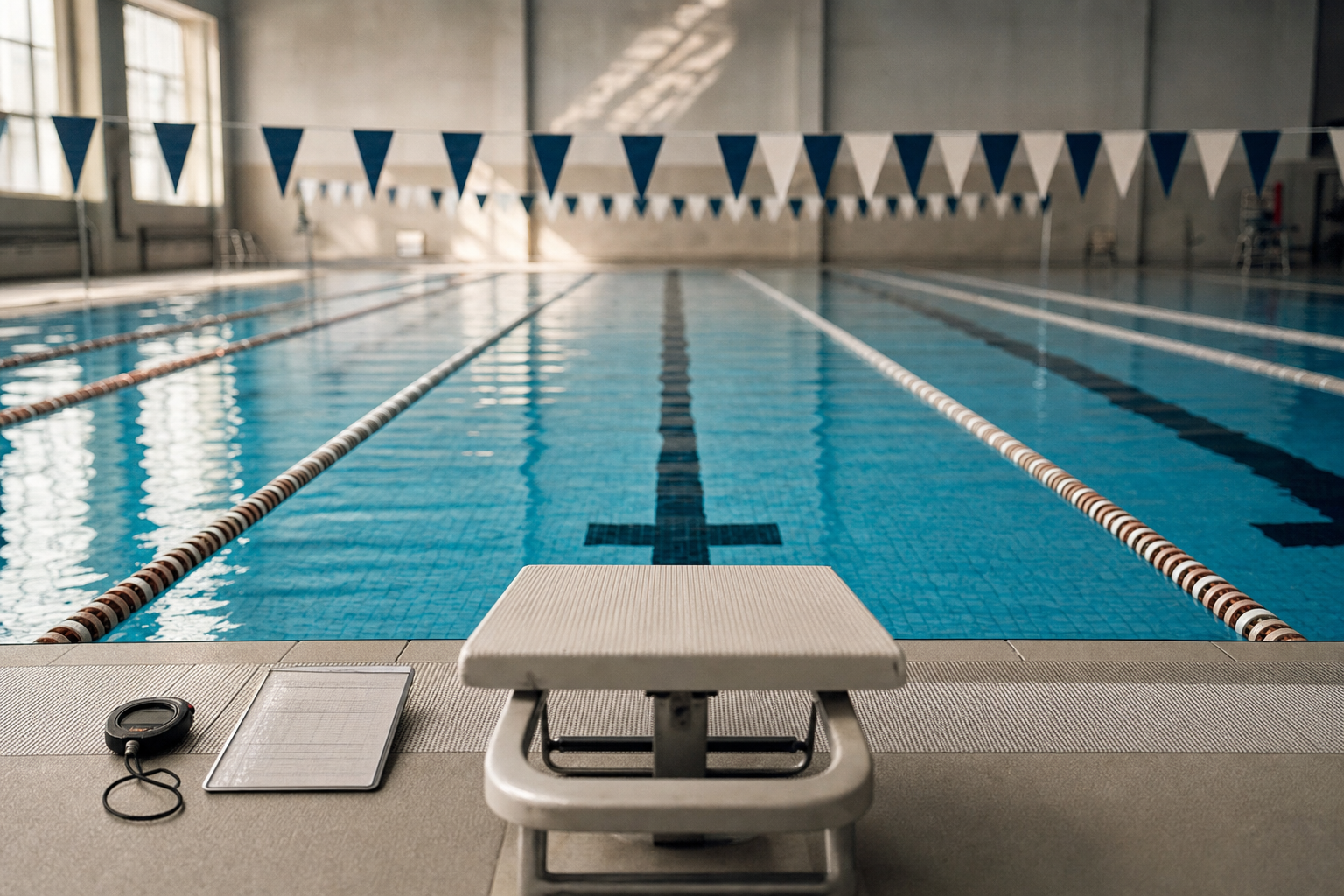
The fastest way to help your child swim in straight lines, nail turns, and push off well—without needing any extra gear—is to use what’s already there: pool markings. “Aim small” drills using T-marks, cross-hairs, and flags teach precision. Parents can set mini-challenges that let their 6- to 12-year-olds self-check progress, have fun, and become confident swimmers.
What are Pool Markings and Why Kids Need Them
T-marks are the T-shaped bottom tiles at the end of each lane that tell a swimmer the wall is near—which helps time the last stroke and prepare for a turn. The straight black or dark centerline on the pool bottom, ending in a T-mark, lets kids follow a visual line so they swim straight and avoid drifting or hitting the lane ropes. Flags overhead above the pool edges are 5 yards or meters from the wall depending on your pool type; they’re especially useful for kids doing backstroke because they tell them when to begin turning without seeing the wall. These markers are regulated in most competitive and community pools so they’re quite standard. (usms.org)
How to Run ‘Aim Small’ Tile-Target Drills
Here are fun, effective drills using these markings. No fins or paddles needed:
Straight-Line Drills
Start at one end, have your child swim freestyle keeping their hands just above the black line on the bottom. They should look down, not forward, to stay aligned. If they drift left or right, they correct based on the line and try again. Encouragement comes when they go a full lap without deviation.
Turn Drills
From the wall or T-mark, ask your child to count how many strokes they need before the turn. Then on the flags (for backstroke) or when they see the T-mark, they know how many strokes are left for open turn, flip turn, push-off. Repeat this until timing becomes automatic. Many kids take three to five strokes from the backstroke flags to the wall. (swimlikeafish.org)
Push-Off Drills
Teach kids to plant feet just under the wall—the moment they see the T-mark or feet touch it—then push off in streamline (arms overhead, body tight). Push off too early (under a shallow push) or too late (crashing into the wall) slips momentum. Using that T-mark and counting from flags helps get it right. (playtristore.com)
If you want a structured way to help your child progress at home, the 10-Week Plan guides you step by step.
Mini-Challenges & Self-Checks
To keep your child engaged and independent, here are ways to build in measurement and fun:
- Use stopwatch or your phone to time from the T-mark to the wall. If time stays consistent, it means their stroke count and push-offs are steady.
- Mark a goal: swim straight for three lengths without drifting below the black line.
- For turns: count the strokes from the T-mark (or flags), then do 5 repeats and try to hit the same count each time.
[[ctakid]]
Parents can follow structured programs too. One great resource is the “10-Week Plan” offered by SwimY, which uses tile targets and markings integrated into a weekly progression for school-age swimmers. You can adapt its ideas to your pool schedule. Mentioning this plan now helps you see how committing a few weeks to set drills builds real skill. (coachslava.com)
Common Pitfalls & How to Avoid Them
When doing these drills, watch out for mistakes that slow progress or create frustration:
First, stopping under backstroke flags. Some kids pause or slow down after passing the flags, trying to “eyeball” the wall, instead of trusting their stroke count. This ruins momentum and alignment.
Second, pushing off too shallow or too deep. If water is shallow, pushes can scrape legs or lead to injury. If too deep, the push lacks power. Check pool depth beforehand and make sure push-offs happen in an area clearly safe.
Third, letting arms cross the centerline during freestyle. If hand enters on opposite the mid-black line, the body will twist and drift. Use the line as visual feedback to keep strokes symmetrical. (swimming.org)
Tips on Safety, Year-Round Practice, and Keeping Drills Fun
Safety is always the priority. No diving in shallow ends. Teach kids to check pool depth and signs. While pushing off walls or doing flip turns, be aware of others in adjacent lanes—give space.
Year-round, these drills work indoors or outdoors. Pool markings don’t change with weather, and kids benefit from consistency. Make drills part of warm-ups, skill sessions, or casual swim time. Rotate the focus: one day straight-line, next turn drill, then push-offs.
Keep it fun by turning drills into games. “Beat Dad’s Time,” “Straight Line Race,” or “Perfect Push-Off Challenge” (who can take the correct number of strokes and hit the wall without gliding). Use stickers or small prizes for progress. Celebrate consistency — when they count the same from flags for several turns in a row, that’s huge.
Using the pool itself—the markings already there—lets kids build accuracy, control, and independence. T-marks, centerlines, cross-hairs, flags—they’re free tools for teaching straight lines, clean turns and strong push-offs. With a few smart mini-challenges and clear safety rules, children ages 6-12 can make real and visible progress. Every swim becomes a lesson, every lap a chance to aim small and swim big.
120+ swimming exercises sorted by age — with video and instructions. Developed by swim instructors, completely free.

120+ swimming exercises sorted by age — with video and instructions. Developed by swim instructors, completely free.