Kids’ Triathlon Swim: A Parent’s Starter Plan (Ages 7–12)
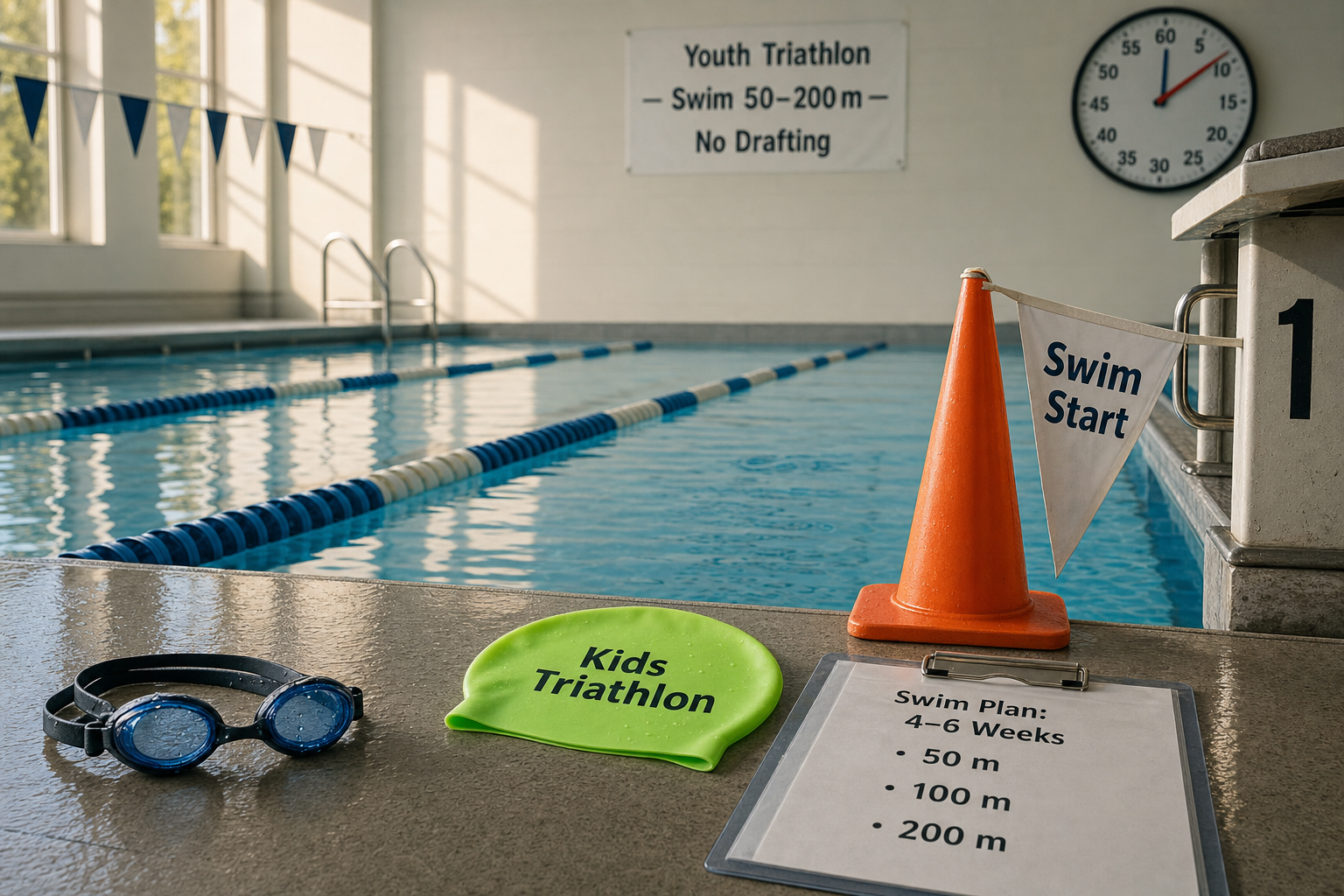
Here’s what matters most for preparing your 7-12-year-old’s swim for their first kids’ triathlon or aquathlon. Dive in to learn event-appropriate swim distances by age, pool-based sighting drills, drafting-free etiquette, and a 4- to 6-week mini-training plan so your child shows up confident and safe.
What Swim Distances Look Normal for Kids (Ages 7-12)
Avoid the common pitfall of signing kids up for adult distances too soon — you want a goal that’s reasonable and safe, especially if their first races happen in pools. According to USA Triathlon, kids in the 7-8 age group should swim about 50-100 meters, ages 9-10 should cover around 100 meters, and ages 11-12 typically do 200 meters. These are pool swims, on closed or shallow courses, with plenty of safety supervision.(usatriathlon.org)
In youth aquathlons (run-swim-run or swim-run events), the swim is often the same or slightly shorter distance. For age 9-10, that might be a 100-meter swim, followed or preceded by a short run; for 11-12, a swim around 200 meters, plus a running section of maybe 2 km.(usatriathlon.org)
Sighting & Pool Prep Before You Hit Open Water
Even with pool-based events first, sighting and swimming straight help build confidence for future open-water races. On race day, sighting means briefly lifting the head to look ahead — spotting buoys or course edges — without losing freestyle rhythm.
Doing drills in the pool gets kids ready. For example, a sighting-every-few-strokes game helps build habit: pick a visible target at the pool deck, swim freestyle and every 6-8 strokes lift your chin to sight, then lower back into stroke. Blind-swimming drills, where you swim looking down or with eyes closed for short stretches before popping up, strengthen awareness and helps stay on course when you swim outside.(triathlete.com)
These swim-pool drills also teach drafting-free etiquette: kids learn not to grab, avoid overtaking aggressively, respect other swimmers’ space, and never draft in swims where rules forbid it (most youth races do). USA Triathlon rules state draft-free swimming is required for most youth and age-group events, especially in non-elite categories.(usatriathlon.org)
If you want a structured way to help your child progress at home, the 10-Week Plan guides you step by step.
Safety & Etiquette You Should Know
Bright swim caps are simple but powerful. Being clearly visible in open water makes a big safety difference and is usually mandatory in races.(usatriathlon.org)
[[ctakid]]
Pool-based events are safest for totally new swimmers—do not rush into open water. Always obey race briefings, know where swim boundaries are, and ensure lifeguards or safety boats are present. Drafting (swimming in another athlete’s wake) is usually disallowed in youth triathlons; learning drafting-free behavior is key for fairness and safety.(usatriathlon.org)
Why a Clear Training Plan Matters (4-6 Weeks to Race Day)
With spring-summer racing season ahead, a simple 4- to 6-week swim training plan builds fitness, technique, and confidence without burn-out. Scene this with a plan like the 10-Week Plan offered at Swimy.org, but tailored down for just a few weeks when you don’t have 10 weeks lead time. Start light, build skill, taper (ease off) just before race day.
Here’s a sample approach:
Weeks 1-2: Two pool sessions per week. One session focuses on technique (body position, breathing) with sighting drills, short repeats (25-50 m) with rest. The other is steady swim: continuous distance close to race swim for that age (100-200 m), at easy pace.
Weeks 3-4: Add a third swim or make one session slightly longer. Include mock race starts (from pool edge) or floating into swim, include “sprint turns” where pushing off the wall fast. Continue pool drills for sighting. If open water is safe and available, introduce short exposure.
Weeks 5-6 (if using 6-week plan): Taper so race day is not exhausting. One longer swim early in week 5 (simulate race distance), then back off. Final week: focus on rest, easy swims, brief sighting practice, mental prep.
Parents experienced coaching or swim team swim habits will tell you consistency over intensity wins: steady, frequent swim practice, with technique built in, beats cramming quick laps without focus.
Putting It All Together: What a Parent Learns & What a Child Needs
When you dive into this plan, you’ll learn the event standards (for their age swim distances, required gear, rules like no drafting), you’ll see the importance of build-up, sighting, and safety. Your child gains a motivating, achievable goal beyond lessons.
Avoid pitfalls: never enter a 7-12-year-old in an adult triathlon with a long swim. Never start with open water if the child is inexperienced; pool‐based races first. Make sure your child can swim the distance continuously before race day.
Racing season in spring and summer is perfect timing. With the right plan over 4-6 weeks, your 7-12-year-old can walk into that first pool triathlon or youth aquathlon ready for a safe, fun, confidence-boosting experience. Safe swims, happy strokes, and bright caps all the way.
120+ swimming exercises sorted by age — with video and instructions. Developed by swim instructors, completely free.

120+ swimming exercises sorted by age — with video and instructions. Developed by swim instructors, completely free.