Ear Pressure Pain in the Pool: Gentle Equalizing for Kids (Ages 6–12)
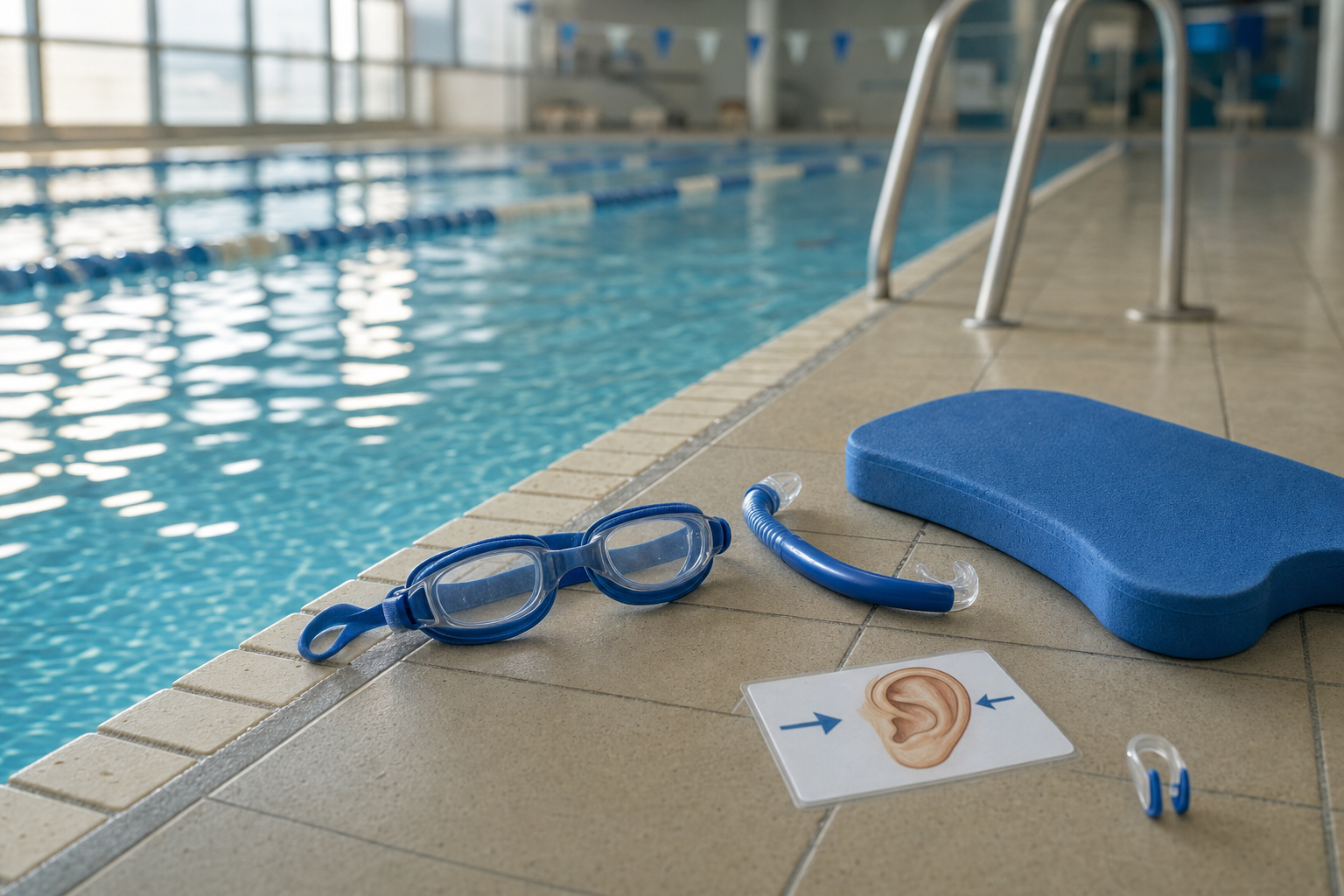
If your child (ages 6–12) is saying “my ear hurts” after going underwater, it’s likely ear barotrauma—when pressure builds in the middle ear because the Eustachian tube can’t keep up. Here’s what you need to know, and exactly how to help them equalize safely and gently without force. Keywords like “ear pain swimming kids”, “how to equalize ears child”, and “ear barotrauma swimming” are crucial here.
What’s Really Hurting and Why It Matters
When kids swim in shallow or moderate-depth water, increasing external pressure pushes on their eardrum. The Eustachian tube connects the middle ear to the back of the throat and must open so the pressure inside and outside the eardrum equalizes. If it can’t (due to congestion, a cold, or allergies), the eardrum stretches inward and causes pain or muffled hearing. That’s middle-ear barotrauma. The injury may get worse quickly if pressure continues to build. Doctors warn that forceful equalization attempts or diving with blocked sinuses could lead to inner-ear damage or even permanent hearing loss.(dan.org)
Kid-Safe Ways to Relieve Ear Pressure Underwater
Here are simple, gentle techniques suitable for ages 6–12. No force, no dangers—just easy strategies that work in shallow to moderate water.
Swallowing & Jaw Wiggles
Swallowing naturally opens the Eustachian tube. While your child is descending just a few feet, teach them to swallow often. Add “jaw wiggling”—having them move their jaw side to side or open and close like chewing. These actions help relieve buildup without any risk. Merck Manual lists swallowing and yawning as among the safest ways to relieve ear pressure.(merckmanuals.com)
Gentle Nose-Pinch Blows
Also known as a mild Valsalva. Hold gently the nostrils closed, keep the mouth closed, and blow very softly so air moves up the Eustachian tubes. Warning: do not blow hard. Divers Alert Network stresses that forceful Valsalva maneuvers can injure the inner ear—especially in kids whose tubes are smaller and more sensitive.(dan.org)
When to Stop, Back Up, or Go Shallower
If the pressure gets too much, know when to pause the dive or stop descending:
If you want a structured way to help your child progress at home, the 10-Week Plan guides you step by step.
- If your child says sharp pain or their ear feels that it’s about to burst, stop immediately.
- If there’s ringing, muffled hearing, dizziness, or intense discomfort, surface to a shallower depth.
- If congestion is present from a cold or allergies, skip equalizing attempts in the water. Congestion can block passages and make equalizing very difficult or dangerous.(merckmanuals.com)
Most guidelines say equalization should begin early and be frequent as the child descends—even just a meter in. If equalization doesn’t happen after a couple of shallow depths, coming up a bit or ending the dive is safer than pushing through.(dan.org)
[[ctakid]]
What to Avoid: Forceful Methods & Diving with Congestion
Parents often think more force helps—but actually it’s risky:
- Avoid strong Valsalva (hard blowing with nose pinched)—this can raise inner-ear fluid pressure and cause serious injury.(dan.org)
- Don’t allow kids to dive or equalize when feeling stuffy—sinus or nasal congestion can block passages, making pressure buildup likely and equalization almost impossible.(my.clevelandclinic.org)
Using earplugs incorrectly or wearing tight masks also traps pressure and complicates equalizing.(cdc.gov)
How to Teach Equalizing Through Practice
You can coach your child with structured practice rather than relying on sudden full dives.
Spend time in very shallow water first—just chest-deep—and help them try swallowing, yawning, jaw wiggles, and soft nose-pinch blows while submerging a little bit. As their confidence grows, gradually deepen only when they report ease at earlier depths. Over several weeks, these methods can become almost instinctive.
If your child already participates in programs like the 10-Week Plan on swimy.org, you can incorporate equalization practice into those swim drills, making it part of their regular routine so it doesn’t feel like a separate, scary skill.
When to Seek Professional Help
If symptoms don’t fade soon after swimming, medical advice is needed:
- Sharp or worsening pain, muffled hearing, discharge, or dizziness that persists more than a few hours.
- If there’s concern about damage, a visit to an ear, nose, and throat specialist (ENT) can evaluate with otoscopic exam and may recommend treatment or surgery in rare cases.(pennmedicine.org)
Safety Rules in Short
Whenever the problem starts, stop. Always pause the dive, ascend a little, let ears equalize—never force them. And don’t try equalizing if the nose or throat is blocked. Teach your child to listen to what their body is saying above following any drill.
Final Thoughts
Ear barotrauma in swimming is common—but avoidable. By using gentle techniques like swallowing, jaw movement, and soft nose-pinch blows, kids can relieve ear pressure safely. If any sign of serious pain, muffled hearing, or dizziness appears, pause and come up to shallower depth. Avoid forceful Valsalva maneuvers or diving with colds or allergies. A little guidance, and your child can enjoy the pool without ear pain. Stay observant, teach early, and when needed, bring in the experts.
120+ swimming exercises sorted by age — with video and instructions. Developed by swim instructors, completely free.

120+ swimming exercises sorted by age — with video and instructions. Developed by swim instructors, completely free.