Pool-to-Beach Readiness Checklist for Families (Kids 6–12)
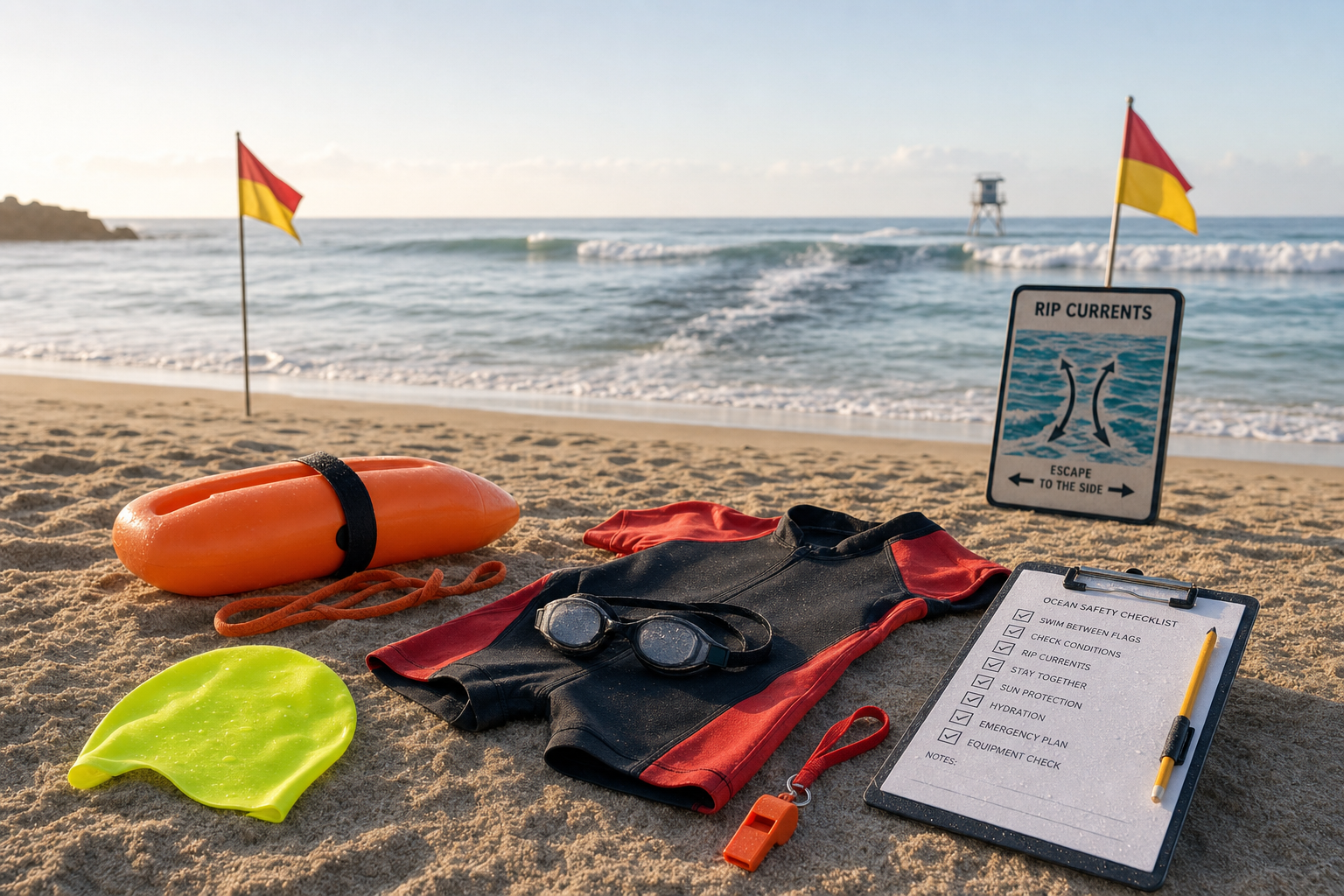
Here’s how to tell if your pool-confident child (ages 6–12) is really ready for ocean surf and tide. Follow these step-by-step checks so you can enjoy beach safety for kids, learn rip current tips for parents, and get confident about that first time ocean with kids.
What ocean skills beyond the pool matter most
Before the beach holiday, test these skills in safe, calm water. If your child masters them, they’re more likely to stay safe in surf, tides, and under flagged beaches.
Float-to-Live and calm breathing
Kids may glide across a pool, but surf and tides throw wild shapes and loud crashes. Teach them the swim-float-swim method: swimming forward, rolling onto the back to float if tired, breathing, then resuming. When caught in a rip current, float first, don’t fight. Strong swimming skills alone won’t keep them safe unless they know how to recover calmly. Numerous beach safety authorities emphasize that floating instead of panicking saves lives. (oceantoday.noaa.gov)
Reading wave and tide behavior
Teach children how currents shift with the tide and how waves break differently depending on beach slope. If waves are plunging or dumping, they load more power. Surging waves over steep beach floors can knock them off their feet. Even on calm days, rips can be hiding just beyond breaking waves. (healthdirect.gov.au)
Spotting and avoiding rip currents
Parents and kids must know what a rip looks like: a darker gap between lines of white waves, foam or debris being pulled seaward, areas where waves don’t break. Always swim at lifeguarded beaches between red and yellow flags. If in a rip, teach your child to swim parallel to shore until out of the current, then return diagonally to safety. (beachsafe.org.au)
Pre-trip checklist: what parents pack and plan
Getting set before you leave home makes a difference between worry and confidence.
Gear for visibility and shocks
Bright swim caps and tow floats or marker buoys make kids easier to see in both UK, US, and AU waters—even in glare or waves. Visibility helps lifeguards spot them quickly and helps you keep track. Beware cold water shock: ocean temperature drops and unexpected waves can cause gasping and disorientation, even for skilled pool swimmers. Have wetsuits or rashies ready if the water looks cold or brisk. (healthdirect.gov.au)
If you want a structured way to help your child progress at home, the 10-Week Plan guides you step by step.
Choose the right location and timing
Pick beaches with patrols and clear flags, not rocky shores or where river mouths feed in. Also schedule outings when surf is mild and tides aren’t extreme—mid-morning or low to mid-tide tends to offer safer conditions for first ocean swims. Always check local surf reports. (home.nps.gov)
[[ctakid]]
Rule-setting before entering water
Set rules the night before or first thing: no swimming beyond flags, stay between arms’ reach, buddy system in action, always check in with you or a lifeguard. Make sure the child can identify a lifeguard and lifeguarded area before getting in the water. Even children confident in pools need firm boundaries. (healthline.com)
Transition training: nearing beach time
Get ready with these concrete training steps so pool skills translate to ocean safety.
Spend part of your summer swim sessions on a program like the 10-Week Plan by swimy.org: have your child practice ocean-like drills—floating, being pushed with small waves, swimming against light current, spotting rips in shallow surf. This gives experience alongside confidence.
Also introduce real-life simulations: let waves push off holding hands so they feel force, teach rolling over to back float unexpectedly, use breath control drills to resist the gasp reflex in cold or splashing water.
When to say “not yet”
There are times when putting safety first means staying in the pool, even if the surf looks inviting.
If your child is hesitant about floating or gets visibly panicked in high waves, delay ocean exposure. Also say no if there are no lifeguards, if flags indicate warnings, during high surf, stormy weather, or at risky times like rip current warnings. Pool overconfidence is common—just because a child can swim laps doesn’t mean they are safe in the surf. Cold water, undercurrents, tides, and sudden depth changes multiply risks. Learn to say no before you go so you’re not caught off guard.
What to do at the beach: safety in action
Once you’ve decided it’s safe, these checks at the beach help protect and guide your child.
Walk along the shoreline first to observe wave patterns. Talk with the lifeguard about rip currents or tides. Make sure the child wears bright swimwear and a fluorescent cap; this helps visibility above the water, especially when waves obscure them. Agree on a landmark in case you’re separated. Always swim between the red and yellow flags at patrolled beaches. Keep kids within sight and reach—even if they seem strong, even among other bathers.
If a rip catches them, remind what they practiced: float, then swim sideways (parallel) until out of the pull, then head back gently and angle toward shore. Yell for help if needed. Keep calm and give them a flotation device if someone else is caught. Needing rescue early beats exhaustion or panic. Sophisticated ocean knowledge grows with experience—and practice with parents.
Following this checklist helps families make smarter decisions about beach safety for kids, gives parents strong rip current tips, and sets up an informed first time ocean with kids so they thrive, not just survive. Enjoy the waves—but only when you're truly ready together.
120+ swimming exercises sorted by age — with video and instructions. Developed by swim instructors, completely free.

120+ swimming exercises sorted by age — with video and instructions. Developed by swim instructors, completely free.