Safe Photos at Baby Swim Class: Capture Memories Without Compromising Safety and Privacy
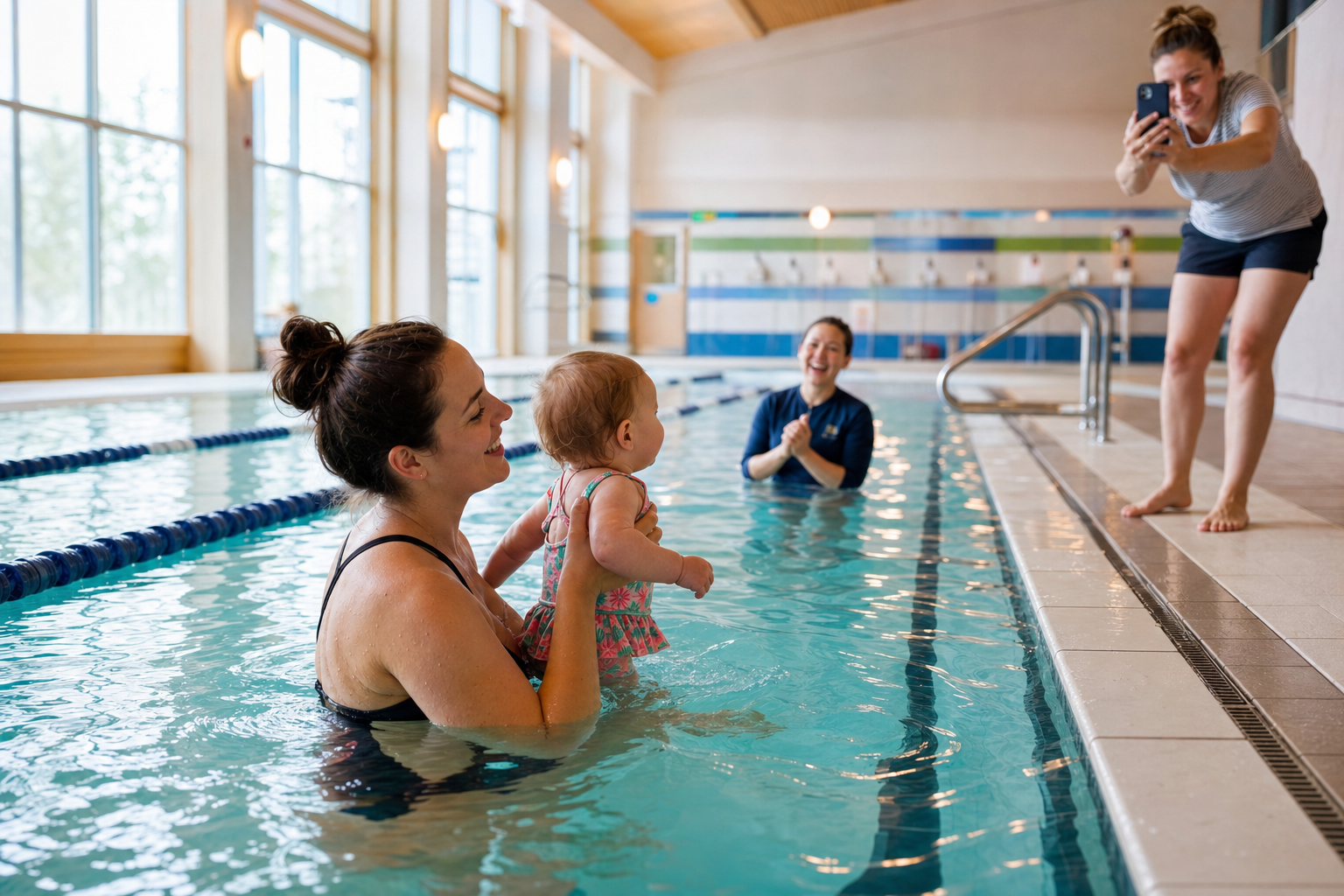
Want to capture those first swim moments without letting phones or cameras get in the way of safety? Here's how to take gorgeous baby swim class photos while keeping supervision, consent, and privacy front and center.
Why phone safety at pool with baby matters immediately
An adult with a phone or camera can feel like they're multitasking—“I’m watching too, just snapping a pic.” But official guidance says otherwise. The CDC stresses that even when children are in formal swim lessons, they still need close, constant supervision when in or near water. Being within arm’s length, eyes and hands free—not holding a phone—is key.(cdc.gov)
Trying to take photos can distract you just enough to miss a slip or a sudden struggle. Filming during actual skills demonstration can reduce attentiveness. Leaning over wet decks to get a better angle increases risk of slipping or dropping your device—and babies deserve your full attention in water.
How other swim schools handle photos & photography policies
Many swim schools have clear rules around photos and videos to protect all children. For example, Squidlets Swim School does not allow photography or recordings during lessons unless a parent has permission and it does not breach safeguarding policies.(squidletsswimschool.com) Leander Swimming Club follows Swim England guidelines—phones not allowed near changing rooms, images used publicly only with written consent.(leanderswim.com)
Aquability Inc requires expressed permission if photos include other children or instructors—especially if the images might be posted online.(aquabilityinc.com) These rules help prevent privacy violations and ensure respect for every family’s preferences.
How to take photos without compromising safety
To capture memories from your baby swim class without sacrificing safety, follow these actionable steps.
If you want a structured way to build water confidence at home, the 10-Week Plan guides you step by step.
First, designate a dry, non-supervising adult to take photos. If there are two parents or a family member present, have one outside the pool responsible for pics. The adult in the water should maintain hand contact or remain within arm’s reach of the baby, focused entirely on supervision.
Second, plan ahead: set expectations with any supervising adult about when pictures will be taken—perhaps at the start or end of class, or during non-skills moments. Avoid trying to photograph when your child or the teacher is doing floats, rolls, or other learning skills that require full attention.
Third, respect privacy: don’t include other children in your photos without parental or instructor permission. Many swim schools require written consent before posting images that include other kids.(swimnarberth.co.uk)
Fourth, avoid risky positions. Don’t lean across wet deck edges, bend low over the water from the poolside, or stand where a stray wave, unstable surface, or broken tile could cause a fall—and possibly injure you, your baby, or your phone.
If you want guidance or improvement ideas, you could also follow structured swim programmes. For instance, through the 10-Week Plan at swimy.org you can learn skills and track progress—which can help you know when to snap pictures safely during class transitions and celebrations.
[[ctababy]]
Don’t assume lifeguards or instructors replace your supervision
A lifeguard presence doesn’t pull focus for parents. Even with trained staff around, the CDC and the American Academy of Pediatrics emphasize that parents or caregivers must provide active, undistracted supervision—especially for babies and toddlers aged 0-36 months.(cdc.gov)
In the water, the supervising adult should always be ready to respond—phone tucked away, eyes on the child. Lifeguards are there for emergencies, not as backups for solo smartphones.
Privacy & social media: what to think about before posting
Everyone has a different comfort level when it comes to sharing. Swim classes often have policies about using photos for marketing, social media, or printed materials. It’s common for swim schools to seek consent forms before using photos for anything beyond personal keepsakes.(leanderswim.com)
If other children appear in your photos, always check with their parents or class instructors before sharing. Even in public pools, best practice is to ask. Also think about what you share—children’s faces, names, locations—and how public your posts are.
Final thoughts
Capturing those sweet early swim moments is absolutely possible without dropping attention or breaching safety. The best approach is simple: pick one adult to take photos, let the in-water adult stay fully focused, respect consent from all involved, follow pool policies, and keep all devices away during key skills or anytime safety could be compromised. These practices let you build memories and protect your baby—and everyone else—in and around water.
120+ swimming exercises sorted by age — with video and instructions. Developed by swim instructors, completely free.

120+ swimming exercises sorted by age — with video and instructions. Developed by swim instructors, completely free.