Tummy-Time Skills for the Pool: What Every Parent of a 3–18-Month-Old Should Know
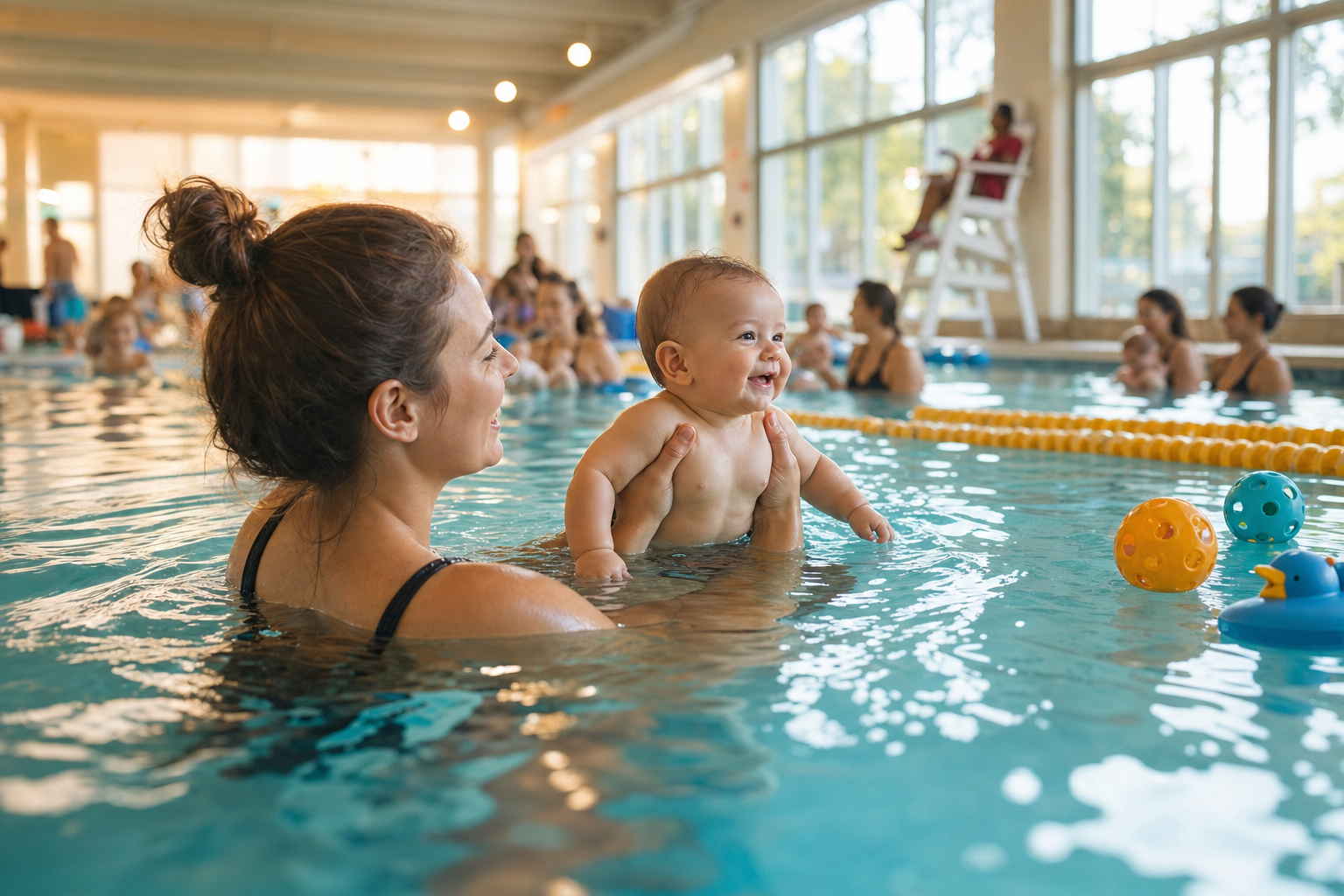
How do you know when your baby is pool-ready beyond just kicking legs? It comes down to head control, trunk strength, rolling ability, and how comfortable they are in supported positions. These developmental skills translate into safer, happier water holds—even if your baby can’t sit, crawl, or walk yet.
Understanding Baby Pool Readiness
Swimming isn’t just about kicking—before that first splash, babies need a foundation. Good baby head control swimming begins around 3-4 months, when infants can lift their head during tummy time and hold it steady when upright. Without this, water holds or supports can cause strain or cause the face to tip into the water. (medicalnewstoday.com) Early trunk strength comes from supported rolling, pushing up with arms during tummy time, and tolerating positions where the baby’s chest is slightly off the ground. (health.clevelandclinic.org)
Parents often rush to prone (on the tummy) floating or face-water drills because others are doing it. That’s a common pitfall. Many babies, especially under six months, aren’t physically ready—and forcing prone work before head and trunk are ready can lead to discomfort and fear.
How Land Milestones Translate to Water Safety
When babies practice tummy time on land, they build the muscles needed for head lifting, rolling, reaching—all part of a core system that supports water activities. Having rolling experience (from back to tummy and back again) helps babies shift positions in the pool, reducing panic if their body tilts or a supported floating moves a little. (childrens.com) Trunk control helps keep the baby’s hips higher in the water when supported, which prevents them from sinking or sliding awkwardly. It gives better balance and safer supine (on the back) or front float holds. (swimy.org)
Supported Water Holds & Activities for Babies Who Aren’t Sitting Yet
For babies aged 3-6 months, staysupported holds are the safest way to build water confidence. Hold your baby under the chest or around the armpits, letting the face stay visible at all times. Keep the body angled safely so the airway is free. Introduce shallow water splashing, warm gentle support in your lap, and let them explore legs and arms in water. These kinds of tummy time and swimming linkages—like propping up on forearms and letting them move in water with assistance—build that early ability. (swimy.org)
If you want a structured way to build water confidence at home, the 10-Week Plan guides you step by step.
Between 7-12 months (pre-walking phase), you can include floating with hand support under the back or chest, blowing bubbles at the water’s surface, and reaching for toys to encourage weight shifting and balance. Avoid prone floating for long stretches until head control and neck muscles are very stable.
[[ctababy]]
Across both stages, baby pool readiness depends less on age and more on typical strength markers: can baby lift and turn head steadily, tolerate slightly tilted or partially prone positions, and roll with minimal distress.
Using a Step-by-Step Roadmap Helps
To help parents avoid rushing or feeling lost, structured plans are useful. The 10-Week Plan from swimy.org offers a gentle, well-paced sequence: familiarisation, facial dips, blowing bubbles, supported floating, before any underwater transitions. That lets babies build trust and strength gradually. (swimy.org)
Bath games at home also reinforce those skills. Simple routines like pouring warm water over shoulders, letting little hands splash, and supporting floats while you talk or sing all simulate pool holds without full immersion or pressure. (swimy.org)
Safety Tips & What to Avoid
Safety must guide every water moment. Always use “touch supervision,” meaning your hand or arms are on the baby at all times. Pools should be warm—about 87-94°F (30.5-34.5°C) for infants and toddlers. Sessions for babies under one year should start short (10-15 minutes) until tolerance builds. (swimy.org)
Avoid copying older toddler or preschool exercises. Don’t pressure face wetting, breath-holding, or underwater work before baby shows signs of readiness (steady head control, tolerance for water on face, comfort with floats). Many swim instructors warn that repeated submersions or forced prone positions with weak head control are common red flags. (swimy.org)
Every baby develops at their own pace. Comparing babies in the same class or pushing milestones set by others can lead to unnecessary stress for both baby and you.
Sample Progression for 3- to 18-Month-Olds
From about 3 to 6 months your focus is gentle exposure: supported upright positions, chest-on-lap laps in shallow warm water, splashing, exposure to mild face-water contact. Between 6 to 12 months you increase supported float time, begin bubble blowing, allow reaching and gentle kicking while holding under chest. After about 12 months, many babies can tolerate short floats, assisted entries/exits, and more dynamic movements—always supported and always with comfort cues guiding each new step.
Final Thoughts: Trust, Safety, and Joy
Good baby head control swimming and baby pool readiness don’t happen overnight, but they begin long before formal swim lessons. Tummy time lays the groundwork. Rolling, trunk strength, and supported positions give your baby the stability to feel safe in water. Use the 10-Week Plan for steady progress, avoid rushing position or prone work, and listen to your baby’s cues. With patience and support, pool time becomes a place of trust and joy—not fear. Every baby deserves to feel that freedom in warm water, supported and face visible, and nurtured in every wave and splash.
120+ swimming exercises sorted by age — with video and instructions. Developed by swim instructors, completely free.

120+ swimming exercises sorted by age — with video and instructions. Developed by swim instructors, completely free.