Kickboards for Kids: Sizes, Setup, and When to Skip
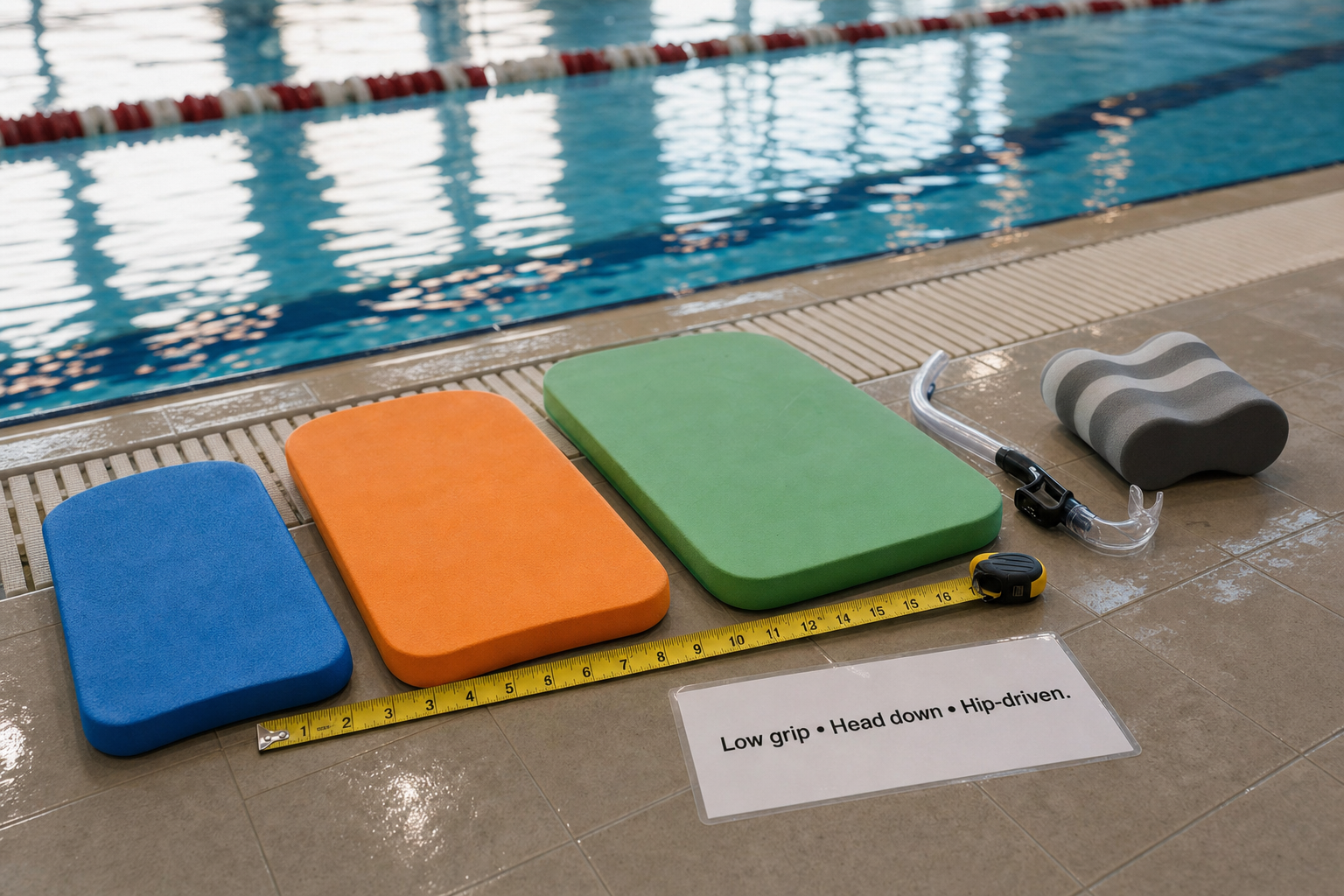
When shopping for a kickboard for a 6 year old, the priority should be finding one that supports a hip-driven kick, promotes a strong body line, but doesn’t become a crutch. Let’s dive into pick the right board, how best to hold it, and when to leave it behind in favour of side-kick or streamline kicking.
Choosing the Right Board Size & Type
Your child’s growth spurt or skill level should guide your choice of kickboard size. For most kids ages 5-12, a board between about 12 to 16 inches wide is ideal. It should be small enough that when they stretch their arms out holding the top edges, the far end of the board lands between their elbows and underarms. This helps avoid the pitfalls of boards that are too wide or too buoyant, which tend to lift the chest up and force hips downward. A classic rectangular kickboard is most stable for beginners, while contoured or ergonomic boards—with hand grooves or chin support—work better for older or more confident swimmers. (swimoutlet.com)
Material matters too. Closed-cell EVA foam is safest: it’s light, doesn’t soak up water, and won’t degrade quickly in chlorinated pools. Avoid soft foams that flex too much—those make it harder to keep a stable body line. (sportssurge.alibaba.com)
If your child is just starting lessons, go for a traditional rectangular board. As they improve, move toward alignment or streamline boards that offer less buoyancy. These help the body stay flatter and prepare them for more advanced kicking drills. (traindaly.com)
Holding the Kickboard: Low Grip & Hip-Driven Kick
To get real propulsion rather than just splashing, your child needs to hold the board correctly and kick from the right place. First, teach them to grip low on the top edge of the board. Gripping too high or squeezing it too tightly leads to tension in the arms and shoulders. The board should support the chest lightly without dragging the hips down. (traindaly.com)
Head position plays a big role. When the head is lifted to see forward, the hips drop—creating drag and hurting propulsion. Encourage your child to tuck their chin slightly, look down, and breathe using their side. If needed, use a snorkel for practice to reduce head rotation. (usms.org)
The kick itself should come from the hips. Knees bend only slightly; ankles stay relaxed to let the feet move like little paddles. Strong hip kicks also help rotate the body slightly—this rotation adds torque and makes each kick more useful. (cd2.usms.org)
Transitioning Out of Kickboard Use
At around ages 7-9 or when your child can hold a flat, stable glide and execute side-kick drills, it’s time to introduce streamline kicking and side-kick (freestyle side position) drills. These help them maintain body alignment, improve breathing mechanics, and avoid becoming overly dependent on kickboards. (icanswimfast.com)
[[ctakid]]
You might also use the “10-Week Plan” from swimy.org to guide this process gradually: build up board work, then alternate board with side-kick sessions, finally shift toward full strokes with streamline legs. (That’s the swimy.org/10-week-plan approach.) This ensures technique carries over into actual swimming without creating habits like rushing to grip the kickboard too high. (parentingmentor.com)
Best Time to Skip the Board: Side-Kick & Streamline Kicking
Streamline kicking (arms overhead, body long) and side-kick drills (lying on one side, one arm extended) are excellent progressions. They teach kids to keep hips and legs high, alignment flat, head down—miimizing drag while maximizing propulsion. Side-kick freestyle drill helps with breathing and rotation. Keeping body line in the side position, head down, and one eye just over the water when breathing makes all the difference. (support.formswim.com)
Streamline kick off the wall or in vertical kicking sessions helps reinforce proper kicking mechanics without the board. These drills should be short—say 10-25 yards/metres—and always supervised. Kids aged 5-12 should never endure long sets that fatigue the back or strain the neck. When you notice their back arching or a repetitive head lift, stop and return to basics. (usms.org)
Safety & Common Pitfalls to Watch For
Watch for overuse of kickboards. Endless board kicking can lead to an arched lower back or neck strain. Short, focused sets—5-10 minutes, mixed with drills—are much safer and more effective. Rest between sets matters: fatigue ruins technique. (usms.org)
Ensure grip is low—hands at top edge, not over the board’s front or sides. Holding high pushes shoulders up, drops hips down, often causing kids to lift their head to compensate. Teach kids to look down, keep chin close to water, breathe sidelong. (usms.org)
Another pitfall is letting the feet or ankles break surface too often. Feet must stay just under water, toes pointed backward, ankles relaxed. If feet pop up, it means the kick is coming from knees, not hips. Correct that before advancing to streamline or side-kick. (cd2.usms.org)
Summary: Best Practices for Ages 5-12
For the best kickboard for a 6 year old, choose one that is sized to their body (board end between elbow and underarm), lightweight foam, stable, rectangular early on. Teach low grips, head down, kicks that start at hips. As soon as body line and kicking feel stable, introduce side-kick drills and streamline kicking. Always keep sessions short, mix in drills, watch form—not just distance.
With the right board and technique, they’ll build real propulsion, a cleaner body line, effective breathing, and avoid the crutch that’s just splashing.
120+ swimming exercises sorted by age — with video and instructions. Developed by swim instructors, completely free.

120+ swimming exercises sorted by age — with video and instructions. Developed by swim instructors, completely free.