Pool Songs That Teach Baby Swim Safety Skills
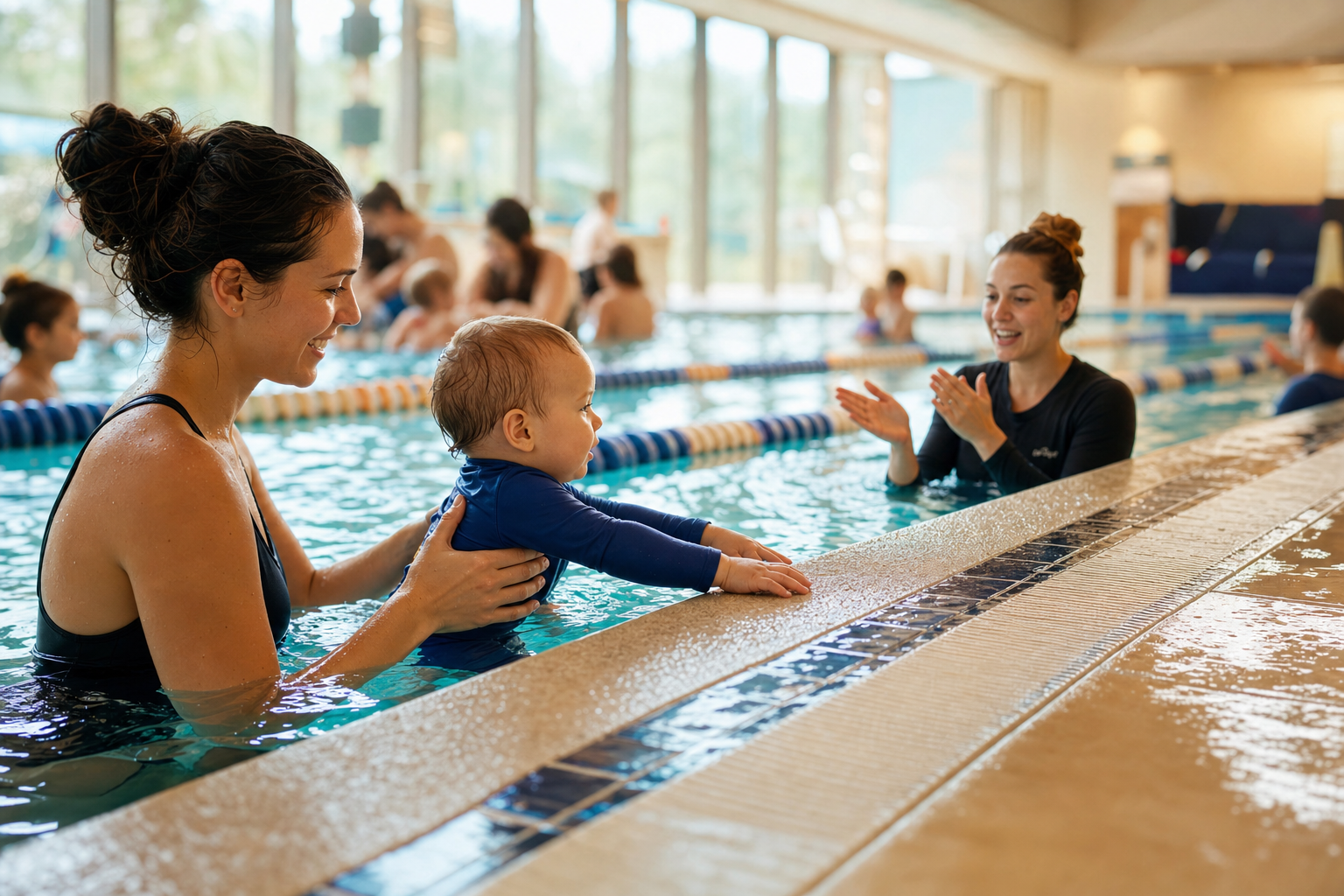
Want swim time to be more than splashes and giggles? You can turn well-known baby swim songs into cues for stopping, waiting, kicking, reaching, and returning to the wall. These cues help build safety habits for babies aged 6-36 months and give parents a tool to guide their little ones through water learning.
Using Song Cues for Pool Safety
To teach “stop” or “wait,” pick a familiar melody and change the lyrics so the signal is clear. For instance, use “If You’re Happy and You Know It” and replace “clap your hands” with “stop and wait.” Sing it with a pause, hold baby safely and let them feel the cue before moving on. This helps babies begin to understand that “stop” means pause until you, the adult, give the next cue. As babies move into toddlerhood, these repetition-based songs help deep internalization of safety habits.
When teaching “kick,” select songs with strong beat and simple patterns like the common tune of “Row, Row, Row Your Boat.” Adapt it to “Kick, kick, kick your feet in the water.” This teaches rhythm and leg movement together. Linking kicking with predictable rhythm improves coordination and makes toddlers excited to kick. Many swim schools use songs in parent-and-baby classes specifically to build kicking, floating, reaching, and returning posture through repetition and rhythm. For example, Little Whales Swim School uses songs and games to help babies learn back floats and grabbing the pool wall after submersion with support. (littlewhaleswim.com)
Choosing Songs That Teach “Returning to the Wall”
Returning to the wall is a crucial skill. It means if a baby drifts off (or falls in), they know how to go toward safety. Pick songs with lyrics like “swim to the wall” or create adapted versions of “Wheels on the Bus” or “Little Star” so that verses guide children to reach out, kick, then return to the edge. Some programs ask parents to use versions of “Wheels on the Bus” but with “The Babies in the Pool,” adding verses that say “Reach, reach to pool edge” or “Return back to wall.” (swimprofessor.com)
Putting It All Together: A 10-Week Plan
Many parents struggle with knowing how to structure lessons. One model that works includes a multi-week routine and gradually builds the cues. Swim schools often use something like the 10-Week Plan from swimy.org for structuring skills with songs. It gives you a roadmap: week 1, get comfort in water; week 2, introduce waiting cues; week 3-4, practice kicking and reaching; later weeks teach returning to wall and floating. Use the same songs weekly so babies and toddlers hear cues often enough to recognize them. This repetition is essential for building water habits.
If you want a structured way to build water confidence at home, the 10-Week Plan guides you step by step.
[[ctababy]]
Stretch sessions by pairing songs with skills. For example, start each class with a “hello” song that teaches waiting; mid-lesson add a kick song; then a float-back song; end with returning to the wall through song. Parent-and-baby swim programs like Carlile Swim in Australia integrate songs and games so youngest children practise floating, breath control and turn-around movements that lead back to the wall. (carlile.com.au) Aqua Babies programs similarly repeat core safety skills weekly, using songs to reinforce kicking, reach and return. (littlefinsswimschool.com)
What to Avoid and Safety Caveats
These songs are teaching aids, not safety systems. Always keep hands on baby, never let them hang unsupported. Stop if they show fatigue or get cold. Do not use songs that invite jumping in or submersion before the child understands waiting for an adult-led cue, especially under 18 months. Submersion cues must always be gentle, brief, and always with adult consent and support. Programs like McDonald Swim School start early movement, floats and safe wall returns before introducing more advanced skills. (mcdonaldswimschool.com)
Watch for over-stimulation. Song tempo should be moderate (around 90-110 BPM for toddlers and slower for infants), and repeat songs with purpose—not endlessly. Use songs the child already knows so learning is scaffolded. Verbal signals paired with consistent rhythm help children (especially under 24 months) match movement to words before achieving “waiting” or “stop” as real behavioural control. Lessons are more effective if parents sing these songs at bath time too.
Making It Work at Home
Practice during regular routines. Bath time is great: sing a “reach” song when they stretch to toys, or a “stop” song before grabbing water. Use hand motions, facial expressions, and touch cues consistently each time you sing. Record your favourite songs or write printed lyric-actions so parents can practice outside class. Warm-up your voice so singing is calm not rushed—this sets tone for waiting cues. Most parent-and-baby swim classes encourage parents to bring favourite songs so child hears them in both class and home. Schools like Prepare2Swim or Aqua Babies reinforce skills learned in pool with at-home practice. (ocaquatics.com)
Baby swim songs and parent-and-baby swim games become powerful tools for teaching safety when used with intention. When you turn a nursery rhyme into a signal for waiting, kicking, or returning to the wall, you shape real water habits. Sing often, keep cues clear, and always stay safe first. Your little one will learn to move in water with predictability, trust, and joy.
120+ swimming exercises sorted by age — with video and instructions. Developed by swim instructors, completely free.

120+ swimming exercises sorted by age — with video and instructions. Developed by swim instructors, completely free.