Should Babies Go Underwater? What Parents Need to Know
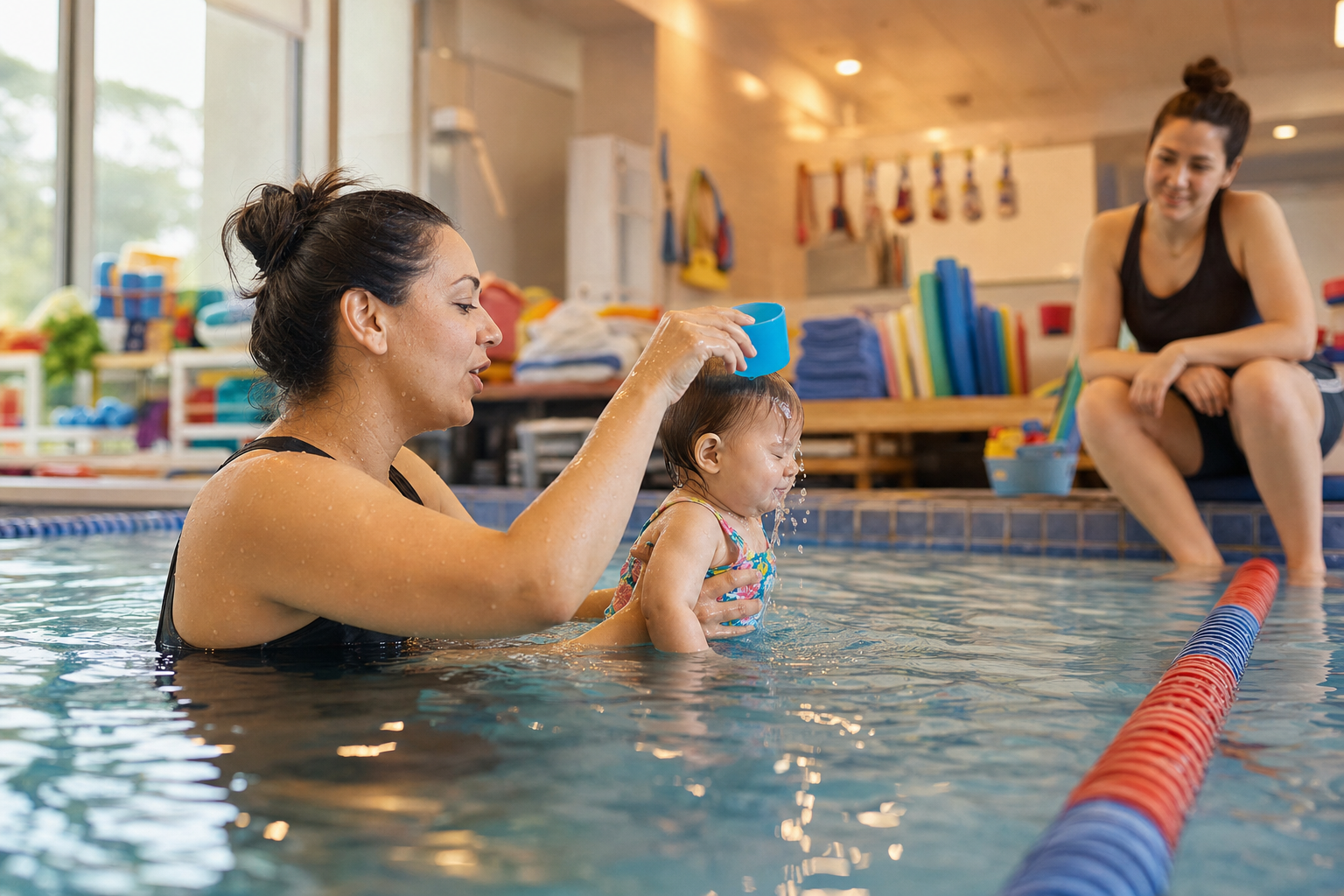
What’s the thing with the breath-holding reflex?
Babies are born with something called the mammalian diving reflex. When their face or nose touches cool water or gets wet, their windpipe temporarily closes, their heart rate slows, and blood flow shifts toward vital organs like the brain and heart. This reflex makes it look like they are holding their breath underwater. It’s strongest in the first few months, stays pretty prevalent through 6 to 12 months, but it begins to fade as they grow.(ncbi.nlm.nih.gov)
Some parents assume this reflex means infants can swim or self-rescue, but it doesn’t. It is involuntary, temporary, and can’t replace actual skills. Relying on it is risky—babies don’t control it and may gasp, inhale water, swallow it, or cough when startled.(biologyinsights.com)
Why forced dunking is risky and absolutely unnecessary
For babies under 12 months especially, forced submersion or repeated dunking isn’t safe. Their neck muscles are weak, body heat is easily lost, immune systems are immature, and reflexes like goggles keeping water out or holding breath are not guaranteed to protect them. The American Academy of Pediatrics (AAP) specifically says swim lessons for children under 1 year do not have evidence of reducing drowning risk. It stresses that for infants and toddlers, adult touch supervision and safe water environments matter more.(healthychildren.org)
Forced dunking can cause fear, distress, and potential inhalation of water—leading to coughing, gagging, fatigue, or worse. Also, over-triggering the diving reflex puts extra strain on the baby’s heart and breathing pattern. It’s a primitive survival mechanism, not a swim skill.(elternundbaby.com)
Gentle cueing: face splashes, consent-based signals, and readiness
A gentler, safer approach works much better. Before attempting any underwater exposure, use calm, predictable cues. For example: clean water over the eyes with “ready, eyes wet!”, or blowing air over the face gently while saying “ready, splash.” Let the baby close their eyes, hold their breath reflexively, or lean back when they expect the splash. That way they start to feel in control.(kidsinthehouse.com)
If you want a structured way to build water confidence at home, the 10-Week Plan guides you step by step.
You can also try the 10-Week Plan offered by swimy.org, which builds gradual water comfort, face wetting, supported floating, playful water access, and only occasional shallow submersions once the baby shows signs of readiness. The 10-Week Plan helps prioritize consent-based signals over forced or routine dunking.
[[ctababy]]
Watch for signs your child is ready: steady head control (holding their head upright without wobble); showing interest in the water (touching, looking at the water, wanting to splash); not panicking with gentle splashes; able to close eyes or turn head away from face wetting.
Where age matters: special caution under 12 months
Babies under 12 months have extra vulnerability. That diving reflex is strongest and most reliable early on, but the flip side is basic body regulation is still immature. They lose heat fast, they can’t yet push themselves out of dangerous situations, and their gag reflexes are strong—sometimes triggering inhalation or panic when water unexpectedly enters the mouth or nose.
For babies under 6 months, most experts recommend avoiding public pools, keeping water warm (around high 80s°F), keeping sessions super short, and never putting their faces underwater or forcing any dunking. The AAP does not recommend formal swim lessons before 12 months for drowning prevention. Informal water play with parents, yes—sessions aimed at submersion or underwater swimming, no.(boystownpediatrics.org)
When to stop: signals and safety caveats
If your baby begins coughing, gagging, turning blue, crying uncontrollably, or seems fatigued, stop immediately. Forced submersion or dunking that stress triggers these signs means water exposure needs to go back to gentler splash-only activities.
Avoid repeated dunking in one session. Never force facial wetting or submersion. For babies under 12 months, limit sessions to short bursts (10-20 minutes), keep water warm, ensure you support head and neck fully. Use proper floatation or close, arm’s-length touch supervision always.(boystownpediatrics.org)
What parents often miss: reflex ≠ skill
One of the biggest pitfalls is assuming because a reflex exists, a baby "can swim" or is safe alone in water. That’s not true. Reflexes don’t mean voluntary breath control, coordinated limbs, or awareness of danger. They don’t ensure self-rescue. Safety is a layered thing: supervision, barriers (pool fences, covers), life jackets, teaching skills when age-appropriate, and listening to your child’s cues.
Bottom line
Can babies go underwater? Maybe—if they show readiness, are older than about 6 months, are in very safe, gently done settings, and only with minimal, consent-based exposure. Essential is knowing the breath holding reflex exists but doesn’t make babies safe in the water. Never force dunking, stop with any signs of distress, and use readiness signals and gentle cues. When in doubt, wait, focus on water play, bonding, comfort, and safety until baby is developmentally ready. If considering lessons, consult your pediatrician and choose programs that respect your baby's limits and readiness.
120+ swimming exercises sorted by age — with video and instructions. Developed by swim instructors, completely free.

120+ swimming exercises sorted by age — with video and instructions. Developed by swim instructors, completely free.