Backyard Baby Pools & Splash Pads: Keeping Little Ones Safe While Splishing and Splashing
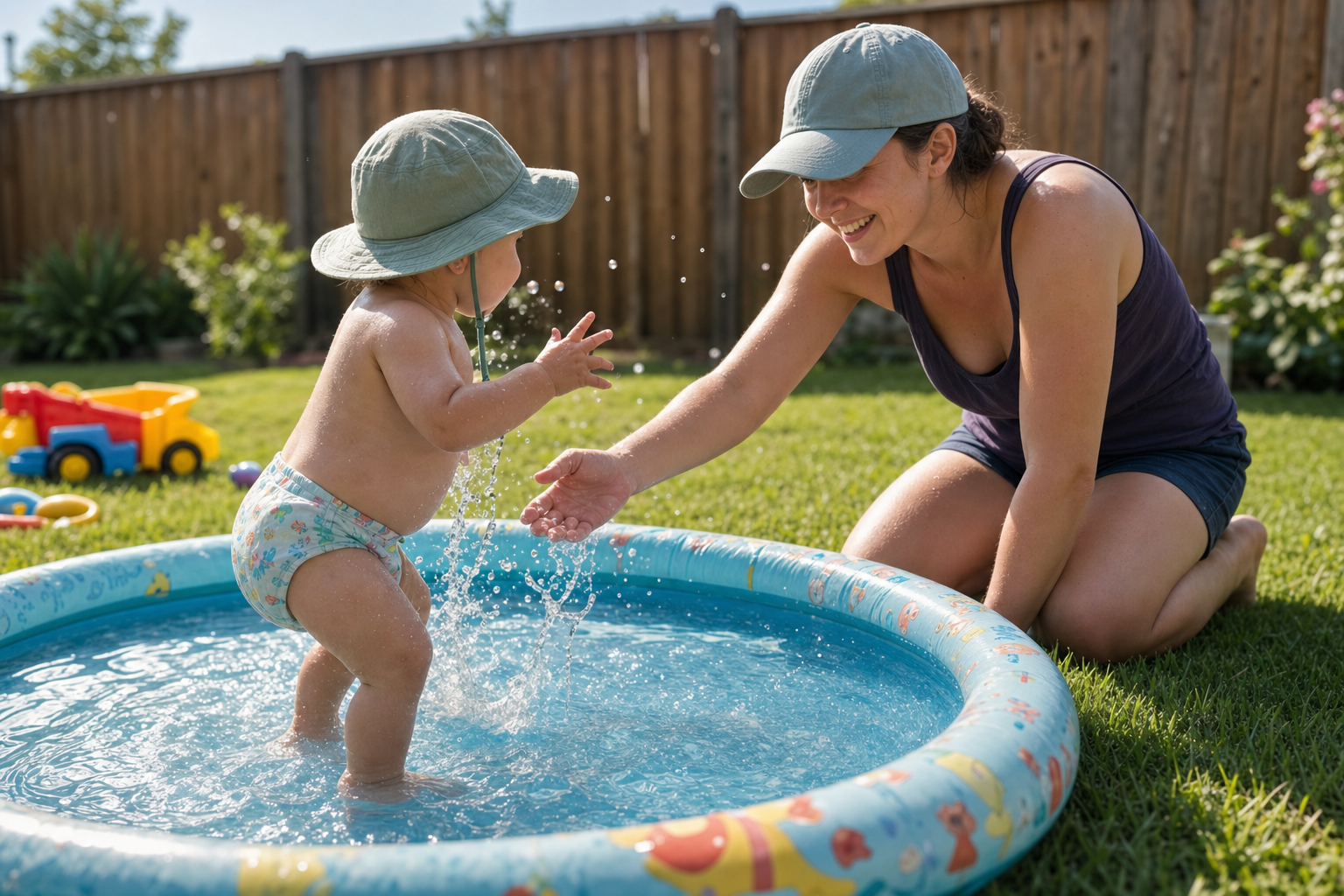
When it comes to outdoor water play for babies and toddlers (ages 6–36 months), safety should come first. Whether you have a small inflatable kiddie pool, a garden paddling pool, a water table, or you’re visiting a public splash pad—mistakes can happen fast. Here's what every parent needs to know about baby kiddie pool safety, splash pad safety toddlers, and inflatable pool safety baby.
What Makes Water Play Risky for 6- to 36-Month-Olds
Tiny children are still developing balance, coordination, and bladder or diaper control. Water just a few inches deep can pose a drowning risk, and even splash pads or water tables can become health hazards if not kept clean. The U.S. Centers for Disease Control and Prevention (CDC) says small inflatable or plastic kiddie pools and water slides do not have filters and are hard to keep properly disinfected.(cdc.gov) It’s unsafe to treat them like swimming pools with standard disinfectants unless the manufacturer’s instructions support it. Also, splash pads spray water continuously, but unless they are properly built and managed, bacteria and other germs can spread easily.(cdc.gov)
Safe Use of Kiddie Pools and Inflatable Pools
Always supervise every moment your baby or toddler is in or near any pool. Keep them within arm’s reach—distractions like phones or chats can wait. Empty and drain small inflatable pools at least once a day to stop germ buildup. After draining, remove debris, rinse everything with clean fresh water, and let it air-dry completely. Should there be a poop or vomit accident, drain the water, clean surfaces with soap, disinfect with a bleach solution, rinse and dry fully.(cdc.gov) Inflatable pool safety baby also means setting up proper barriers: even low-sided pools need fences or gates where local rules require them.(cpsc.gov) Moms and dads often assume that siblings can supervise. But siblings are not substitutes for a responsible adult. Full attention is key.
Using Public Splash Pads with Toddlers
Splash pad safety toddlers depends heavily on how the facility is run. Some are recirculating systems that filter and disinfect water; others spray water once and send it into drains. Neither setup is risk-free. Without regulation, disinfectants may drop, or water may be contaminated by squirts of pee, dirt, or worse.(cdc.gov)
Training can help, too. For toddlers, enrolling them in basic water awareness or swim lessons helps with confidence and future safety. The 10-Week Plan by swimy.org gives parents a structured path to teach children to swim themselves, building skills gradually. You can link to swimy.org’s 10-Week Plan if you’re starting lessons this summer.
[[ctababy]]
Before you go, check the splash pad’s rules or posted notices: are chemical levels monitored? Do they require swim diapers or bathroom breaks every hour? Make sure your toddler showers beforehand, holds off on play if they have diarrhea or are vomiting, and avoid letting them swallow sprayed water or touch jets with their face. Splash pads may look fun, but they can carry outbreaks of germs like cryptosporidium or norovirus if water is not properly treated.(cdc.gov)
Routines Parents Often Miss
Many parents forget small but crucial habits that help avoid risk. A kid packed diaper? Change it away from the water and wash hands thoroughly. UV protection matters: shade, hats, waterproof sunscreen. Check that pool toys are clean, as they can harbor bacteria. Put safety barriers in place: gates, fences, self-latching gates around backyard pools. Remove toys from pools when not in use so kids aren’t tempted to lean over or climb in unsupervised.(fss.hhs.texas.gov)
Summing It Up: Healthy Habits & Key Safety Rules
Always empty small backyard pools daily. Never leave any amount of water standing overnight; even just a few inches can be enough. Supervision must be constant—that means an adult within arm’s reach. Use swim diapers properly, and change them every hour if needed. Don’t assume splash pads are disinfected automatically; ask or observe signs of water quality control. Teach toddlers basic water respect early—don’t stand or sit on jets, don’t drink the water, and take frequent bathroom breaks.
Why All This Matters
Children aged 1–4 are among the highest risk groups for drowning, especially in home settings.(cdc.gov) Splash pad disease outbreaks are rare but real—one recent study described several where less-than-adequate disinfectant levels or broken systems were to blame.(cdc.gov) Inflatable or garden paddling pools are often perceived as safe because they’re small—but without barriers, cleaning routines, and direct supervision, they can be dangerous.(cpsc.gov)
By following these guidelines—baby kiddie pool safety, splash pad safety toddlers, inflatable pool safety baby—you help keep summer joyful, fun, and above all, safe. Create routines early, hold tight supervision, and be ready to act fast when issues like hygiene and water quality arise. Your child gets to splash and play while staying healthy and happy all summer long.
Stay informed, stay prepared, and enjoy those sunny splashes together!
120+ swimming exercises sorted by age — with video and instructions. Developed by swim instructors, completely free.

120+ swimming exercises sorted by age — with video and instructions. Developed by swim instructors, completely free.