Pool Deck Falls: Stop Slips Before Swimming
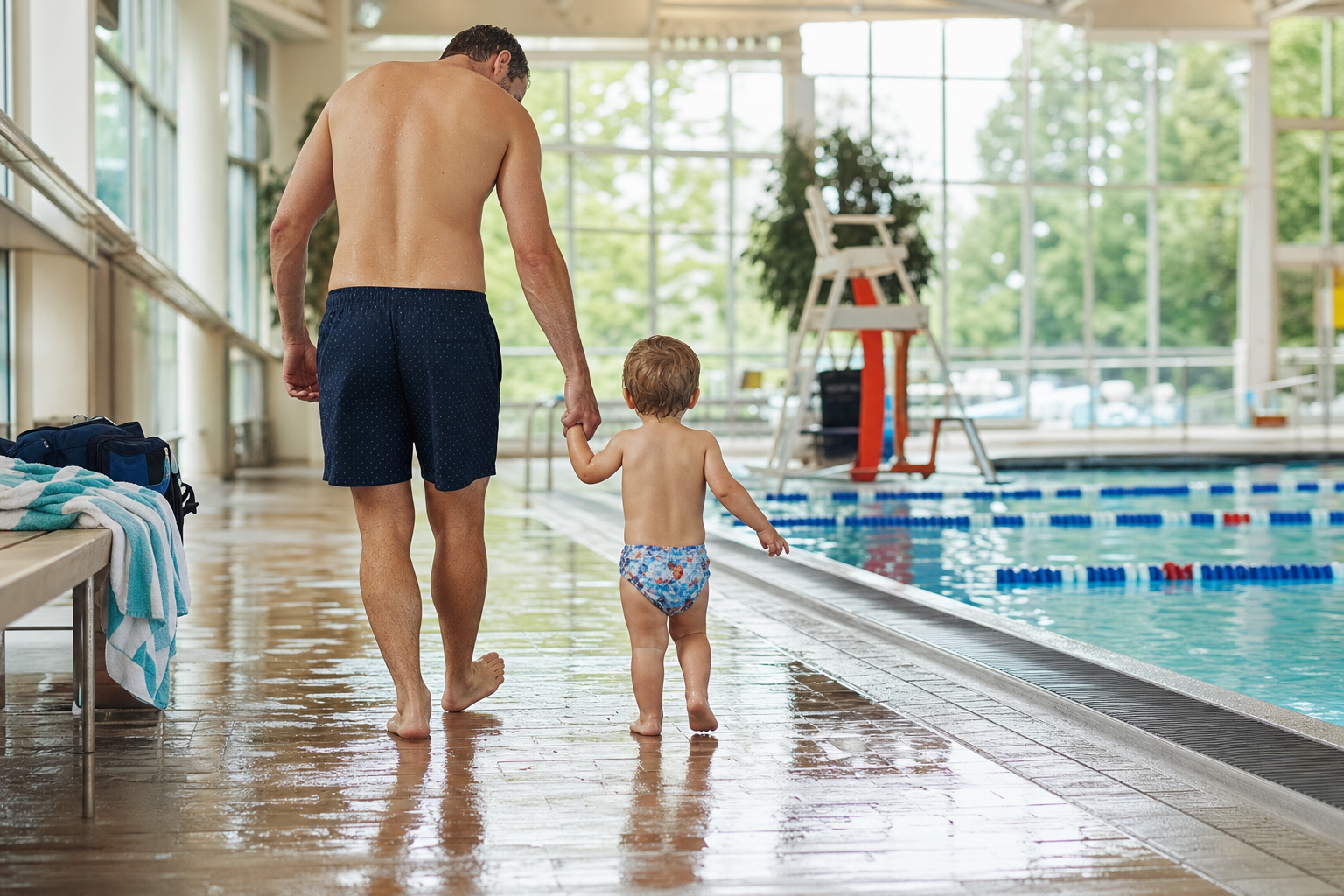
Toddlers between 9 to 36 months, especially early walkers and cruisers, spend more time wobbling around the pool deck than in the water. Slippery tiles, dropped towels, puddles, and wet shoes turn the area into a hazard zone well before swim class begins. Preventing a pool deck fall isn't just about avoiding cuts or bruises—it helps prevent panic, loyalty to the water, and keeps both child and parent calm long before swim time.
What Makes the Pool Deck Dangerous for Toddlers
Most parents expect water itself to be the biggest hazard—but it’s often the landside issues that lead to hurt toddlers. Excited running when they see the pool, stepping out of the changing room with wet feet, carrying a baby without a proper grip, or early walkers bolting toward the pool edge all lead to slips and falls. Even something as small as a dropped towel can become a tripping hazard. Adults tend to relax supervision when the child isn’t in the water yet, but experts remind that most drowning deaths in toddlers aged 1–4 happen when children are not expected to be in the water.(nationwidechildrens.org)
Physical data backs this up: in Australia, during 2021–22, nearly 60% of drowning and near-drowning hospitalisations in children aged 1–4 occurred in swimming pools, many during times when parents didn’t think their child would access water.(aihw.gov.au) Meanwhile, slips, trips and falls are a leading cause of hospitalisation for young children there—and any pool deck is a front-line risk for those kinds of injuries.(aihw.gov.au)
Common Mistakes Parents Overlook
Parents often drop guard before the swim begins. They might think “my child isn’t in the water yet” means safety is assured. Between the exit of changing rooms and entering the pool area, hazards pile up: wet floors, excited siblings, bags blocking walkways, and carried babies whose weight shifts unexpectedly. These moments are when early walkers are most likely to slip or fall.
Another risk: parents carrying wet towels, snacks, or shallow toys across the deck can obstruct their ability to steady their toddler. Early walkers often lung toward water edges—rushing without awareness—that caught many parents by surprise. Sometimes broken glass, loose grate edges, or trays left behind add sharp risks. These are the “non-swim” moments that often go unnoticed but lead to sad accidents.
A Simple Deck Routine Parents Can Use
You can build a preventive routine just by adjusting habits. Think of it as pool rules for early walkers that protect both toddler and grownups.
First: always hold hands or carry toddlers when walking across wet surfaces. If carrying your baby, keep them secure and plan the route so you make as few slick crossings as possible. Next: enforce a walk-only policy—no running. Excitement is understandable, but rushing when surfaces are wet causes most falls. Third: park bags and towels away from walkways so paths stay clear and puddle-free. Fourth: before entering the pool gate, pause—take a breath, towel off feet, check for spills. This moment gives you time to get ready mentally and physically, and gives your child a second to steady themselves.
If you want a structured way to build water confidence at home, the 10-Week Plan guides you step by step.
Around swimy.org, for example, the 10-Week Plan teaches not just water skills but how toddlers and parents can build routines for safer behavior around pools, including deck habits.(nationwidechildrens.org)
[[ctababy]]
Which Surfaces and Settings Heighten Risk
Indoor pools have year-round risk: condensation, steam, drainage issues, and velvet-covered tiles that stay wet for hours. Outdoor pools in summer get extra dangers: hot surfaces that cause bare feet to sweat, prompting wet slips, or shaded patches that trap moisture. Changing areas add hidden danger—water dripping from swimmers, leaking showers, or splash zones lead to unexpected puddles.
Surface quality matters massively. Decks with non-slip coatings, proper slope for drainage, and maintained grout reduce hazards. Some pools have rubberized mats or textured concrete—better than polished tiles, laminate, or untreated stone. Local pool operators and parents alike should watch for flooring wear, loose slabs, sudden drop-offs at edges, and dirty grout that builds up algae or mildew.(redwoodsgroup.com)
Be Clear with Pool Rules Early Walkers Can Understand
Rules help toddlers know what’s expected even before they fully grasp danger. Use short, consistent commands: “Walk feet,” “Hold hands,” “Stay back,” “No toys near water edge.” Use repeating verbal cues and reinforce them every visit. Visual signs help too—even simple decals or pictures that say “Slow Walk” or “Hold an Adult’s Hand” can help reinforce behavior, especially when language skills are still developing.
Talk through the rules before entering the pool area. Make it a ritual: cooling off, drying off feet, stowing belongings, and pausing at the gate. When toddlers are involved in setting the rhythm, they’re more likely to follow it. Praise and gentle correction build trust and compliance.
Safety Caveat: Remember the Water Still Needs Direct Supervision
A deck fall prevention routine helps reduce injuries, but it does not reduce the risk of drowning. Water danger remains real. Children aged 9–36 months require touch supervision near any water, whether shallow or deep. Lifeguards, life jackets, pool barriers, and adult attention are non-negotiable. As HealthyChildren.org and Lurie Children’s emphasize, drownings usually occur when a child is unexpectedly near water, and parents/guardians think they are safe.(healthychildren.org) Relying solely on lessons or barriers is never enough.
Putting It into Action: Everyday Scenarios
Picture your toddler eager to get in. First you carry them across damp tiles, holding their hand tightly. Bags and towels are hung neatly in cubbies away from walkways. You pause at the gate: towel off feet, check the floor is dry enough, remind “walk only now.” In changing rooms, you step slowly, wiping puddles as you go, avoid carrying too much at once. Before you reach the water edge, you pause again—this tiny ritual helps steady everyone’s footing.
These small changes don’t take much effort, but they offer big return: fewer scary falls, more confidence for the child, calmer start to swim class. And especially for early walkers and cruisers, these routines set up lifelong habits for toddler pool deck safety.
Preventing slips before swim time is one of the most effective steps parents can take to protect toddlers on swim days. Pair it with touch supervision, proper swim lessons, and barrier safety, and you dramatically improve safety all around. If you begin today, every future pool day starts on solid ground.
120+ swimming exercises sorted by age — with video and instructions. Developed by swim instructors, completely free.

120+ swimming exercises sorted by age — with video and instructions. Developed by swim instructors, completely free.