How to Make Sure Your Baby’s Swim Instructor Is Certified and Truly Qualified
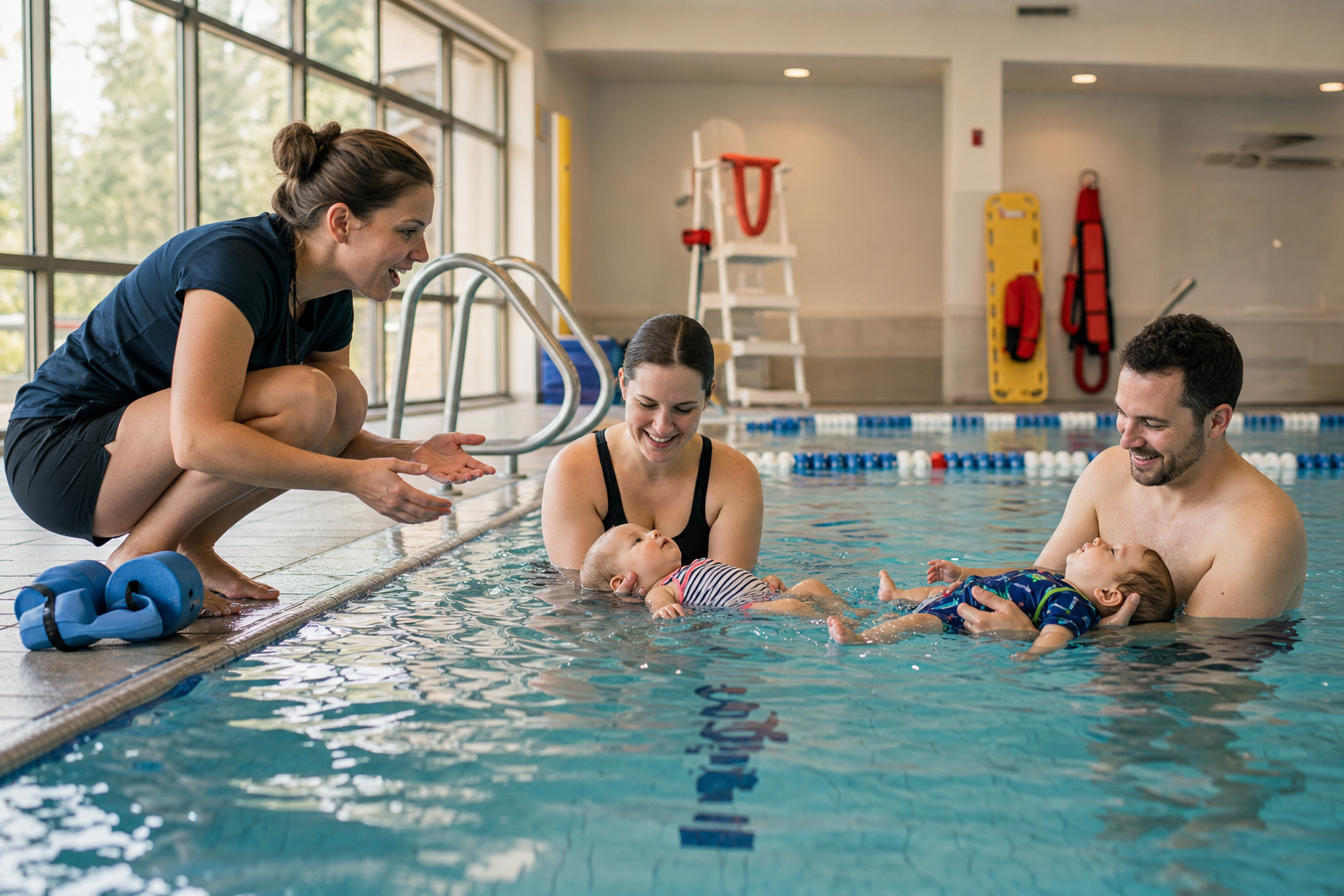
Start here: check for valid credentials, age-appropriate skills, emergency readiness, and real experience. Knowing what questions to ask and what standards to expect makes all the difference when choosing a certified infant swim instructor. Keep reading to equip yourself to compare programs deeply.
What Certifications Really Mean
In the US, the certified infant swim instructor should hold nationally recognized credentials like the American Red Cross Basic Swim Instructor (BSI) or Water Safety Instructor (WSI). These certify they’ve learned how to teach parent-child aquatics, preschool aquatic skills, safety around the water, and survival basics. They also typically include CPR-AED and First Aid training. (redcross.org)
In the UK, look for the SEQ Level 2 in Teaching Swimming credential or the new STA Level 2 Swimming Teacher qualification. These certs are legally regulated, aligned with the professional standard for swimming teachers, and cover baby & pre-school teaching. (healthclubmanagement.co.uk)
When asking “what makes you a qualified infant swim instructor?”, parents should hear references to these established credentials, not vague “water safety expert” labels.
Ask About Infant-Specific Experience
Infants and toddlers (roughly 6-36 months) have very different developmental needs than older children. A genuine infant swim teacher will have experience with classes specially designed for this age, focusing on water comfort, gentle introduction to submersion, breath control, kicking, blowing bubbles, supported floats, and parent-led comfort. YMCA parent-child programs, for example, run classes for ages 6-36 months that emphasize water orientation and building trust between baby and parent through fun games. (ymcatriangle.org)
Programs should be divided by age and developmental stage: like “Water Discovery” for 6-12 months, “Water Exploration” for 12-36 months, and parent-child classes that stay hands-on with adult-led safety. Before enrolling, ask how many years the instructor has worked with babies, if they follow a developmental progression and how much adult participation is required.
Around the middle of your evaluation, you might also explore structured curricula. One example is the 10-Week Plan from swimy.org, which outlines weekly skill progressions and gives parents a roadmap of what the class will teach. This helps you see whether the teacher or swim school has a plan you understand.
If you want a structured way to build water confidence at home, the 10-Week Plan guides you step by step.
Emergency Readiness = Non-Negotiable
Even with a certified infant swim instructor, supervision by parents is essential. Credentials do not replace active watching. But instructor preparation matters: ask if they hold current CPR for infants and children, AED training, First Aid, and whether they’re required to renew those regularly. The Red Cross’s WSI and Basic Swim Instructor courses include Child/Infant CPR and First Aid as part of the standard. (redcross.org)
[[ctababy]]
Also check whether the facility has emergency plans in place: rescue equipment nearby, lifeguards or supervisors on deck, and clean, safe pool water and environment. Inspect the pool temperature, depth, the ratio of children to instructor, and adult-in-water policies.
Developmentally Appropriate Classes for 6-36 Months
At 6 months old, most infants aren’t ready to “swim” independently. Skills should revolve around safety, comfort, bonding through parent involvement, and gentle familiarisation with water. From about 12-18 months, toddlers may begin exploring more independent movement—floating, kicking, getting their face wet with support. Teachers should never promise strokes before readiness. YMCA classes define these early stages carefully: “Water Discovery” focuses on using songs, bubbles, floating, and parent-led support. “Water Exploration” builds upon those, introducing basic skills but still with adult in water. (ymcanyc.org)
Ensure the baby swim teacher qualifications include this age-specific focus. If your child is under 36 months, avoid classes meant for preschoolers or older age groups—they move too fast or assume independence.
Questions to Ask the Swim School or Instructor
What to ask so you compare effectively:
- Can you show me your certificates and training hours in infant aquatic teaching?
- How many classes have you taught for kids under 3? Can I observe one?
- What safety and rescue training do you and your staff have? Is CPR/AED current?
- What is the student-to-instructor ratio? How many adults are in the water, and where?
- What is your curriculum or syllabus? How do you measure progress, and what should I expect weekly or after ten weeks?
Avoid choosing solely by price or date; sometimes the cheapest or closest instructor lacks the specialized skills or safety readiness required.
Real-World Examples That Match the Standards
Many YMCAs in the US offer parent-child swim lessons for ages 6-36 months where parents stay in water with the child, and the classes focus on water comfort, playful entry and exit, attractions like songs, bubbles, and very basic aquatic safety. (grymca.org) In the UK, the Swimming Teachers’ Association and Swim England now require programmes to follow the SEQ Level 2 or STA Level 2 teaching qualifications with clear professional standards, including baby & toddler specialisms. (healthclubmanagement.co.uk)
You’ll feel confident when you see a certified infant swim instructor who brings official qualifications, specific infant experience, strong emergency training, and a class designed for 6-36 months. Remember: credentials don’t replace your supervision, and observing a class matters as much as reading the brochure. With these tools, you’ll ask the right questions, avoid the pricey pitfalls, and choose a swim school that puts safety and development first—your baby will thank you in every splash.
120+ swimming exercises sorted by age — with video and instructions. Developed by swim instructors, completely free.

120+ swimming exercises sorted by age — with video and instructions. Developed by swim instructors, completely free.