Swim Bag Essentials for Lessons (Ages 3–12): A Parent-Proof Checklist
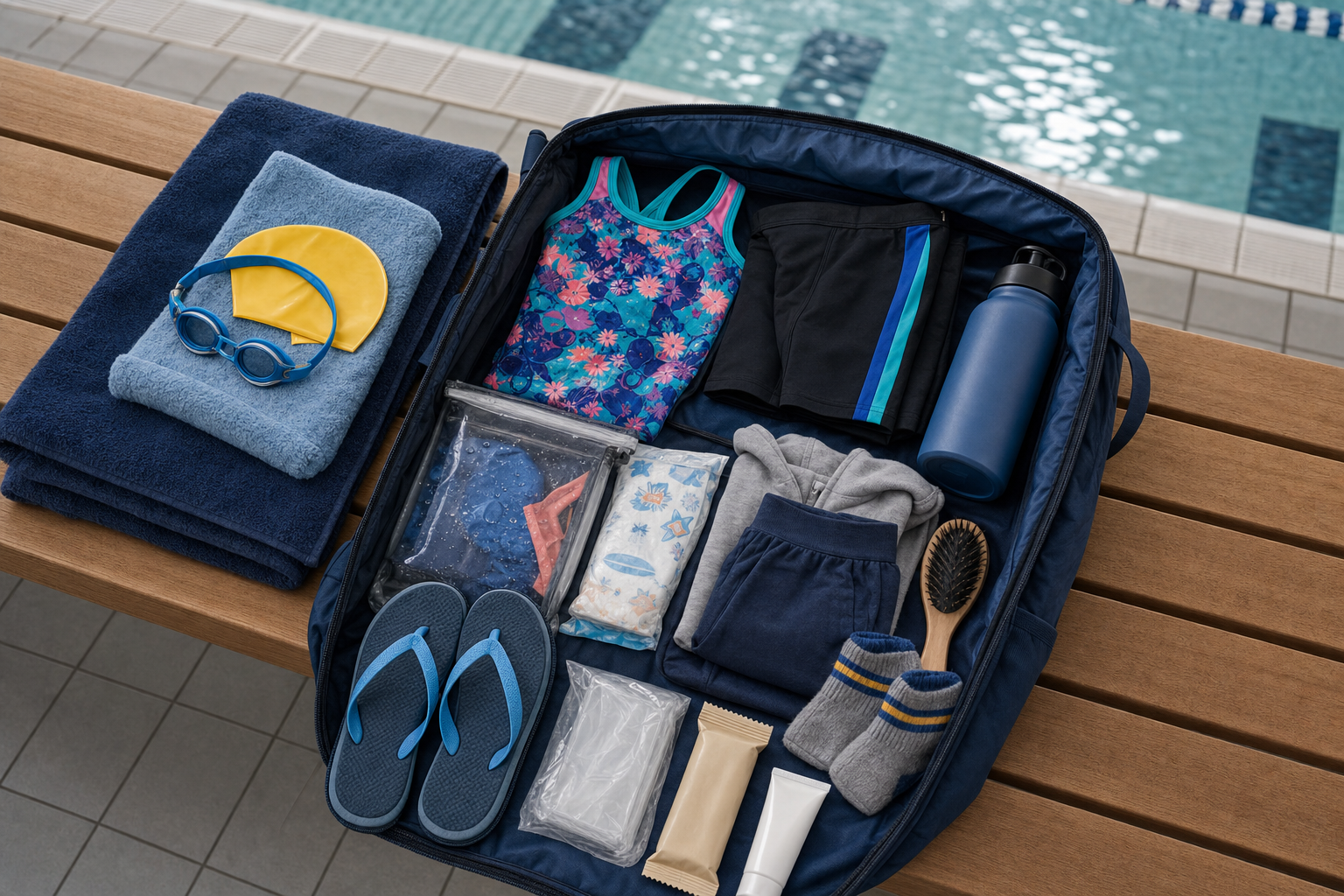
Here’s what you need in your kid’s swim bag on lesson days so there are no last-minute panics. This checklist covers what most YMCA branches expect, plus extras to make lesson days smoother.
What Your Child Absolutely Needs
A properly fitted swimsuit is non-negotiable. YMCA FAQs stress that kids should wear swimwear made specifically for swimming—avoid baggy trunks or anything cotton as they weigh the child down and take ages to dry. If your child isn’t toilet trained, a swim diaper plus tight swim cover or rubber pants are usually required. (mcgawymca.org)
Two towels can save your sanity: one big one for drying off after the lesson, another spare in case the first gets soaked or muddy. YMCA branches also expect parents to bring dry clothes for afterward—clean underwear, shorts, or a hoodie so kids aren’t walking out shivering. (ymcamemphis.org)
Labeled goggles and an extra swim cap are lifesavers. Even if goggles are optional for beginners, many YMCAs encourage them since they reduce chlorine sting and help kids feel more confident putting their faces in the water. Caps are especially helpful for longer hair and for hygiene. Keep a spare cap too—just in case one’s lost or breaks. (mcgawymca.org)
A snack for after class makes a big difference. Swimming burns a lot of energy, and kids often come out starving. Pack something compact and healthy (fruit, crackers, a snack bar) plus water. Make this part of your routine and it becomes expected, not optional. (splashabout.com)
Finally, bring a warm layer for after the lesson. Especially when session starts during cooler months or early mornings, kids need fleece, joggers, warm socks, or just a long-sleeved shirt. Wet swimwear cools them quickly once they’re out of the water. (splashabout.com)
Extras That Prevent Stress
If you want a structured way to help your child progress at home, the 10-Week Plan guides you step by step.
To go beyond the basics and be truly parent-proof: pack a wet bag or plastic bag for wet gear so everything else in the car or home doesn’t smell or drip. Dry underwear as backup never goes amiss. You might also include a toothbrush, hairbrush or comb—especially if it’s a long drive home.
Practice with goggles before lessons: have your child try them in the bath or shallow water first. Getting goggles that fit well (no pinching) and teaching your child how to adjust them can avoid tears during class. Consider bringing two pairs if your child tends to lose them.
If the pool is outdoors, don’t forget sunscreen that’s water-resistant, a hat and possibly a cover-up. Many YMCAs require showering before entering the pool and wearing UV protection when outdoors. (frederickymca.org)
[[ctakid]]
What Local YMCAs Expect
Most YMCA branches list required swim lesson gear in their FAQs. Common Y expectations include a tight-fitting swimsuit, towel, bag for wet items, swim cap for long hair, and optionally goggles. What’s uniform among them is you’ll need clean clothes for after, and often another layer to stay warm. (mcgawymca.org)
For example, the McGaw YMCA emphasizes a properly-fitting swimsuit, towel and a bag for personal items, plus suggesting a swim cap and goggles particularly if hair is long or thick. (mcgawymca.org) The YMCA of South Hampton Roads requires children age three and up to bring a suit, towel, hair tied back, and for non-toilet-trained children a swim diaper and cover. (ymcashr.org)
Bonus Tip: Planning Across a Session
When you enroll in a swim lesson session (often 6-10 weeks at many Ys), you’ll quickly see the same items needed each week. Having a swim bag stocked ahead means you aren’t scrambling each morning. Some parents use guides like the 10-Week Plan from swimy.org to map gear by week—making managing swimsuit, goggles, snacks and clothes predictable. Use that to your advantage.
Also, always aim to arrive early (10-15 minutes) so your child can go to the bathroom, adjust goggles, get settled. Rushing causes stress—for everyone.
Common Pitfalls (and How to Avoid Them)
One leaky goggle can derail swimming time. Always have a backup pair. Try them on ahead of time to find tightness that works.
Forgetting dry clothes or clean underwear is one of the most frequent mistakes at YMCAs—kids exit water wet and chilly and nothing is more heartbreaking than a shivering walk to the car.
Putting off swim cap or hair tie until the last minute means frantic hair fixing before class. Keep a cap or hair tie in the bag so you’re not digging in your purse.
Snacks that are too sugary can cause spikes in energy then crashes. Aim for protein or fiber-rich snacks that sustain.
In short, for ages three to twelve, your swim bag must include two towels, a well-fitting suit, labeled goggles, a spare cap, a solid post-lesson snack, and warm dry clothes. Add wet bags, backup underwear and practice ahead where possible. With this checklist, lesson days will feel less chaotic—and more confident—for you and your child.
120+ swimming exercises sorted by age — with video and instructions. Developed by swim instructors, completely free.

120+ swimming exercises sorted by age — with video and instructions. Developed by swim instructors, completely free.