Training Aids That Help (Not Hinder) Kids’ Swimming Technique
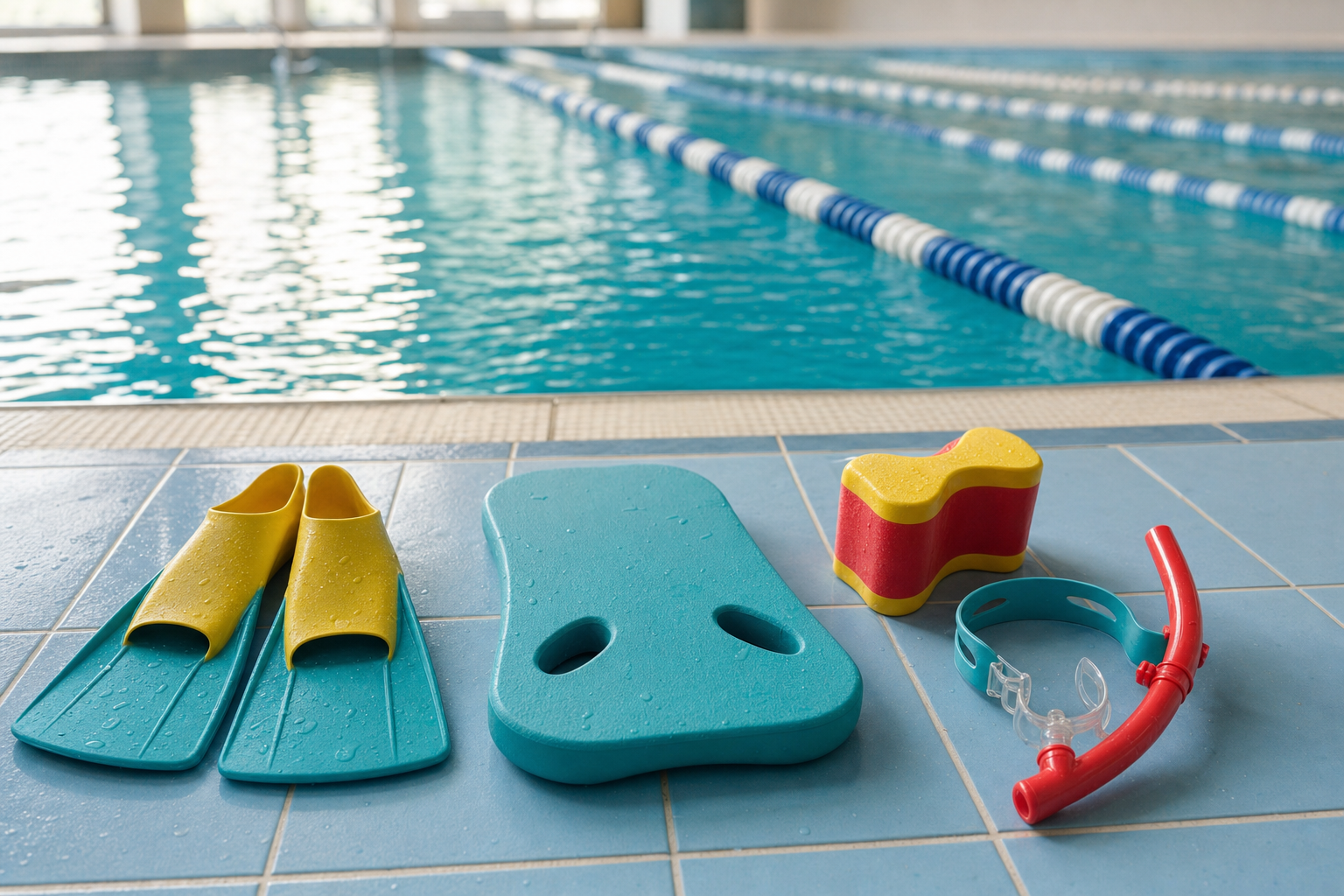
If your 6- to 12-year-old is learning to swim or refining strokes, knowing when and how to introduce training aids like swim fins, kickboards, pull buoys, and snorkels makes all the difference between building strong technique and creating a crutch that masks weak movement. This practical guide delivers key tips you can use right away: which aids to use, at what ages, session ratios, sizing, pitfalls to avoid, and feedback you can give your child to reinforce correct form. Scroll down to learn about the right timing for fins, kickboards vs pull buoys, snorkels, plus the 10-Week Plan for steady progress.
When and How to Introduce Swim Fins
To help children develop a stronger kick and more awareness of body line, fins are excellent—but only when the technique is good enough to carry over. For ages around 7–12, short-blade swim fins are helpful for practicing flutter and dolphin kicks while keeping ankles loose; they speed up movement and exaggerate what the legs should do naturally. According to gear reviews, the FINIS Floating Swim Fins are among the best swim fins for kids, designed to improve kicking fundamentals without overloading young joints. (swimswam.com)
When using fins, limit their use so they don’t hide a weak kick. Try drills or short intervals (for example 25 m) with fins, then remove them and ask: “Can you still kick well without assistance?” If not, include more kickboard or no-aid kick work to strengthen foundational skill. Also be sure the fins fit junior sizing—not adult—so the foot pocket isn’t too loose or restrictive.
Kickboard vs Pull Buoy: Knowing the Difference
Kickboards and pull buoys seem similar but serve very different roles in technique training.
A kickboard helps isolate the legs. When held out in front, the swimmer focuses purely on kick strength and rhythm. But using a kickboard with the head up can drop hips and strain the neck, so it's better (especially for freestyle and backstroke) to keep the face in the water—alternating breathing side to side helps mimic the full stroke. (thesmarterplay.com)
A pull buoy, placed high between the thighs, allows arms-only swimming; this elevates hips and emphasizes the catch-and-pull portion of strokes. Coaches recommend using pull buoy work for about 20-30% of training volume in older kids so you don’t build dependency. Overuse may make your child rely too heavily on floatation rather than developing kick strength and proper balance. (thesmarterplay.com)
Choosing between the two depends on what needs improvement: kick power or arm pull. Ideally include both in your weekly swim mix. What about a “pull-kick” or kick-pull combo device? Adults sometimes use them, but for beginners the lesser buoyancy can make kick work harder than needed, and they offer less isolation. (swimoutlet.com)
Junior Snorkel: When & How to Use It
Using a junior snorkel allows kids aged approximately 6-10 years to swim without rotating the head for breaths, promoting a straight body line and better alignment. The Stability Snorkel Junior by FINIS is designed precisely for that age group. It has a shorter tube, softer mouthpiece, and removes the distraction of breathing mechanics so kids can feel their body position without turning the head. (finisswim.com)
If you want a structured path, the 10-Week Plan from swimy.org gives a week-by-week framework parents can use to introduce swim aids in a balanced way, monitor progress, and avoid dependency. It includes suggested session plans where aids like fins, kickboards, pull buoys, and snorkels are introduced gradually, focusing first on feel for the water and correct alignment, then building strength and finishing with unassisted strokes. You can check out the full plan at https://www.swimy.org/10-week-plan
[[ctakid]]
Snorkel safety: always supervise carefully, use masks and snorkels meant for junior swimmers, avoid longfulness in sessions, and ensure the snorkel is cleared of water properly. Limit snorkel work to shorter laps and primarily during technique-focused drills, not fatigue sets. And mix times: using snorkel less than 25% of session avoids overuse of a device that hides breathing challenges that kids need to master.
Session Ratios, Feedback & Size Guidelines
To avoid creating crutches while using training aids, structure sessions with care. A session for a 6- to 12-year-old might look like this: warm-up unassisted swim (~30%), kickboard or fins (~20%), pull buoy or snorkel drills (~20%), normal stroke work (~30%). The total time with any aid should stay at or below 25% of the overall session, so kids keep building strength and coordination without leaning on devices. Expert guides often recommend similar proportions for pull buoy work—around 20-30%—balanced with regular swim. (thesmarterplay.com)
Feedback to give your child: encourage kick from the hips, not knees; arms should enter cleanly with catch and pull; body should be streamlined, not sagging or twisted. When aids are removed, these skills should still carry over. Measure stroke count and body position in no-aid swimming after aid drills to check transfer.
Sizing matters. Fins need to fit junior feet; pulling on adult size can lead to slipping and injury. Pull buoys should be snug between thighs—too large, and they float too high; too small, and they slip down risking poor alignment. Kickboards should be light enough for kids to manage without collapsing their shoulders. Snorkels need shorter tubes and softer mouthpieces for smaller faces; junior snorkels are built for ages 6-10. (finisswim.com)
Pitfalls to Avoid & Smart Use of Hand Paddles
While the blog angle focuses on fins, kickboards, pull buoys and snorkels, it’s worth briefly touching paddles since many parents ask. Hand paddles create resistance and amplify any flaw in technique, but when used too early, they can lead to shoulder strain or reinforce bad stroke habits. For novices, it's usually best to delay paddles until age 10-12, once the fundamentals of catch, pull, kick are solid.
Paddles should be very slightly larger than the hands and used sparingly: short sets, alternating with regular swimming, and always carefully observed to prevent fatigue-driven breakdown. Always remove them if you see posture collapse or your child tensing up. Better to build skills gradually than risk injury masked by fast paddles.
Putting It All Together: 10-Week Plan Way
Summary & Takeaways
Training aids are powerful when used correctly: introducing swim fins around age 7-10 helps feel and kick rhythm; kickboards are best early for leg work; pull buoys build arm strength but must be used carefully; junior snorkels help with body alignment; paddles delay until technique is strong. Always size aids for kids, limit use in sessions to ≤ 25% overall, give targeted feedback, and watch closely for posture and body line. When aids are removed, kids should swim with the same quality—because that’s the real marker of progress. Use tools to support technique, not hide its weaknesses.
120+ swimming exercises sorted by age — with video and instructions. Developed by swim instructors, completely free.

120+ swimming exercises sorted by age — with video and instructions. Developed by swim instructors, completely free.