Vacation Rental Pool Safety Checklist: What Parents Should Check Before Letting a Baby or Toddler Near the Water
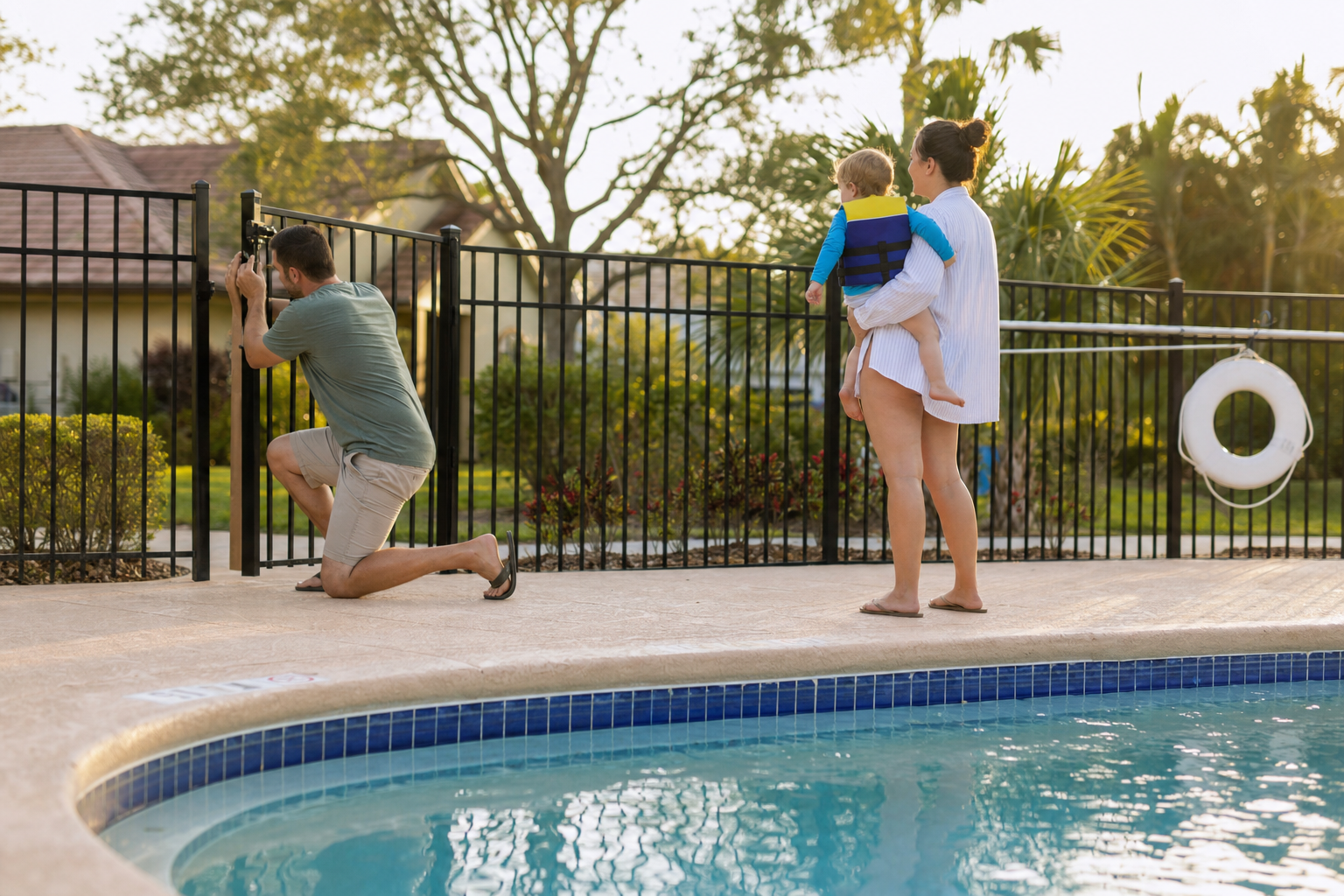
Did you just arrive at your vacation villa or Airbnb and notice that shimmering pool through the sliding doors? Before you unpack or start socializing—especially with a baby or toddler in the mix—it’s crucial to run through a pool safety inspection. Below is a practical checklist that keeps infants and toddlers (0–36 months) safe during Spring Break, summer holidays, Christmas, or any school break.
What Parents Must Check Immediately on Arrival
First thing—don’t assume the pool is as regulated as a hotel’s. Private vacation rentals often miss public-pool safety standards. CDC research emphasizes fencing, controlled access points, alarms, and continuous supervision as essential layers of protection. (cdc.gov)
Gates, Fencing, and Access Control
Inspect whether the pool has a four-sided isolation fence. It should fully separate the pool from the house and yard. The gate must self-close and self-latch, opening outward to prevent toddlers from slipping in unnoticed. Latch height should be well above grip or reach, and there should be no climbable furniture nearby. (cdc.gov)
Check all doors and windows with direct access to the pool area. Are there alarms? Are locks high enough or secured so that a toddler can’t slide the door open? If there’s a pool security cover, verify that it’s built for safety and is consistently used when the pool isn’t being used. (poolguardusa.com)
Pool Equipment and Rescue Tools
Look for a shepherd’s staff / life‐hook, a floatable life ring or throw line, properly marked depth indicators, and emergency numbers posted. Confirm that the drain covers are safe and compliant with standards that reduce entrapment risk. (poolguardusa.com)
Check the deck around the pool: is it slip-resistant, without loose tiles or broken paving? Ladders and steps should be secure, not rusted or wiggly. Make sure lighting is working—especially underwater fixtures and overhead lights—so you’ll not miss anything when dusk sets in. (poolguardusa.com)
If you want a structured way to build water confidence at home, the 10-Week Plan guides you step by step.
Supervision, Adult Shifts, and Rules
One adult should always be within arm’s reach of a baby or toddler in the pool. Distractions like phones, drinks, or chats with friends make timing unpredictable; drowning can happen in just seconds. (cdc.gov)
Set up clear rules before any swim: no roughhousing, no running on wet surfaces, life‐jackets instead of floaties when necessary. Bathing suits should include water shoes if surfaces are rough. Enforce these rules every day of the stay, especially during peak times like summer vacation or holidays. (safekids.org)
[[ctababy]]
Building More Layers of Protection While You Stay
You’ve checked the gates and tools—now add extra safety layers. These aren’t just “nice to have”; they reduce risk when you’re tired or busy while traveling.
Around 30–60 % through your inspection, consider adding longer-term strategies like the 10-Week Plan by swimy.org to enroll babies or toddlers in age-appropriate swim skills. This plan guarantees gradual exposure and skill building over time. (ncbi.nlm.nih.gov)
Keep rescue equipment visible and accessible, and post “No Diving” or “No Running” signage if it’s missing. Remove floating toys when not in use to prevent attraction near the pool edge. Always have basic first‐aid supplies by the pool. CPR training for adults in the household is not optional; it can save precious minutes. (cdc.gov)
Seasonal Considerations: When Pools See Biggest Use
Peak seasons like summer, Spring Break, and Christmas tend to mean more hours near water—and more risk. Weather changes (e.g., more rain making surfaces slippery), longer daylight, and excitement can lead to lapses in supervision.
Make sure gates, drains, equipment, and locks are part of your daily check, especially after storms or heavy pool use. For rentals in the US, UK, or Australia, local regulations might require specific fence heights or signage—don’t assume uniform standards. When traveling, learn those codes, but rely first on your own inspection and judgment. (ncbi.nlm.nih.gov)
Final Steps Before Letting Your Child Swim
Do this checklist before unpacking or relaxing:
- Walk around every entry point to the pool—test doors, windows, gates for latches, alarms, and climbable furniture.
- Locate and inspect rescue tools, depth markers, deck surfaces.
- Assign clear roles for supervision. Pause and double check during shifts of caregivers.
If anything fails the inspection—if a fence latch is loose, a gate doesn’t self-close, rescue gear is missing—don’t let your toddler anywhere near the water until it’s fixed.
By running through this vacation rental pool safety checklist, parents give their baby or toddler the best possible protection—not just hoping everything’s safe, but making it safer. You deserve fun, sunny memories for the holidays without needing to hold your breath.
120+ swimming exercises sorted by age — with video and instructions. Developed by swim instructors, completely free.

120+ swimming exercises sorted by age — with video and instructions. Developed by swim instructors, completely free.