First Swim Team Season: A Low-Stress Parent Playbook
If your school-age child (6 to 12) is gearing up for their first youth swim team, you’re probably wondering what it really takes to get started, how meets work, and how to make sure it’s fun, safe, and realistic. Below is your guide to readiness, essentials, seasons, and smart expectations—so your kid builds skills and absolutely falls in love with swimming.
Readiness: What Kids Should Be Doing Before Joining
Before you sign up, make sure your child can handle basic swim skills. For ages 6 and under, most clubs expect comfort with freestyle and backstroke, and being able to swim one lap (25 yards) without stopping. Children ages 7-8 are often expected to know all four strokes (including breaststroke and butterfly in a basic form), be able to do a turn or two, and begin diving from the pool edge if safe. Knowing backstroke 25 yards, breathing to the side in freestyle, and following coach directions are also key.
Tryouts usually take only 15-30 minutes, enough time for a coach to see what strokes your child can swim, how they handle basic turns, and whether they can sustain a short swim. (dolphinswimteam.org) If you’re aiming for a club or USA Swimming program, you might also see age-group criteria: 6-10 year olds, for example, should often be able to swim 25 yards per stroke, do a flip turn, or show proper starts. (asphaltgreen.org)
Essential Gear and Safety Rules
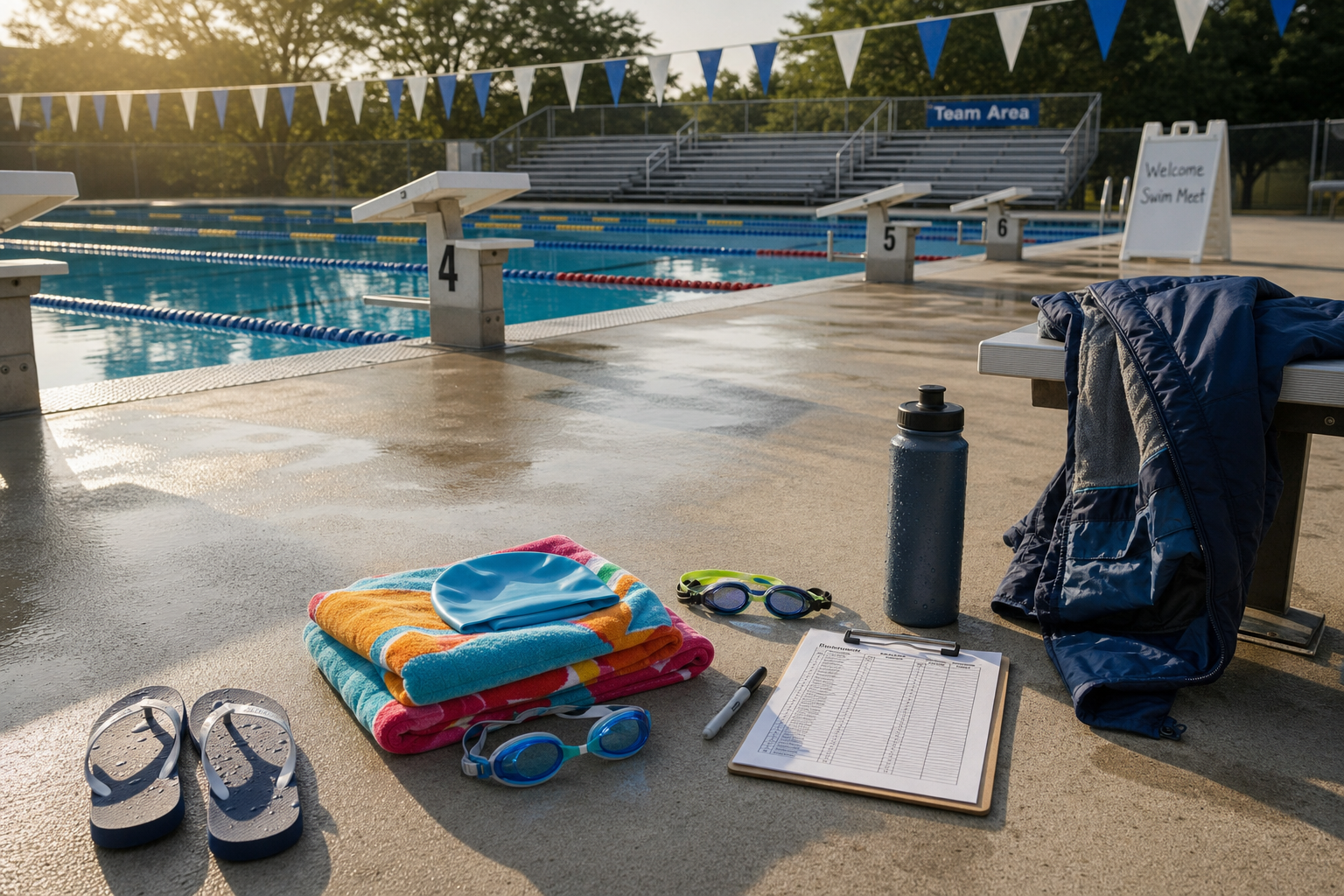
Having the right gear makes all the difference—not just for comfort, but for confidence. Make sure your swimmer has a durable, chlorine-resistant training suit, two pairs of goggles (one backup), a swim cap if their hair is long, and at least two towels—for warm-ups and after races. Bring warm clothing, flip flops or deck shoes, and shade or a parka, depending on whether meets are indoors or outdoors. (swimswam.com)
On safety: always check that the team uses proper lane supervision, meaning coaches or designated staff are present on deck and in the water if needed. For club or USA Swimming-affiliated programs, confirm they follow Safe Sport policies. These are regulations designed to protect athletes from abuse or inappropriate behaviour. USA Swimming’s Safe Sport program is a good standard to ask about. (riptideswimteam.org)
Season Timeline and Time Commitments
Summer swim team sign-ups usually happen between April and July. Summer leagues often run for 5 to 10 weeks, with 3-5 meets scheduled, often one meet per week or every other week. Practices generally happen 3-4 times per week, evening or morning depending on your child’s age and schedule.
If you want a structured way to help your child progress at home, the 10-Week Plan guides you step by step.
For example, a town-pool summer league might expect ages 6-8 to practice around 45 minutes two times a week, while older 9-10 or 11-12 year olds might do 60-75 minute sessions 3-4 days a week. Overcommitting—meaning every day of the week—is a common mistake. Give your child room to rest, enjoy other summer things, and avoid burnout. (bluedolphinsswim.com)
[[ctakid]]
Meet Day Flow: What to Expect and How to Help
Meets often start with warm-ups, which last 20-30 minutes. Kids should arrive early enough to check in with their coach, get settled, and know where their team area is. Bring the pack the night before so nothing essential gets forgotten. Use a Sharpie to write down the event numbers, heats, and lanes on your child’s arm—that helps reduce stress. (swimdeets.com)
The actual races are short for beginners—typically 25-yard freestyle or backstroke, sometimes breaststroke or butterfly. Heats are seeded from slowest to fastest. If your child hasn’t done an event before, it will show as “NT” (no time) and they’ll be in an early heat—perfectly normal. Disqualifications (DQ) might happen as they learn stroke rules; it’s not a failure but a chance for growth. Parents are encouraged to cheer, but leave technique coaching to the coaches. (swimdeets.com)
Tryouts, Placement, and the “10-Week Plan” Approach
Many teams use tryouts to place swimmers in the appropriate group rather than to cut swimmers. For those ages 7-10, you might be asked to swim all strokes, do a turn, show some endurance like a few laps, and demonstrate proper starts. If your child is new, sometimes drop-in summer sessions let you ease in. (dolphinswimteam.org)
To build confidence and skills over a typical season, consider following a structured progression like the “10-Week Plan” offered by swimy.org. This plan combines gradual build-ups in practice frequency, stance with freestyle and backstroke, introduces backstroke starts or flip turns, and plots meet participation so each week has stretch but stays manageable. This helps avoid over-promising results early and protecting against the burnout trap.
Avoiding Pitfalls: Realistic Expectations
Don’t expect instant personal records (PRs) every meet. Early seasons are mostly about technique, experience, and building comfort. Even small improvements in stroke, breathing, turns count. Celebrate best times, but weight improvement lightly against effort and attitude.
Don’t let swim take over every evening. Two to four practices per week are enough for beginners. Too many drills and too much pressure can lead to fatigue, frustration, or quitting altogether.
Don’t forget your role outside the water. Most swim meets require parents to volunteer—timekeeping, marshalling, or staffing event boards. Missed volunteer shifts can hurt the team and your standing. Build those into your own calendar.
Final Thoughts: Ensuring Fun, Skill, and Safety
Youth swim team beginner season should center on enjoyment, safety, and small wins. When your child can swim both freestyle and backstroke across 25 yards, when they feel comfortable racing, when they know there’s support and structure—that’s success. With the right gear, realistic time commitment, safety checks, and understanding that skills take time, you’ll be setting up a foundation for a lifelong love of swimming.
If you've got questions about your local swim league's policies, practice schedule, or meet expectations, reach out to the coach early. They’ll welcome the conversation—and your child will thank you. Happy swim season!
120+ swimming exercises sorted by age — with video and instructions. Developed by swim instructors, completely free.

120+ swimming exercises sorted by age — with video and instructions. Developed by swim instructors, completely free.