Safe Signals for Deaf Babies in Swim Class: Visual & Touch Cues
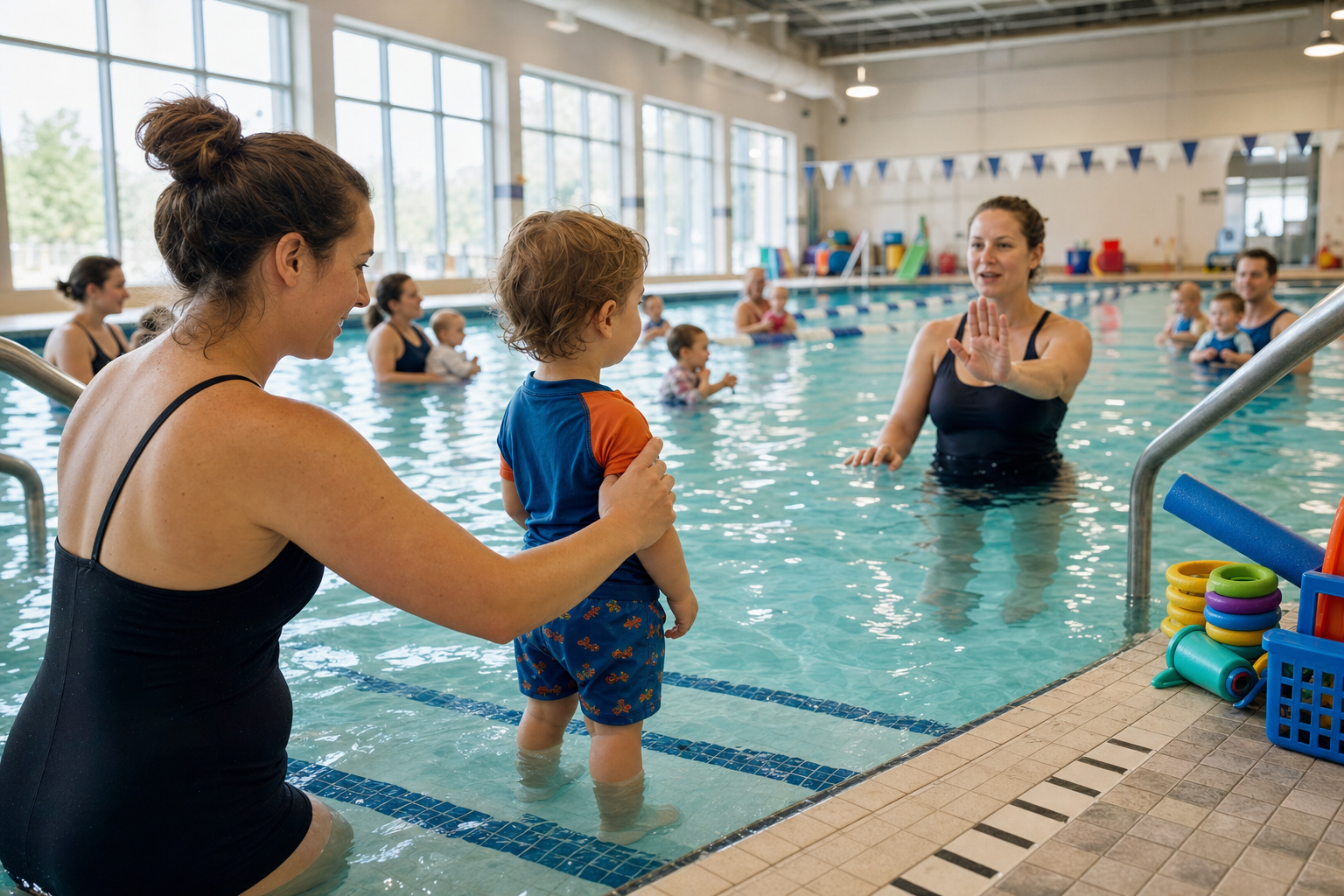
When your 6-36-month-old baby is deaf or hard of hearing, swim class safety depends less on loud verbal cues and more on clear visual and touch-based signals. This ensures they can respond confidently even in an echoey indoor pool where voices get muddled. Below are vital cues like stop, hold, face wet, turn, exit—and how you and the instructor can use them together for a safe, inclusive experience.
Making Core Visual & Touch Signals Work
Stop
Use raised arm (flat palm) held high above water level along with a firm but gentle tap on the child’s shoulder. Before the class, agree with the instructor on exactly how you’ll raise your arm so it’s always visible and consistent. Since shouting “Stop!” may be lost in the ambient noise, turning and using the exact signal becomes the real safety tool.
Hold
To signal “hold” (stay in place, wait), the instructor or parent lightly places one hand on the child’s mid-back or shoulder and shows a flat hand with fingers together held out toward them. This feels safer than trying to rely on speech and reinforces the feeling of grounding during transitions.
Face Wet
Getting a baby’s face wet can provoke panic unless they know what’s coming. Use a visual cue like pointing to the face, a closed fist just below the chin, plus hands cupped and splashing water gently so the child sees water coming. Adding a brief face-touch or blowing light air before the face meets water helps build awareness. Always signal something like “face wet” before submersion.
Turn
When you need the child to turn around or change direction (face the wall, swim toward safety, etc.), use your index finger pointing then rotate your hand in the intended direction. Combine that with body positioning so the child can follow your visual line. If they use sign language, learn their sign for “turn” so that everything stays predictable.
Exit
Exiting the pool safely needs to be unmistakable. Lift both arms overhead in a clap-like motion or wave an object like a small flag. You might accompany it with walking backward toward the pool stairs or wall—so the child sees where to go. Always confirm the cue before they begin to exit so that the path is clear and confident.
Transitioning From Visual Skills to Full Participation
Around 30-60 percent of progress in “baby swim” lessons comes when the child learns to anticipate and respond to these safety signals. Programs like the “10-Week Plan” from swimy.org offer structured support so both parent and instructor can practice cues gradually. At first, you might use cues only around the edge of the pool. Later, as your baby becomes more attuned, combine face wet, hold, turn, stop, and exit into more complex drills—always keeping touch supervision.
Safety Caveats & Instructor Communication
Before the first class, meet with the instructor to settle on the exact versions of each signal. Clarify what “stop” will look like, how “exit” is shown, and how you’ll both use touch. Inclusive aquatic programs should adapt to children’s communication methods—whether signing, gesturing, or visual board aids—and parent involvement should remain central. Even the best signals do not replace “touch supervision,” meaning an adult must always be within arm’s length of deaf toddlers during swim lessons. This is emphasized by child-safety authorities in both the US and UK. (healthychildren.org)
[[ctababy]]
Why Relying on Shouted Instructions Isn’t Enough
Indoor pools are loud. Echoing hard surfaces, overlapping voices, crowd noise can drown out even the clearest speech. Many deaf or hard-of-hearing toddlers lose track when verbal commands are shouted—lip movement becomes distorted, meaning cues are missed. Expert advice from organizations like the National Deaf Children’s Society (UK) warns against shouting and recommends staying visible, using visual signs, signals, and keeping your face fully visible under good lighting. (ndcs.org.uk) Relying on verbal cues alone can lead to confusion or unsafe delays in response.
Tips That Parents Can Use Right Away
Before class, practice the signals at home—on dry ground, then in shallow water. Make it playful so your baby begins to associate a raised hand with stop, pointing for turn, etc. Use mirrors or record yourself so the signals are clear, consistent, and easy for your baby to see.
Bring visual aids—waterproof boards, pictures or symbols for stop, hold, turn, exit—and agree these with the instructor. Even simple pictures can help when the cues need reinforcement during class.
Always let the baby observe a full lesson first or stay poolside on the first few times so they understand the structure. Watching others respond to cues helps build anticipation.
Final Thoughts on Inclusion & Progress
With shared agreement on visual and touch cues, and keeping supervision close, deaf or hard-of-hearing toddlers aged 6-36 months can safely participate in swim lessons. These signals don’t just keep them safe—they help them feel included, confident, and part of the class. When parents and instructors use consistent cues for stop, hold, face wet, turn, exit, each baby learns not because of raised voices, but through trust and clear communication.
Always remember: no signal replaces an attentive adult beside the child. Inclusive swim schools are those that adapt, yes—but also those where you, the parent, are empowered and involved every step of the way. Your voice may not always be heard, but your hands, your gaze, your touch will guide.
120+ swimming exercises sorted by age — with video and instructions. Developed by swim instructors, completely free.

120+ swimming exercises sorted by age — with video and instructions. Developed by swim instructors, completely free.