Ramadan & Swim Lessons: Energy, Hydration, Respectful Scheduling
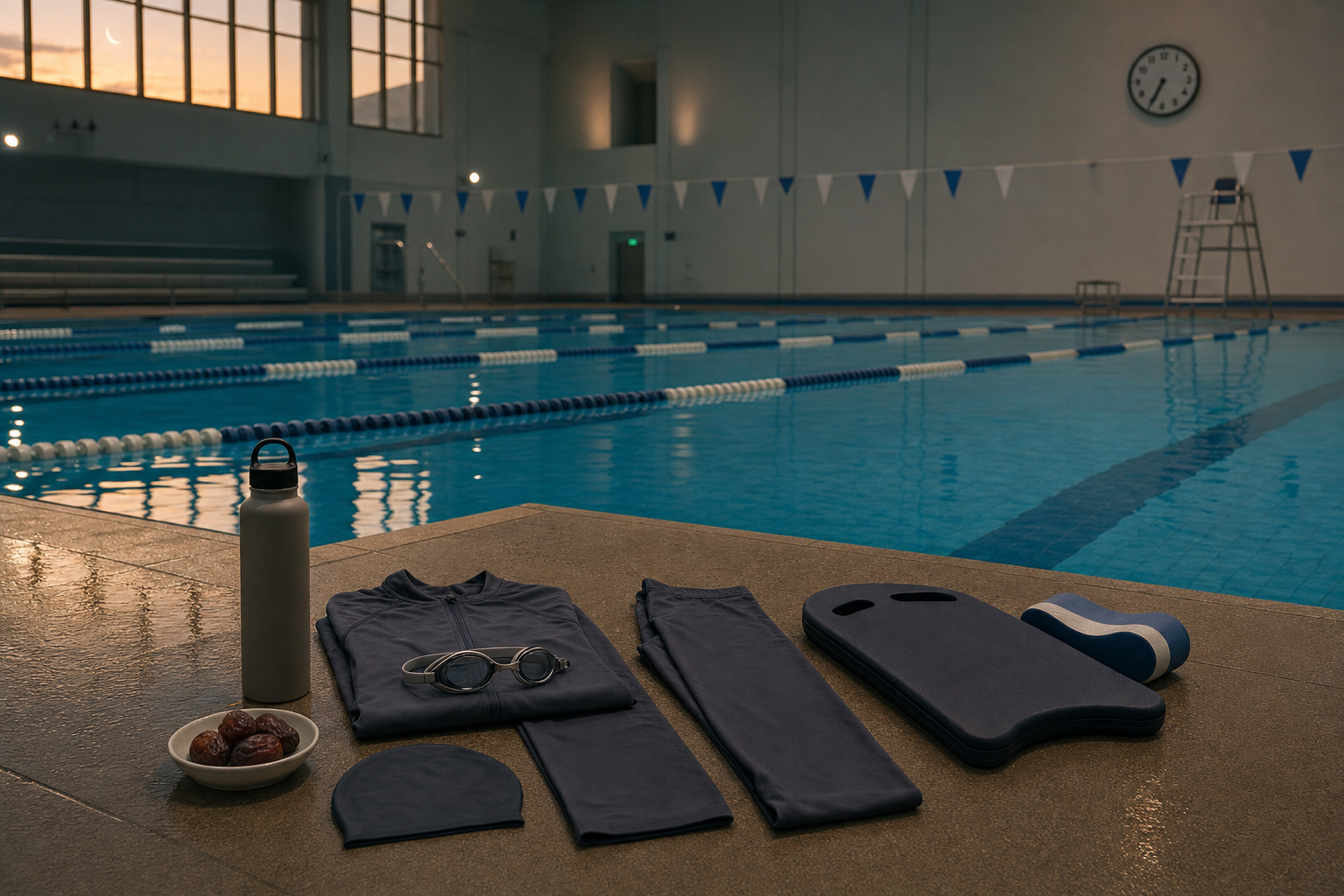
When your child (around ages 8–12) fasts during Ramadan, you don’t have to hit pause on their swim lessons. With thoughtful tweaks, kids can still enjoy water time while keeping safe, hydrated (outside fasting), and comfortable. Let’s tackle your biggest questions first: when to schedule lessons, how to adjust effort, what gear fits both modestly and practically, and how parents and coaches can support fasting families.
When to Plan Swim Lessons: Timing That Respects Fasting
Lessons scheduled mid-day or in late afternoon, especially outdoors, can put fasting kids at risk of dehydration and overheating. Scientific research on 10–11-year-olds fasted for ~14 hours shows that while short bursts like jumps and sprints are mostly okay, endurance tasks suffer, and perceived fatigue rises.(pubmed.ncbi.nlm.nih.gov)
A better plan is to time lessons either just before dawn (suhur) if your pool opens early, or better yet, after sunset (iftar). Evening lessons allow children to eat, hydrate, rest, then swim without risking unsafe fluid loss. If evening slots aren’t possible, aim for early morning or right after school so the body still has some fuel and the sun isn’t baking overhead.
Also speak with the swim school about reduced or flexible scheduling during Ramadan — say, shorter sessions or fewer high-intensity drills. Dropping maximal efforts while fasting means fewer sprints, less time underwater holding breath, and more technique, float, and water safety work.
Adjusting Swim Sets: Lighter Workouts for Fasting Kids
Even when scheduling is kind, what your child does in the pool matters. Heavy, anaerobic work wears them out faster when they’re fasting. Instead of pushing for new personal bests in lap time, replace maximal efforts with low-impact strokes, drills focusing on form, longer rest breaks, and gentle warm-ups.
For example, if a 45-minute lesson usually includes 30 minutes of hard training and 15 minutes rest, reverse that ratio during Ramadan. Let 10 minutes go easy—kids floating, practicing breathing, kicking gently. Then build gradually up to maybe 15 minutes of more effort after iftar when energy returns. I remember coaching my own 10-year-old niece: we swapped sprints for “shadow swimming” (going through strokes slowly) and weighted the lesson toward dry-land moves to reduce exhaustion.
Between fasting windows, after sunset and before pre-dawn, help your child recover: a balanced meal with complex carbs, lean protein, liquids, an electrolyte drink if needed, rest. Sleep counts too — fasting kids may lose sleep staying up later, which adds to fatigue. Ensure enough rest to support swim lesson recovery.
[[ctakid]]
Modest Swimwear That Works and Respects Beliefs
If you want a structured way to help your child progress at home, the 10-Week Plan guides you step by step.
Parents often worry about modest swimwear during lessons. It’s critical to choose gear made for swim environments—not loose street clothes that drag, get heavy, snag, or become transparent when wet. Full-coverage suits, burkinis, rash guards, swim leggings—so long as they are made from swim-safe fabrics like polyester, polyamide, and elastane blends that resist chlorine—can be respectful and practical.(swimy.org)
Swim schools in the US, UK, and Australia increasingly accept modest swimwear policies. For instance, inclusive swimwear guidelines at many YMCAs allow burkinis or outfits with leggings, provided they are designed specifically for swimming, fit well, dry quickly, and do not restrict motion.(gwrymca.org)
Before purchasing, test at home: have your child stretch, kick, move arms overhead while thinking of lessons. If fabric rides up, feels tight when wet, or chafes, it’s probably the wrong cut or material. A child distracted by tugging at their suit won’t focus on floats, breathing, or actually learning.
How Parents and Coaches Can Spot Fatigue & Coordinate Care
Communication between parents, kids, and coaches is key. Before Ramadan, let swim instructors know your child is fasting. Ask for lesson plans that consider lighter load, shorter sessions, or delayed drills involving strength or breath-holding. Even offering to move to a less crowded or shaded pool space helps.
Watch your child closely each lesson: signs like yawning, pale skin, dizziness, stumbling out of water, or slowdown in technique suggest they may be overdoing it. Encourage rest breaks at the wall, seated recovery intervals, and avoid talking your child into pushing through if they clearly can’t.
Hydration strategy: remind children to drink plenty during non-fast hours. Outside fasting windows it’s smart for ages 9–12 to consume substantial fluids: roughly 3–8 ounces every 20 minutes during activity, and balanced fluids earlier in the day.(healthychildren.org) Supplements (like minor electrolytes) are okay only when needed and with healthy meals.
Parents can also support with post-iftar recovery meals rich in carbs (think brown rice, whole-grain bread), protein (chicken, beans), and hydration (water, milk, diluted juice). A cool shower or gentle stretching before bed helps muscles relax and digestion settle.
Putting It All Together: Sample Creation for Ramadan Swim Lessons
Imagine this schedule: lessons from 7–7:30pm, kids break fast at 6:45pm, eat a light iftar, then arrive at pool warmed up. Warm-up includes stretching and brief swim drills; main set is modest in length and intensity — technique with kickboards, floating, breathing drills, and maybe a short effort only if the child feels strong. Cool down with float work and total restoration. (Note: some swim schools share programmes like a 10-Week Plan that adjust lesson length, garment layers, and training load across seasons and could be adapted for Ramadan use. You might explore the 10-Week Plan from swimy.org for ideas.)
Parents check in each weekend: sleep patterns, hydration, appetite — if either is off, lighten upcoming sessions further, perhaps till evenings when the child feels stronger.
Final Thoughts
Ramadan doesn’t have to mean stopping swim lessons. With well-timed sessions, lighter sets, modest swimwear suited for serious swimming, and watchful care from coaches and parents, fasting kids can thrive in the pool. Prevent dehydration or overheating by scheduling smartly and balancing energy. Gear up with fabrics made for water, not for the streets. Tune into your child’s fatigue — both physical and emotional. When all those pieces come together, Ramadan swim lessons can still be safe, respectful, and even deeply rewarding.
120+ swimming exercises sorted by age — with video and instructions. Developed by swim instructors, completely free.

120+ swimming exercises sorted by age — with video and instructions. Developed by swim instructors, completely free.