Baby’s First Open-Water Dip: A Safety-First Guide for Parents
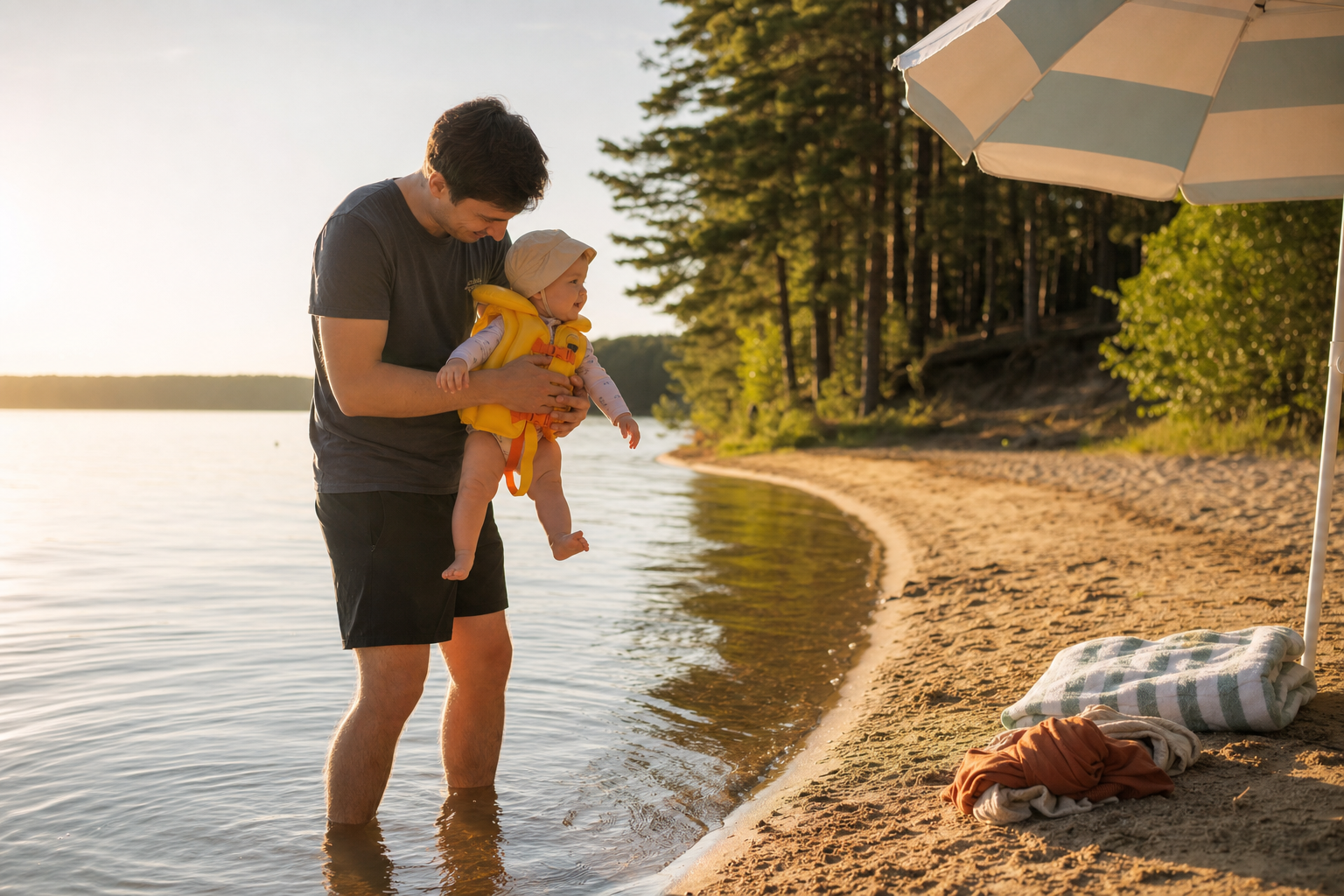
Taking your baby or young toddler (ages 6–36 months) into a lake, river, or sea for that first gentle dip can be magical—soft waves, cool water, new sensations. But open water isn’t a calm, warm pool. To make sure the moment is safe and joyful, knowing how to assess cold, currents, water quality, wind, shade, and exit possibilities is key.
How Cold Is Too Cold?
Even summer natural water can surprise you with its temperature. Babies lose heat far faster than older kids. According to parents’ guides, infants are safest when water is warm—ideally above 89.6°F (32°C)—especially during initial introductions. Outings lasting 10–20 minutes in water cooler than around 87°F (30.5°C) are risky without extra insulation like a wetsuit or thermal swimwear. (waterwisekids.com) Sudden immersion in cold water (under ~15°C or 60°F) can cause cold shock: gasping, rapid breathing, possible spasms—dangerous even in calm water. (rospa.com) Before dipping in, touch the water, test temperate at elbow or chest-level, and plan short sessions to see how your child reacts.
Reading Waves, Currents, and Wind
One moment water may look peaceful; the next, unseen currents could tug at your feet. Waves, especially breaking ones, indicate moving water under the surface. Beaches often have rip currents—fast, narrow flows of water pulling away from shore—which can happen unexpectedly even when it seems calm. (nps.gov) In lakes or rivers, channel currents near inlets or weirs, steep drop-offs, or submerged logs pose risks. Wind can stir up waves or change surface currents in minutes—always arrive early to observe conditions. Stay clear of piers, breakwalls, and river mouths when currents are known to be strong. (weather.gov)
Checking Water Quality & Sun, Shade & Shelter
Clear water doesn’t always mean clean. Natural bodies of water can carry bacteria, parasites, algae blooms, or pollutants. Local environmental agencies often publish lake and river water quality reports—check before going. Tools like lake quality checkers can show bacterial counts, algae levels, and transparency ratings. (lakequality.org) Meanwhile, sun protection matters enormously: babies’ skin burns easily. Choose shaded spots, use protective swimwear and hats, and apply baby-safe sunscreen.
If you want a structured way to build water confidence at home, the 10-Week Plan guides you step by step.
[[ctababy]]
Life Jackets, Supervision & Exit Plans
Open water safety for toddlers isn’t just about being present—it’s about being prepared. Always use a properly fitted, Coast Guard-approved life jacket when near deep or unpredictable water, boating, or waves. Floaties or water wings are comforting toys but not life-saving devices. (cdc.gov) Supervision needs to be “touch supervision”: you should be within arm’s reach whenever your child is in or near water. (answers.childrenshospital.org) Choose an exit plan before entering the water: know where the shore is safe, where there’s a gradual slope, and how slippery or rocky the exit might be. Think about easy wrapping towels, dry clothes, and warm shelter nearby.
Planning Skill-Building or First Swims
For parents eager to move past sensory splashes and help baby build confidence, gradual skill-based approaches are best. Starting with kidney-deep water where baby feels supported, progressing to gentle float, splash, supported submersion, then letting little kicks happen while held. Baby swim schools sometimes use structured programs, but even informal sessions at the lake benefit from parent-led pacing. Note that some classes and programs follow a 10-Week Plan to build familiarity, safety awareness, and comfort—tailored for ages 6–36 months when open water exposure is timed for maximum safety and growth. These programs help parents and toddlers develop trust, balance exposure, and build skills.
Pulling It All Together: Before, During, and After
Before heading out, check forecasts for wind, waves, and weather; talk with local rangers or lifeguards about conditions. During the dip, keep sessions brief—say, 10–15 minutes—depending on water temperature. Constantly observe baby’s lips, hands, feet for signs of cold: shivering, color change, lethargy. Avoid swallowing water and rinse ears and skin clean afterward. Afterward, dry off fast, wrap in warm layers, allow rest in shade, hydrate, and watch for any unusual symptoms.
Children benefit greatly from early gentle sensory exposure: the sound of lapping waves, the feel of sand under tiny toes, the scent of fresh water. Parents often remember their first lake or beach day forever. But keeping that memory safe means respecting the power of nature alongside the curiosity of the little one. With correct equipment, awareness, and a clear exit strategy, baby swimming in lake trips or beach visits can be joyful, healthy, and worry-free.
120+ swimming exercises sorted by age — with video and instructions. Developed by swim instructors, completely free.

120+ swimming exercises sorted by age — with video and instructions. Developed by swim instructors, completely free.