Doctor Questions Around Hip Dysplasia and Baby Swim: A Medically Cautious Checklist
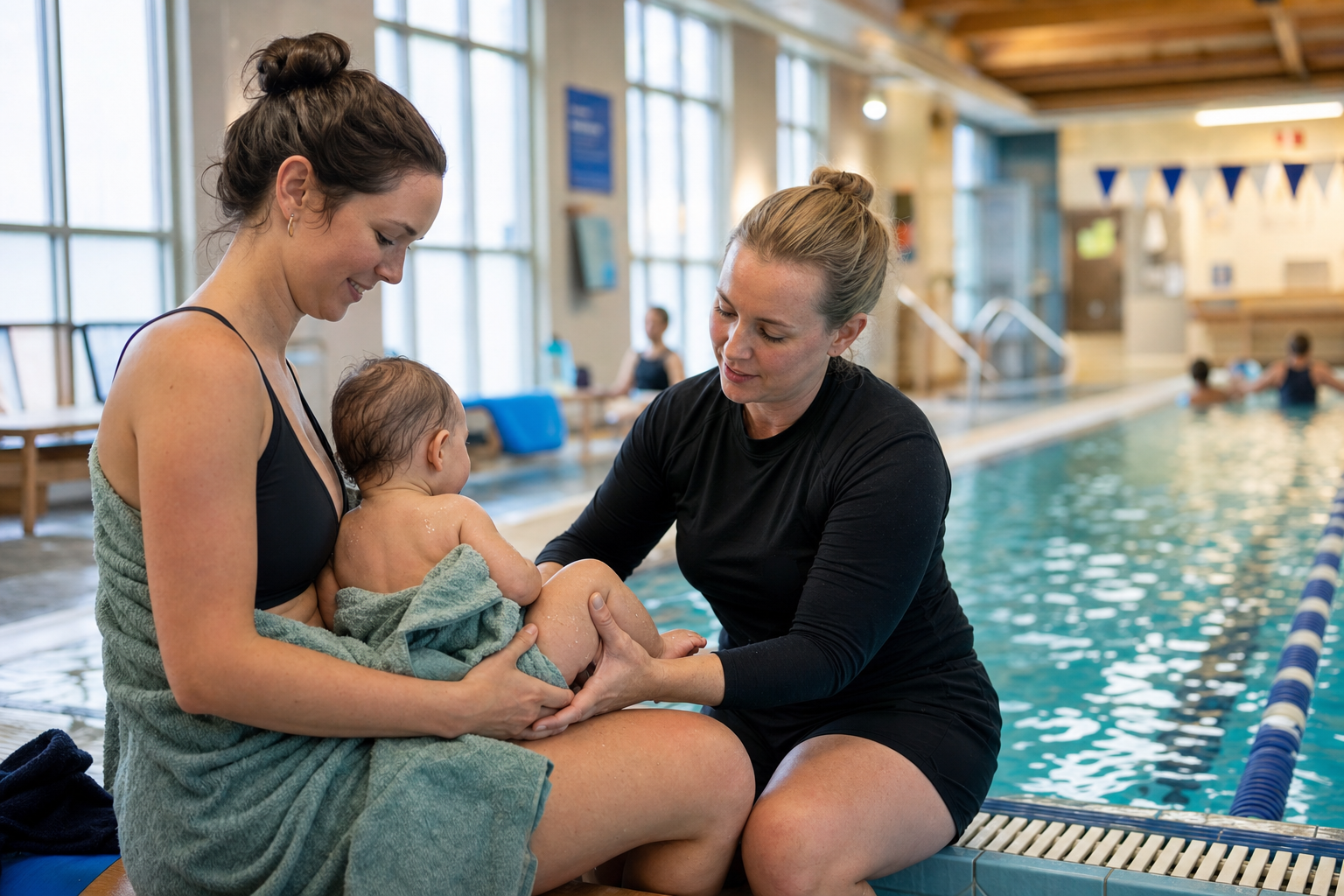
If your baby has developmental hip dysplasia (DDH) or is wearing a Pavlik harness, you probably have urgent questions about swimming, gentle holds, harness wear, and what to avoid. Below is a checklist of questions you should ask your orthopedist—and why they matter—for your baby’s safety, positioning, and recovery.
When is it safe to start pool time?
Ask: “Can my baby swim with hip dysplasia or while still in a Pavlik harness?” In many cases, babies in a harness are advised not to go into the water until your orthopedist gives permission. The Pavlik harness is designed to hold your baby’s hips flexed and abducted—think frog-leg position—which keeps the femoral head pressed into the socket so the hip develops properly. If the harness gets soaked, it can lose its rigidity or rub the skin. Specialist sources like Johns Hopkins explain that harness wear is usually 24/7 for the first 6 to 12 weeks, and removal should only happen under guidance—not based on anecdotes. (hopkinsmedicine.org) Ask if the harness should be removed for swimming or whether only sponge baths are allowed at first.
Harness wear: What to expect and what to avoid
You’ll want to discuss how long the harness must stay on each day, and for how many weeks. Many children wear it full time for 6 to 12 weeks, then progressively part-time under doctor supervision. (dukehealth.org) Also ask: can straps be adjusted at home or only by the orthotist? Tight leg straps, shoulder strap slipping, or narrow-leg holds can pinch nerves, irritate skin, or reduce blood flow. Avoid DIY fixes without guidance. Cleveland Clinic and Duke Health warn parents not to remove or loosen the harness without approval. (hopkinsmedicine.org)
Gentle holds, cuddles, and babywearing: what movements are okay?
Always ask: “What kinds of holding, carrying, or babywearing positions are safe?” The International Hip Dysplasia Institute recommends the “M-position” when holding or babywearing infants—that is, hips spread, knees bent, thighs supported—to help the hip joint stay aligned. (hipdysplasia.org) Narrow “cradle” holds, holding both legs together or straight, can stress the hip. Transition slowly to common postures, especially tummy time or rolling motions, and always ask your orthopedic team for safe modifications.
If you want a structured way to build water confidence at home, the 10-Week Plan guides you step by step.
[[ctababy]]
Reading about the 10-Week Plan from swimy.org, many parents wonder if following a structured swimming program helps accelerate mobility. You might bring this up in your discussion: is part of such a plan safe while wearing a harness? Is the plan adaptable once off harness?
Movements and actions to avoid until cleared
You must ask: “Which movements should I NOT let occur while in treatment?” Don’t force the legs together (“adduction”), avoid tight clothing or carriers that bring knees close or lower than the buttocks, and skip any exercise or anecdotal advice that suggests stretching or pushing beyond mild abduction. Many clinical guidelines (AAOS, AAP) caution strongly against high-risk holds that reverse the frog-leg position. (publications.aap.org)
Swimming styles like kicking or fluttering legs wildly should not be attempted until your orthopedist deems them safe. Do not rely on online stories alone—they are not substitutes for medical clearance.
Questions about pool timing, temperature, and hygiene
You’ll want to ask your orthopedist: when is it okay to get in the water again, and is the harness waterproof or does it need a cover? Also ask about temperature—cooler water may cause shivering and tightening of joints; warm water (around 30–32°C / 86–90°F) is gentler. Check whether chlorine or salt water might irritate harness straps or skin, and what after-swim care is needed to dry thoroughly and protect from infection.
Follow-up care and monitoring
Finally, ask: “How often should we come in for imaging, strap checks, and adjustments?” Experts say regular follow-up visits are essential. Duke Health and other pediatric centers track harness effectiveness using ultrasounds or X-rays until stable alignment is documented. (dukehealth.org) Also ask what to watch for: uneven leg lengths, skin burns, swelling, reduced movement in one leg—any of these should trigger a check-up.
The path to safe swimming and active play after hip dysplasia and while wearing a Pavlik harness is full of valid questions. Having conversations around pool timing, harness wear, gentle holds and movements to avoid, hygiene, and follow-up care ensures you protect your baby’s hip development. Always consult your pediatric orthopedic team rather than relying on forums or generalized advice; every case is unique, and guidance should come from those who can assess your child directly.
120+ swimming exercises sorted by age — with video and instructions. Developed by swim instructors, completely free.

120+ swimming exercises sorted by age — with video and instructions. Developed by swim instructors, completely free.