One-Step Pool Cues for Toddlers: Hold the Wall, Wait, Turn Around, Feet First
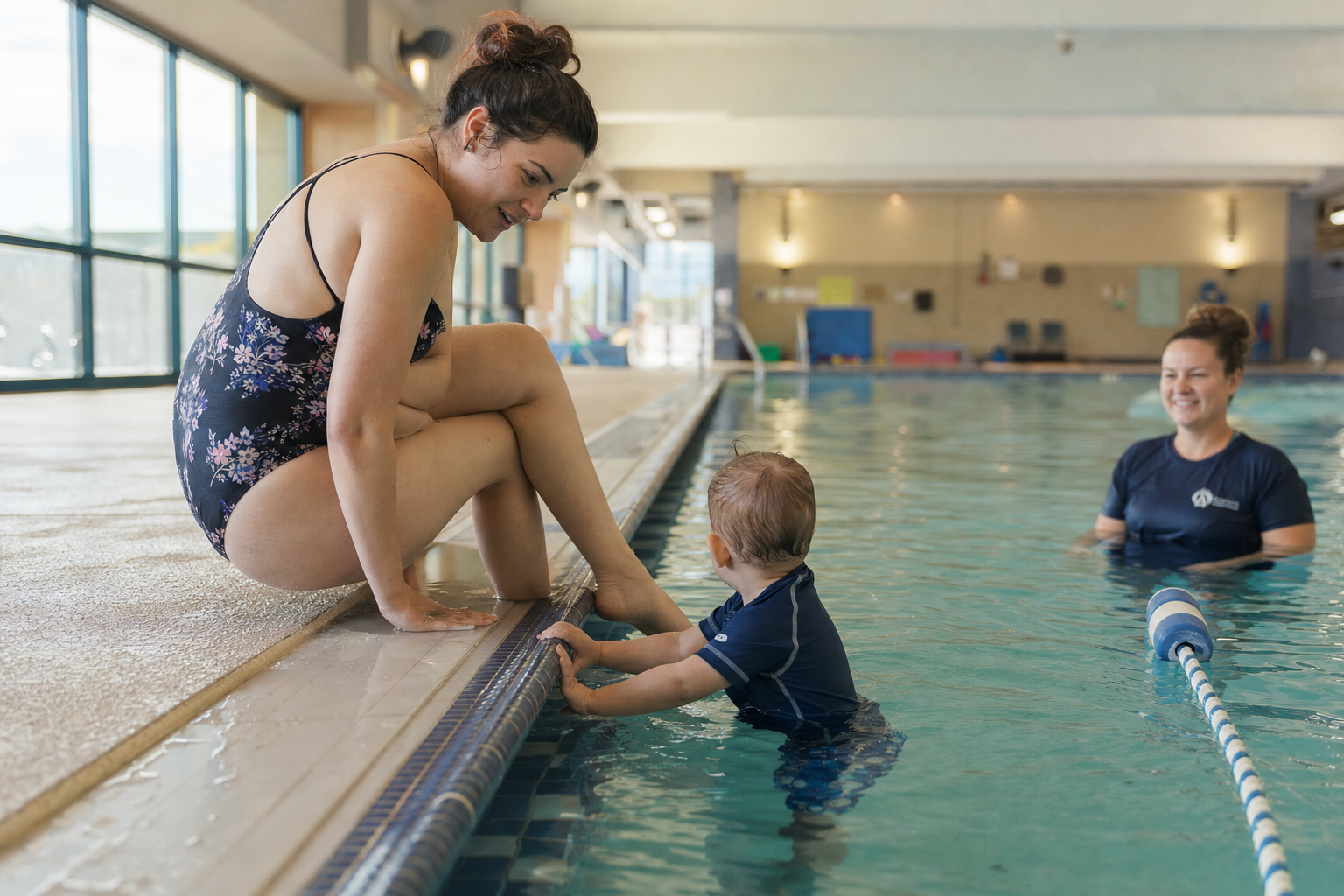
Short, repeatable cues like “hold the wall,” “wait,” “turn around,” and “feet first” are not just simpler—they fit better with how toddlers (aged 12-36 months) develop. When your child starts to follow simple directions, these cues become tools for stronger pool safety and early self-regulation. They work far better than long explanations, especially around water, where clarity and routine save lives.
Why single cues match toddler development
By about 18 months, most toddlers can follow one-step directions (e.g. “Give me the toy”) without gestures.(publications.aap.org) At ages 2-3, they begin to understand more, but their cognitive load is still limited. Two or three instructions at once often lead to confusion or delay.(pmc.ncbi.nlm.nih.gov) So a cue like “turn around” or “hold the wall” is immediately actionable.
Simple cues also support early self-regulation. In water environments, toddlers face excitement, novelty, and sometimes fear. Clear, consistent cues help them anticipate what’s coming, manage impulses (like running to the edge), and understand routines. As they hear these cues again and again, they link words to action without needing long explanations. That builds habits that reduce risk.(pmc.ncbi.nlm.nih.gov)
Four cues to teach and why they matter
“Feet first” helps prevent entry-related injury. Rules such as entering the water feet first every time guard against head and neck trauma from diving or slips. WaterWiseKids recommends children enter feet first until formally taught to dive.(waterwisekids.com)
“Hold the wall” teaches toddlers to stabilise themselves at pool edges, preventing slips or falls. It also becomes part of exit routines.
“Wait” is powerful. It slows impulse: before stepping near water, before entering, before splashing. Teaching "wait" paired with your presence builds a buffer between thought and action.
“Turn around” is about awareness and exit. After an entry, turning to the wall or steps prepares them for exit or holding on.
How to practise cues during class, open swim, and transitions
If you want a structured way to build water confidence at home, the 10-Week Plan guides you step by step.
In swim class, choose one cue per session. Use structured programs (for example, participating in the 10-Week Plan from swimy.org helps standardise learning across sessions) so shapes, timing, entry and exit routines include the same short cues. Repetition (same wording, same timing) makes those cues stick.
During open swim or family swims, place reminders on walls or pool fences, or whisper cues as you yourself follow them. “Feet first” becomes not just something you tell your toddler but something you model: you step in feet first, and say “watch me,” then cue them.
[[ctababy]]
At bath-to-pool transitions, cues from home build consistency. Before bath: “feet first into the tub,” “turn around to rinse,” “wait while I check water,” “hold the side.” Even though water is shallow, you’re laying groundwork. That familiarity helps when the setting changes to a large pool.
Common mistakes to avoid
A typical pitfall is using too many words at once. Do not say “please turn around, then wait, then hold the wall so you don’t slip.” That overloads them. Instead give one cue: “turn around.” Help them physically if needed. Also avoid explanations when safety demands immediate action—just offer the cue and assist. Over-explaining slows response.
Avoid changing the wording often. If sometimes “stop” is used instead of “wait,” or “look back” instead of “turn around,” you risk confusing toddlers. Keep cues consistent across caregivers—family, class instructors, grandparents. That consistency reinforces the habit.
Always pair cues with supervision. These cues are habits, not guarantees. Toddlers must always be watched within arm’s reach when in or near water. Safety layers still matter: fences, alarms, life jackets, attentive adults.(cdc.gov)
Putting it all together: practical steps you can use today
Start small. Pick one cue—maybe “feet first.” Use it every time your toddler enters water or bathtub. Pair it with praise when followed: “Great job—feet first!” Over a few days, add “hold the wall” whenever they reach the pool edge. Keep your tone firm, clear, calm. Use eye contact, get low to their level.
In swim class, ask the instructor to emphasise your chosen cue and include it in exit routines. At home, during bath time, you can practise the same cues: “wait” before putting water in the face, “turn around” for rinsing, “hold the side” to get out. Structure makes repetition natural.
Watch for progress. When your child can independently respond to multiple one-step cues (usually toward age 24-30 months), you might gradually introduce two-step cues (“turn around and hold the wall”), but only one new cue at a time.
Encourage self-regulation by acknowledging their effort: “You waited when I said wait—that’s safe,” or “You held the wall—smart choice.” These small moments build their grasp of rules and safety.
Final thoughts
Toddlers are learning fast, and water safety rules are lifelong habits in-the-making. Short cues like “feet first,” “hold the wall,” “turn around,” and “wait” match their developmental stage and make safety routines clearer and more effective. Practice them often—in swim class, open swim, at home—and keep expectations simple. These cues are habits, not guarantees. Always supervise within reach. But with repetition, clarity, and calm, your toddler will start doing what’s safe even without a long speech. You’ll be setting them up for safer, more confident times in and around water.
120+ swimming exercises sorted by age — with video and instructions. Developed by swim instructors, completely free.

120+ swimming exercises sorted by age — with video and instructions. Developed by swim instructors, completely free.