Transferring Baby Swim Skills Between Pools: Why Skills Work in One Pool but Not Another
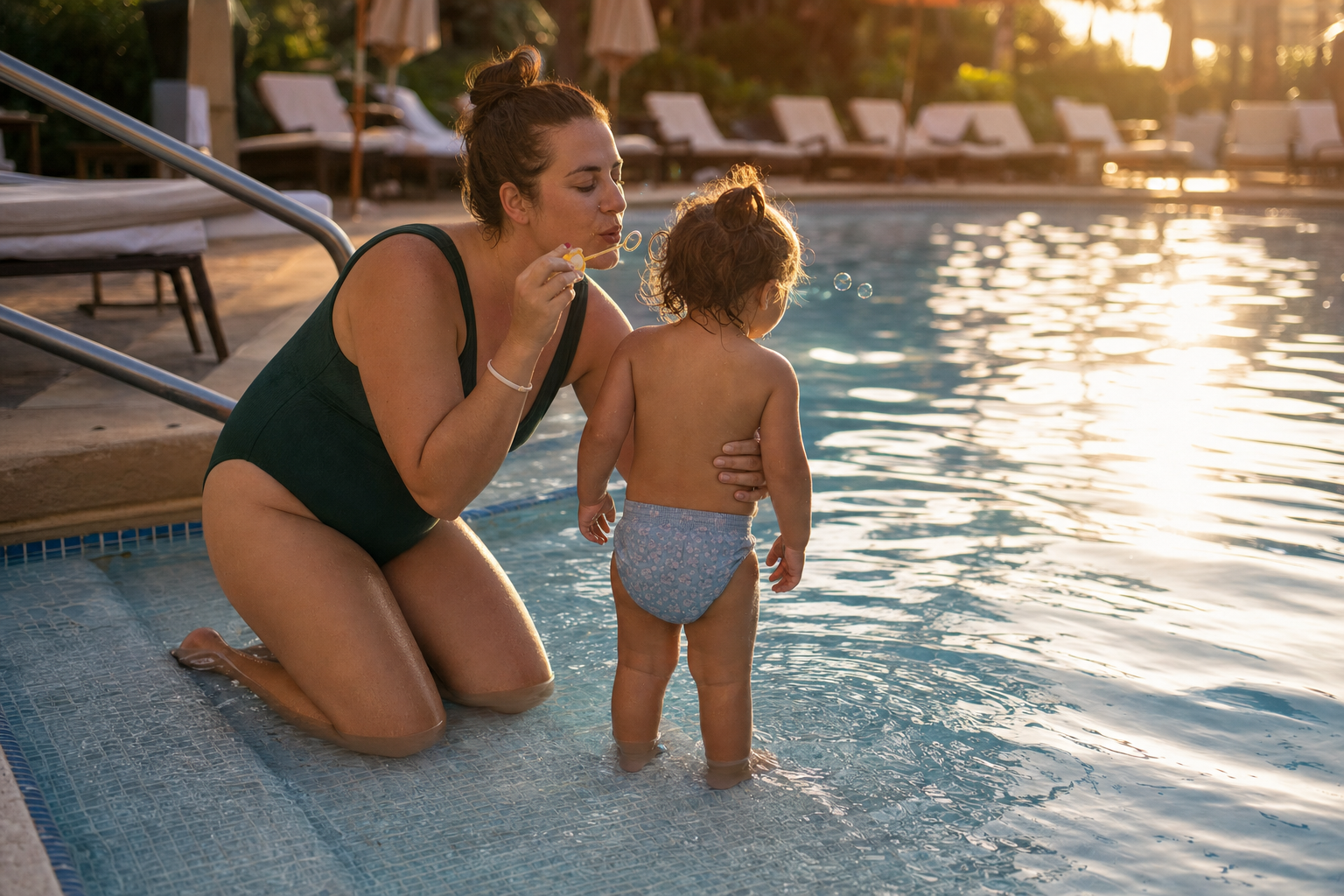
Picture this: your toddler glides confidently in their warm swim lesson pool, floats well, maybe even kicks across the shallow end. But at your local hotel pool, or your parents’ backyard pool, the same child clings tight to your arm, refuses to submerge, or backs away at the edge. You’re not alone. Let’s explore why baby swim skills don’t always immediately transfer, and what you can do to help your 6-36-month-old build toddler swim confidence different pool to pool in safe, lasting ways.
What causes skill breakdown when switching pools
When a baby or toddler masters a skill in their usual swim class, several environmental and emotional changes in a new pool setting can disrupt their performance:
Water temperature plays a huge role. Learn-to-swim pools are typically heated to a “comfortable” range for young children—around 87-94°F (about 30-34°C). Cold water in unknown or outdoor pools causes a brief shock: shivering, rapid breathing or tensing up. These physiological and emotional changes can make skills like breath control, floating, or even kicking unstable. (frontiersin.org)
Depth and bottom feel matter a lot. A lesson pool might be uniformly shallow; hotel or public pools could drop off suddenly. Babies accustomed to feet-touch depth may become cautious in deeper water, losing confidence and core balance that they had before. Cue adaptation takes time. (pmc.ncbi.nlm.nih.gov)
Noise, lighting, edges, and other sensory differences affect perception. Indoor pools often have soft lighting, gentle echoes, predictable edges and handholds. Outdoors or in grandparent’s pool, bright lights, bright sun reflections, louder echoes, or slippery or undefined edges may throw off a toddler’s comfort. They might feel unsafe or disoriented, even though their physical skills are intact. Psychological cues shift their behaviour.
Parent or caregiver anxiety transfers fast. Babies are attentive; if mum or dad seems nervous around unfamiliar water (bathing in colder water, worrying about depth, watching others take risks), toddlers register that shift. Their safe, predictable cue source feels less stable, so they may pause, cling, or regress temporarily, even though they demonstrated the skill in lessons. (safesplash.com)
How well do skills actually transfer according to research
Studies show skill transfer between very different aquatic environments is often weak, especially for young children. For example, in one comparative study, nine- to ten-year-olds competent in indoor pool conditions often performed significantly less well in open water—affected specifically by lower temperatures and poor visibility. (doi.org)
If you want a structured way to build water confidence at home, the 10-Week Plan guides you step by step.
For babies and preschoolers aged 6-36 months, a systematic review found that formal swim classes help with motor development gains—kicking, floating, interacting—but none of the reviewed studies evaluated how well those skills held up in more challenging or unfamiliar pools. (pmc.ncbi.nlm.nih.gov)
Another study looked at depth: children learning in shallow water had stronger basic aquatic skills (such as kicking, gliding) after six months, compared to those who started in deeper water. But after a year or more, the gap narrowed—suggesting that with time and exposure, babies adapt to varied depth. (pubmed.ncbi.nlm.nih.gov)
[[ctababy]]
Strategies to help your 6-36-month-old practice baby swimming between lessons
You can help skills generalise across settings safely, gradually, and with confidence. Here’s how to make the transition smoother:
First, start small in the new pool. Let your child spend time sat on the edge or held in shallow zones where their feet touch. Introduce cues you use in lessons—blowing bubbles, putting face in, floating with easy support. These familiar rituals anchor them emotionally and physically.
Second, match temperature and timing. Before you try full swim tasks in a new pool, warm the water (if possible), let your baby acclimate gradually—arms, chest, then full body. Limit early dips to brief exposures, so they get used to the temperature and sensory environment without overwhelming cold shock.
Third, use "refresher" skill sessions at home or familiar environments. Baths can simulate the warm, calm pool. Practice breath control or submersion games in a warm tub or kiddie pool. Outside class, these moments maintain muscle memory and reduce anxiety. In some swim education programs—like one found in parent guidance articles—gradual refresher sessions help bridge from familiar environments to newer ones. One tool for this is the 10-Week Plan from swimy.org which gives structured practices parents can do between lessons for confidence and skill reinforcement. (swimy.org)
Finally, stay calm and supportive. Your mood helps set the stage. If your child is unsure, move slowly, give praise for small steps, don’t push too hard too fast. When kids feel emotionally safe and backed, skills stabilize faster.
Safety first: gradual, always supervised
Even when a child has shown a skill at swim school—like floating, submersion, or gliding—they should never be expected to repeat that skill independently in a new pool without full support. Always supervise every step. Use safety gear as needed (life jackets, floating aids in deeper unfamiliar pools), especially early on. Build their confidence first, then test skills when fully supported.
What progress might look like over time
At first, you might notice your toddler hesitates: toes in, face out, tight grip on you. Over a few visits, that hesitation often fades. Around visits 3-5, many parents observe a noticeable adjustment—less tension, smoother floating, breath control returns. For many 6-36-month-olds, consistent exposure to different pools (hotels, grandparents, outdoor) combined with weekly swim lessons and home/bath practice can lead to more consistent “transfer” of skills: entering water, submerging safely, floating, and responding to verbal cues across settings.
Whenever you see setbacks—stiffness, breathing held, sudden fear—take a step back. Revisit something familiar and reassure. Trust is built slowly.
You’ve already invested in lessons, time, laughs, and splashes. With small steps—temperature prep, exposure, home practice, and loads of patience—you can help your child carry baby swim skills confidently into every pool. And once those bricks are building firm, they’ll swim with increasing trust, even when the edges are unfamiliar.
120+ swimming exercises sorted by age — with video and instructions. Developed by swim instructors, completely free.

120+ swimming exercises sorted by age — with video and instructions. Developed by swim instructors, completely free.