Choosing Between ISR vs Parent-and-Baby Swim Lessons: What Every Parent Needs to Know
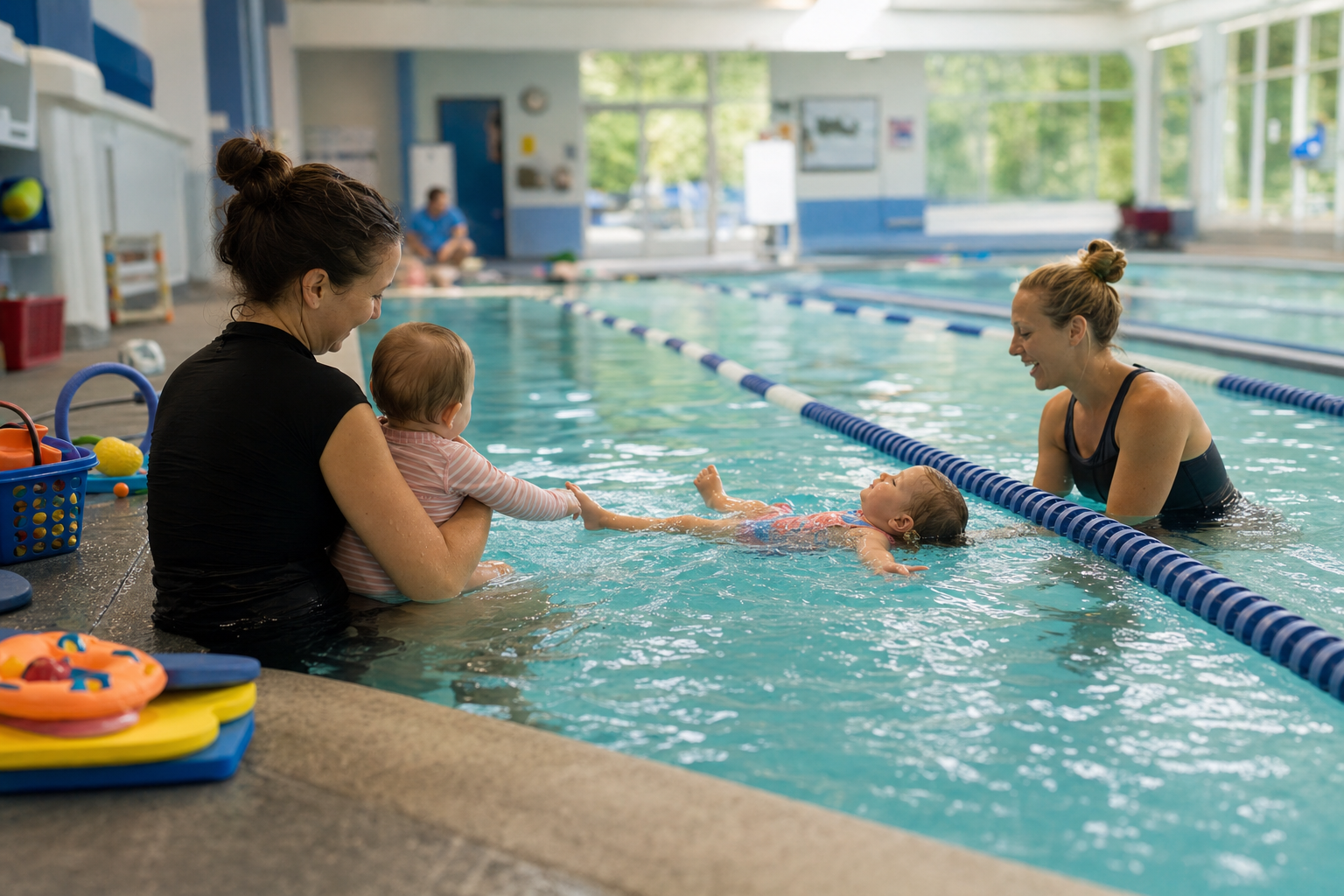
For parents of children aged 6-36 months, the question isn’t just if swim lessons matter—it’s what kind. The debate between infant self-rescue style lessons like ISR (Infant Swimming Resource) and gentler parent-and-baby classes hinges on goals, age appropriateness, emotional fit, and how well claims match evidence. Understanding the trade-offs protects a child’s confidence and safety without falling for overhyped guarantees.
Goals: Survival Skills vs Comfort & Confidence
Infant self-rescue programs such as ISR Self-Rescue® focus on teaching young children, starting around 6 months, specific survival behaviors. Babies learn to roll onto their backs, float independently, rest, breathe, and—once they're older—perform a “swim-float-swim” sequence to reach safety if they find themselves in water unintentionally. Lessons are one-on-one, short (about 10 minutes per day), frequent (often 4-5 days a week), and last over several weeks.
Parent-and-baby classes, by comparison, prioritize water familiarity, trust, and basic skills: paddling, blowing bubbles, increasing comfort in water with a caregiver present. These classes often happen weekly or twice-weekly, longer sessions, and less intensity. Stroke technique usually comes later.
Age Suitability & Developmental Readiness
From about 6 months, many parents explore water play and traditional parent-baby classes just to help their infants become comfortable around water under safe, supervised conditions. The American Academy of Pediatrics (AAP) states there is no evidence that swim programs for babies under 1 year old reduce drowning risk. Reflexive floating or “swimming” movements may be present, but the complex motor skills (head control, breath control, arm and leg coordination) needed for survival aren’t reliably developed. (healthychildren.org)
From 12 months to about 4 years, children are more developmentally equipped for survival swim or water competency lessons. The AAP supports swim lessons for many kids after their first birthday and highlights that drowning risk is highest among toddlers aged 12-36 months. (healthychildren.org)
Evidence & Limits: What Research Actually Shows
A recent 2025 phase I clinical trial examined toddlers aged 12-23 months in self-rescue training. After 20 short daily sessions over four weeks, about 83% could pass tests requiring independent water-survival skills (floating, remaining face-down when released, etc.); with a second attempt, nearly all succeeded. (pubmed.ncbi.nlm.nih.gov)
However, for infants younger than 1 year, evidence is nearly absent. The AAP’s updated guidance emphasizes that formal lessons may start after one year, and that for children below that age, no program has reliably shown a reduction in drowning risk. (healthychildren.org)
Want structured step-by-step guidance to introduce swim safety at home AND choose the right lesson type based on your child’s age and exposure to water? Check swimy.org’s 10-Week Plan for a balanced program parents can follow alongside any class choice.
Even with toddlers, survival programs like ISR don’t replace other safety layers. AAP and global lifesaving societies warn that swim lessons—of any kind—do not make a child “drown-proof.” Barriers, active supervision, life jackets, pool fencing are always essential.
[[ctababy]]
Emotional Fit & Child’s Comfort
Some children thrive with the structure and frequent repetition of ISR-style lessons. The survival instinct and challenge can build confidence—but not without emotional cost. Parents report stress, tears, fear in early ISR stages. The dose (how many sessions, how often) and the child’s temperament matter a lot. An emotionally overwhelmed child might resist swimming or develop water anxiety rather than competence.
Parent-baby classes tend to lean gentler. Children stay close to caregivers, learning at their own pace. Bonding and trust are central. These programs usually cause less distress, though they won’t build rapid survival skills. The trade-off here is between emotional safety and urgent skills.
Safety Claims & Marketing: What to Watch For
Programs like ISR often highlight large numbers—“over 300,000 graduates,” “800 documented self-rescues”—and promise that children will save themselves. These are powerful claims. Yet what professional bodies like the AAP clearly state is there is no evidence that any swim lesson for infants under 1 year reduces drowning risk. (healthychildren.org)
Claims that a child will be “drown-proof” are misleading. No child is ever safe without constant supervision, proper barriers, emergency readiness, and responsible adult action. Also, frequent refresher training is necessary if skills are taught early but not reinforced.
How to Choose: Matching Program to Your Child & Family
If you live near water or have a pool at home, or your toddler spends time in aquatic environments, a survival-focused program may be appealing. If your child is over 1 year, ISR or similar programs can offer measurable benefits as a safety layer—but inspect how claims stack against evidence. If your child is younger than 1, prioritize parent-baby classes for bonding, comfort, and gradual acclimation—and definitely consult your pediatrician if considering anything more intensive.
What matters: observe a class first. Ask what ages the instructor has worked with, how distress is handled, how much one-on-one time there is, whether the teacher includes training in realistic conditions (e.g. clothes, returning to float after face-down release). Also check credentials—certification, safety protocols, water temperature, how often the child is in the water.
Bottom Line
Both approaches—ISR style self-rescue lessons and parent-baby swim classes—have strengths. ISR can potentially build survival instincts rapidly for children aged 12-36 months, especially when supported by careful instruction and frequent practice. Parent-baby classes build comfort, bonding, water confidence from as early as 6 months. Neither kind replaces core safety measures: supervision at arm’s reach, secure barriers, knowledge of CPR, and avoiding headlines that promise perfect protection. Your child deserves confidence without exaggeration—the right choice balances evidence, age, temperament, and realistic goals.
120+ swimming exercises sorted by age — with video and instructions. Developed by swim instructors, completely free.

120+ swimming exercises sorted by age — with video and instructions. Developed by swim instructors, completely free.