Pool Fencing 101 for Families & Vacation Rentals
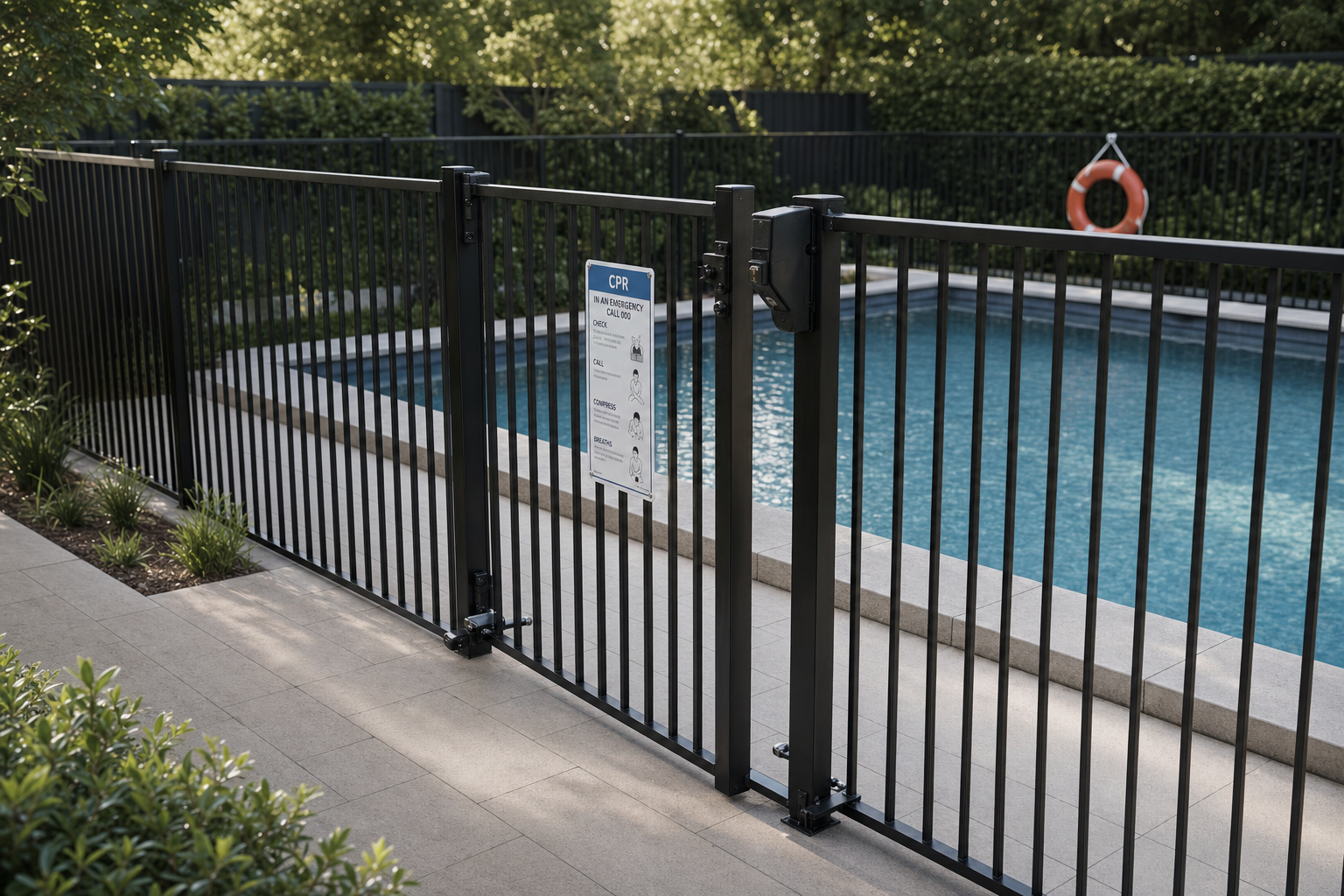
If you’re a parent with kids aged 3-12, or booking a vacation rental with a pool, the single best thing you can check right away is: is there a four-sided pool fence plus a self-closing, self-latching gate? These two features together form a critical layer of protection. They don’t replace watching your kids at all times, but they make a big difference, especially during busy spring afternoons or summer getaways. Keep reading for what to look for at home, what to demand in a vacation rental, and exactly how these systems work in places like Australia, the UK, and the US.
Why Four-Sided Fencing & Self-Closing Gates Matter
Four-sided fencing means the pool is fenced on all sides, none of the barrier relies on the building or house itself as part of the fence. That prevents sneak-in access through doors or windows. The American Academy of Family Physicians says residential pool safety is best when the pool is completely enclosed with a self-closing, self-latching gate, fence at least four feet high, and no direct access from the house. Fence gaps must be small, and you can’t depend solely on pool covers or three-sided fences—they often fail when kids leap over, crawl through low gaps or exploit a window or door that has direct pool access. (aafp.org)
A self-closing, self-latching gate shuts on its own from any open position, and locks without extra effort. That’s essential. In many places in Australia, laws require that gates swing outward (away from pool), self-close, self-latch, and have latching devices placed high enough that 3-year-olds can’t reach them. (qbcc.qld.gov.au)
What to Look for Before Booking a Vacation Rental
If you’re planning a summer rental, here’s your quick safety checklist. Ask the property owner or host these:
- Is the pool barrier four-sided and completely surrounding the water so no entry from the house or uncovered windows?
- Does the gate swing outward (away from pool), self-close from any point when opened, and self-latch when shut?
- Is the latch release high—about 1.5 meters (5 feet) above ground or shielded so a child can’t reach it?
Ask to see photos from different angles: fence height, gate hardware, and whether there are objects like chairs or flowerbeds near fence that can help climbing. A rental should also display a CPR sign nearby. If anything doesn’t meet your standard, don’t be shy about asking the landlord to fix it—it may be required by local code.
How Rules Vary: US, UK & Australia
In Australia, the standard barrier height for a new residential pool is 1.2 meters (about 4 feet), measured from the outside ground. Gates must be self-closing, self-latching, swing outward, and the latch placed properly by rules like AS 1926.1. There also must be a “non-climbable zone” outside the fence—no furniture, steps, or vines within about 900 mm so kids can’t boost themselves over. (chalkline.com.au)
If you want a structured way to help your child progress at home, the 10-Week Plan guides you step by step.
In NSW, Australia, for example, gates need to self-close from any open position, automatically latch, have vertical bars spaced no more than 100 mm apart, and no ground gap more than 100 mm. Renters and homeowners alike must register pools and show compliance records. (barkconstruction.com.au)
In the UK, pool safety barriers are enforced though exact rules can differ by region. Four‐sided fencing and self-latching gates are often required by law or local regulation—any gate that opens toward the house, lacks an automatic closing/latching mechanism, or has climbable parts fails the standards.
[[ctakid]]
In the US, requirements vary by state and county. The AAFP recommends fence height at least four feet, self-closing/self-latching gate, and fence gaps less than four inches at the bottom. But your state or city may have stricter rules, so always check local building department codes. (aafp.org)
Extra Layers & Common Pitfalls
Even with the right fence and gate, you’ll want these extras. Install door/window alarms especially for doors/windows that open toward the pool. In rentals make sure there’s a first-aid kit, flotation device, CPR sign, and that supervisors know where it all is. Teach your child to swim early if possible—for example a 10-Week Plan or similar structured program (you might try the 10-Week Plan of swimy.org) helps build water skills rapidly. These measures plus barriers reduce risk significantly.
Common mistakes families make: trusting a pool cover to prevent drowning, assuming boundary fences count without checking height or non-climbable zone, assuming overseas laws match what you’re used to. When in doubt, measure fence height, test the gate from multiple positions so you see it self-close and self-latch, try to reach over to the latch to see if a child might. If you find missing requirements in a vacation rental, ask for them to be fixed or documented before booking.
When to Set Up & What to Check Regularly
Spring is the perfect time to inspect or install your pool safety barriers. Before the heat kicks in, when outdoor travel begins, check fence integrity, gate mechanisms, latch height, and fence surroundings. In rentals, do this soon after arrival. During summer, check that nothing has degraded: no rust or loose hinges, plants haven’t overlapped into non-climbable zones, gates still swing and latch properly.
Maintenance is often overlooked. Gates must shut from any open starting point, latches must work every time—not just most of the time. If a gate is sticky or a latch lets in light, it’s probably not secure. Repairs should be done immediately. In places like Queensland, failing to maintain a compliant barrier, or leaving gates propped, is an offence. (qld.gov.au)
Your Rights & Responsibilities in Rental Homes
If you rent, the property owner is usually responsible for meeting code: proper fencing, gate hardware, signage, and keeping it all in working order. Before you sign or book, send photos or questions. Request any missing guardrails, gate latches, or repairs. If the host resists, you can check with local housing or council rules—for example, many Australian states require pool registration and certificates; homeowners must show compliance when renting. In the US, liability insurance and building inspectors may also enforce it.
When you’re the homeowner, inspect annually if not more often: fence height, ground erosion, gate alignment. Kids aged 3-12 are natural climbers: a fallen plank or misplaced planter can spoil a fence. Don’t trust that it’s good just because it once passed inspection five years ago.
Four-sided fencing and self-closing, self-latching gates are non-negotiable for pool safety in homes and rentals alike. Pair them with close supervision, alarms, and CPR readiness, and you’ve given your family or guests the strongest protection possible. Stay safe, stay aware, swim happy.
120+ swimming exercises sorted by age — with video and instructions. Developed by swim instructors, completely free.

120+ swimming exercises sorted by age — with video and instructions. Developed by swim instructors, completely free.