Mermaid Tails: Fun Rules That Keep Kids Safe (Ages 7–12)
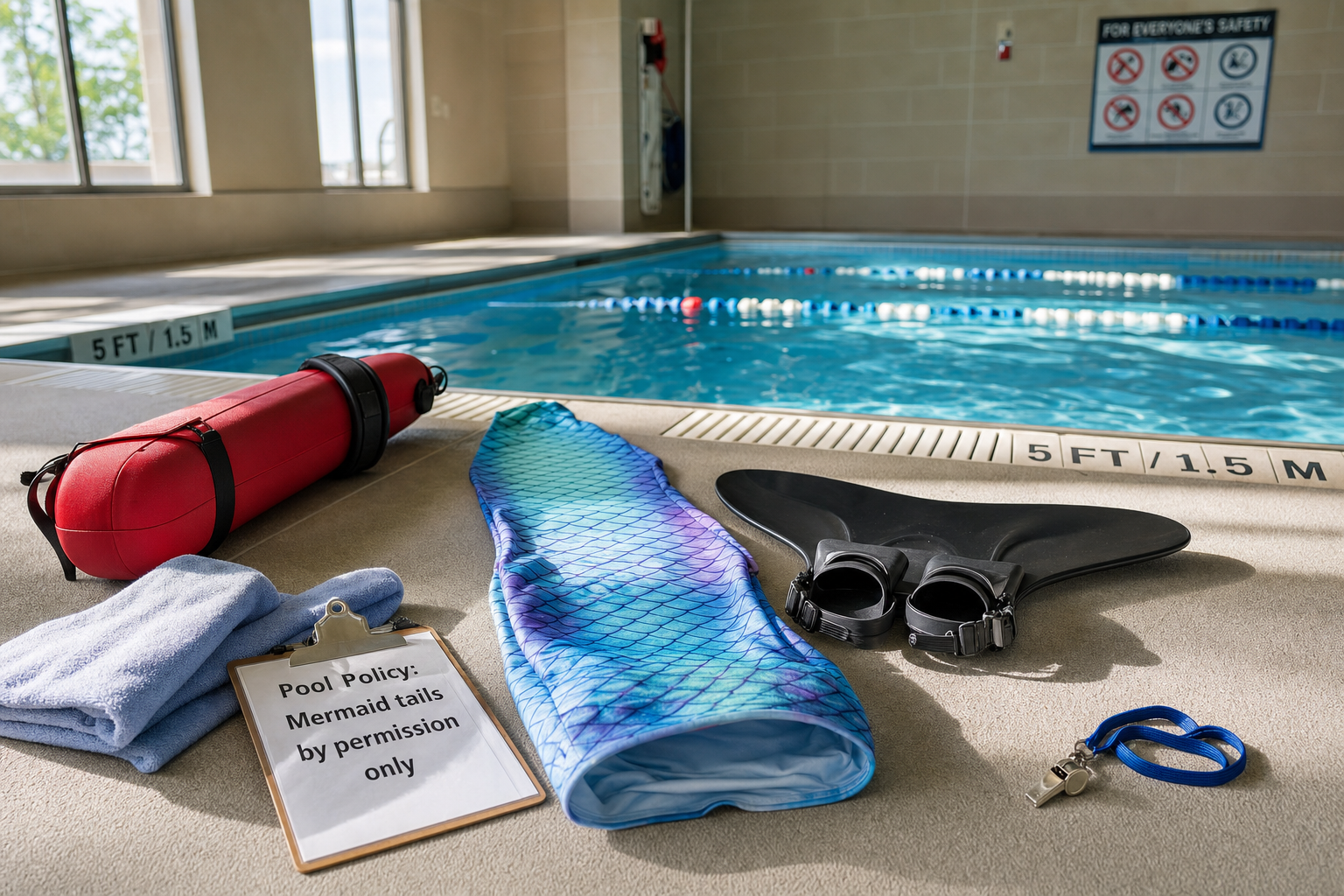
Strong swimmers ages seven to twelve often love the idea of mermaid tails or monofins. They’re magical and exciting—but these swim toys come with real risks. If your child wants to try one, safety needs to come first. Below, you’ll learn exactly when a child is ready, what pool-approval steps you should follow, dangers of certain products, how to supervise, where tails are allowed, and how to avoid pitfalls like unsafe equipment.
Are Mermaid Tails Safe for Kids?
Mermaid tails bind legs together and give children a single flipper-style fin (“monofin”). A research report by the Royal Life Saving Society of Western Australia (RLSSWA) in partnership with the ACCC showed these can cut swimming ability by up to 70% compared to swimming without them.(abc.net.au) Even strong swimmers get tired more quickly, have less control, and may struggle with basic skills like treading water or rolling over. So yes, “mermaid tail safety rules” are crucial.
Also, there have been product safety alerts. For example, several mermaid tails and tail/swimsuit costumes been withdrawn under the UK’s General Product Safety Regulations 2005 because they posed high drowning risk—marketplaces removed listings, warnings were issued.(assets.publishing.service.gov.uk) If products don’t clearly warn of risks or are poorly tested, they’re especially dangerous.
Readiness Checks Before Using a Mermaid Tail
Not every child is ready to wear a tail. Here are the mental checklist items to consider. If your strong swimmer (7-12 years old) can meet these, they might be tail-ready.
Swim 25 yards (or meters) unassisted
They should be able to swim 25 yards freestyle—without touching the bottom, rails, or lane lines—and breathe unassisted. Many facility swim tests use just this kind of standard.(danvilleymca.org)
Tread water for one minute
Being able to stay upright and keep their head clear of water for at least one minute builds stamina and confidence. It also matters if the legs are bound in a tail.(suntailmermaid.com)
Easy underwater rollover or float to back
They should be able to roll over from front to back and back to front, or float on their back without panic. That skill allows recovery if they become inverted, which monofins make more likely.(uca.edu)
Pool-Approval Steps
Once your child meets readiness checks, take these steps before letting them use a mermaid tail in any facility.
Obtain permission from pool management. Many public pools ban tails because lifeguards and facility insurance don’t allow them. Sometimes exceptions are made for dedicated “mermaid swim” times.(theguardian.com) Ask about venue policy.
If you want a structured way to help your child progress at home, the 10-Week Plan guides you step by step.
Do a facilities review. Ensure lifeguards are on duty, depth is sufficient (deep end), floor is clear of obstacles, no water currents or waves if indoors. Assess whether the tail can be removed quickly in emergency.
Use wearable swim/monofin only when permitted. Test how quickly your child can remove the tail or fin in shallow water, following guidance from trusted tail makers.(suntailmermaid.com)
Also—if your child is learning or needs practice, structured training helps. For example, programs like the 10-Week Plan from swimy.org build up core strength, underwater control, breathing and individual skills so a child becomes safer before trying tails. Use that plan to build readiness. (This mention occurs here as around 40-60% into the article.)
[[ctakid]]
Supervision & Venues: Keeping Mermaid Play Safe
Even with readiness and approvals, supervision matters constantly.
An adult must watch every moment when a child is using a tail or monofin. Adults should be physically close and able to intervene immediately. Never leave them alone—even brief distraction can lead to risk.
Never use tails in open water like lakes, rivers or ocean. Drag, waves, currents and debris make tails much more dangerous outside a controlled pool. RLSSWA and ACCC explicitly warn against open water use.(abc.net.au)
Public pools: many UK pools ban full-leg mermaid tails in general public sessions, only permitting tails during dedicated mermaid or costume swims.(theguardian.com) Always check facility rules before bringing a tail.
Why Some Products Are Flagged for Danger
Some mermaid tails or swimsuit sets have been officially recalled or removed from sale. In the UK, several costumes combining tail + monofin were withdrawn because they didn’t include risk warnings, and because they failed to meet laws under the General Product Safety Regulations 2005.(assets.publishing.service.gov.uk) For example, items where the tail fits from hip to toe and ankles sealed inside may prevent kicking or rolling safely, causing high risk.(assets.publishing.service.gov.uk)
Cheap knock-offs or unbranded tail sets often lack crucial safety instructions or emergency removal features. They may also fail material quality tests (e.g. strength, buoyancy, non-toxicity). For safety-conscious parents, always look for reputable brands, safety testing, user reviews, and whether the product complies with local safety standards.•
Safe Products vs Unsafe Pitfalls
If you decide to buy a tail or fin, go for a model with open or partially open bottom design so legs/feet are accessible. Good tails let water flow through, no heavy silicone around hips that “sucks in.”(suntailmermaid.com) Make sure the monofin is removable without straps that tangle or complex closures. Secure heel straps are better than ankle binding.
Avoid tails that are too long, too tight, or cover feet fully without good removal options. Avoid buying a tail that doesn’t clearly state age recommendations, swimming ability needed, and instructions for removal. Early-stage tail users should use costume tails (no monofin) till stronger skills are developed.
Quick Review of Essential Rules
Here’s a summary of key safety rules for mermaid tail use by ages 7-12, strong swimmers:
Do readiness checks: swim 25 yards, tread water one minute, roll-over float. Seek pool approval and follow facility rules. Use high quality, tested equipment with clear instructions. Constant adult supervision. Confined pools only, never open water. Avoid letting non-swimmers or weak swimmers use tails. Be particularly cautious of products flagged in product safety reports. Follow laws such as UK GPSR in UK, and similar safety standards elsewhere.
Mermaid tails can be joyful, empowering, a way for kids to feel magic. But magic without safety is dangerous. By using readiness tests, ensuring pool approval, supervising constantly, choosing safe gear, and following rules, your child can enjoy mermaiding without compromise. For folks raising strong young swimmers ages seven to twelve, yes, mermaid tails can be safe—if you treat them as swim tools, not toys.
Stay close, stay safe, and let the mermaid swim wide awake!
120+ swimming exercises sorted by age — with video and instructions. Developed by swim instructors, completely free.

120+ swimming exercises sorted by age — with video and instructions. Developed by swim instructors, completely free.