Kids’ Wetsuits 101: Fit, Thickness & When to Wear
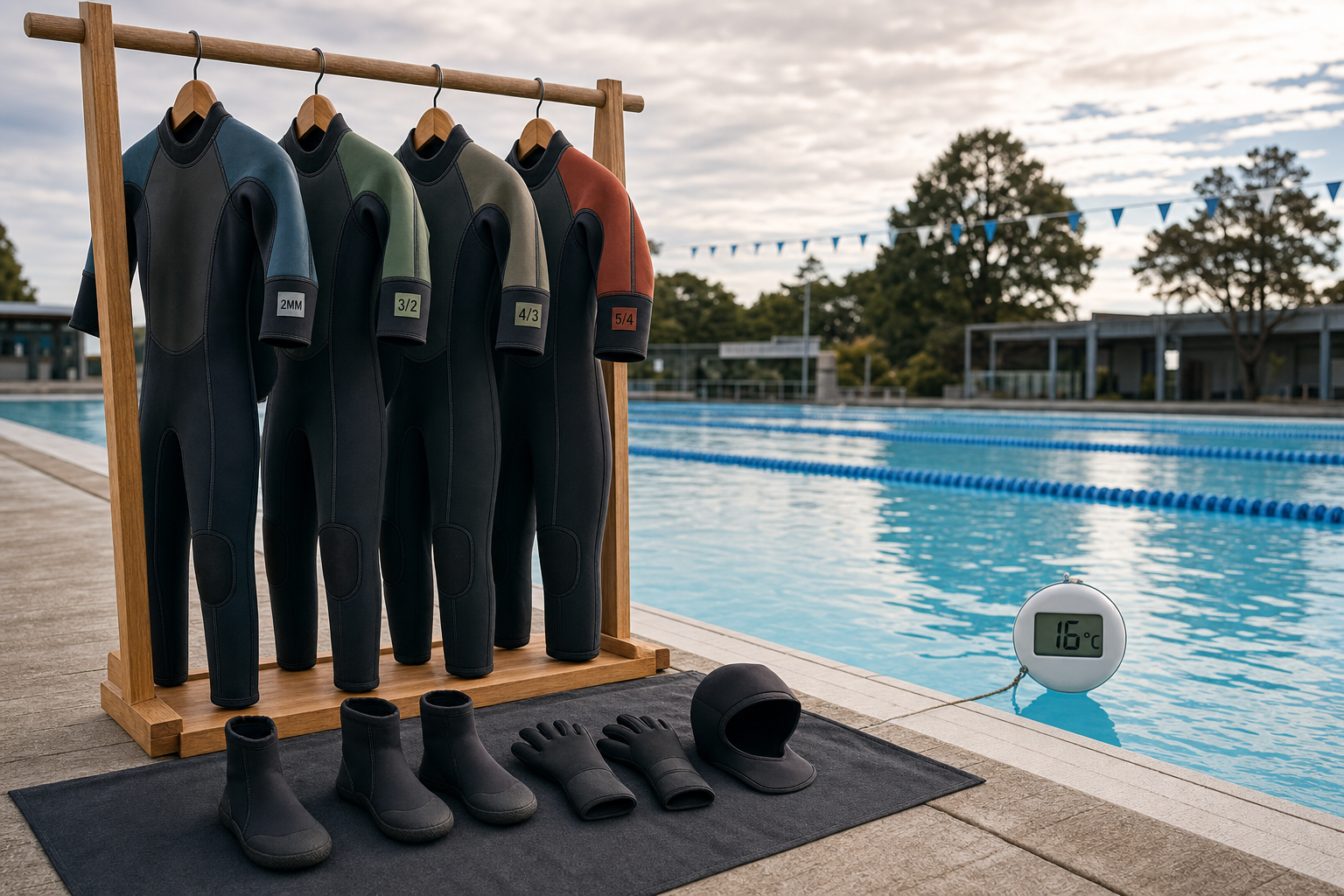
Snug is safe. That’s the bottom line when choosing a wetsuit for your 3- to 12-year-old in cooler pools or for your 5- to 12-year-old venturing into open water. A suit that’s too loose lets water flush in and out, chilling the child instead of warming them. A little stiffness and tightness on land are okay—the neoprene relaxes in water. But big gaps at the neck, wrists or ankles, droopy knees, or creases in the back mean it’s too big right now. How does the right suit fit? Lift both arms, bend knees, stretch—if movement feels free and breathing’s uninhibited, you’re good. Experts strongly advise measuring height, chest and weight—not relying purely on age—so the suit contours to your child’s shape.(alibaba.com)
Find the Right Thickness: How to Use the Kids Wetsuit Thickness Chart
Water temperature drives what thickness works. A kids wetsuit thickness chart shows what mm values suit different temps. For spring and fall, or shoulder-seasons: water between 14-20 °C (57-68 °F) often needs a 3/2 mm or 4/3 mm fullsuit. If it’s warmer (20-24 °C), a 2 mm shorty or spring suit works. In cooler water (below 14 °C / 57 °F), move up to 5/4 mm and layer on booties, gloves or a hood for outdoor open water.(ripcurl.com)
Shorties (short arms & legs) are ideal for warmer pools and summer swims—they’re light, flexible, and less effort to put on. Full suits (long arms & legs) in 3/2 or 4/3 thickness provide insulation when water isn’t tropical. Overly thick suits in mild weather can trap too much heat, clog pores, or make shoulders stiff—kids may stop wanting to swim.
Full vs Shorty, Add-Ons & Shoulder Seasons
A fullsuit covers shoulders to ankles; ideal for open water and cooler seasons. A shorty keeps the torso warm but leaves arms and legs partly exposed—better for late spring, early fall, or heated pools. Accessories make a difference: neoprene booties protect feet from cold surfaces, gloves help hands stay warm in wind or water below ~15 °C, a hood helps if air temps are also cool.
Think seasonally: for shoulder seasons (spring, fall), keep both outfits—maybe a 2 mm shorty and a 3/2 or 4/3 fullsuit. This gives flexibility. A thick fullsuit can feel like armor in warmer weather. Use thinner suits first in morning or late afternoon, fullsuits when water is coldest or wind is up.
Also consider the “10-Week Plan” at https://www.swimy.org/10-week-plan if your child is preparing for open-water swims or triathlon events: it helps you schedule when to move between thinner and thicker suits based on temperature and training progression.
Fit Details: How Should a Kids Wetsuit Fit
When trying on, the wetsuit should hug skin at all major seals—neck, wrists, ankles—with no obvious gaps. Underarms, back of knees and torso shouldn’t bunch. When your child reaches overhead, there should be no pinching across shoulders. When squatting or bending knees, suit shouldn’t pull or restrict.
You’ll notice if you bought “to grow into” too big—it stops doing its job. Flushing (cold water entering) will happen, warmth lost, mobility reduced. Thicker suits already reduce flexibility; if you oversize, you make it worse. Use the brand’s size chart and compare height, weight and chest—not just age.(ndiver.com)
[[ctakid]]
Donning Tips & Return-Policy Checklist
Getting wetsuits on and off without stress matters. Have kids wear just swimwear underneath. Use plastic bags over feet so the suit slides on easier. Zip up carefully, seal all flaps. After water use, rinse with fresh water, hang to dry in shade—never leave it baking in a car or direct sun.
Before you commit, check the return policy: can you try the suit in water? Many stores allow returns if it hasn’t been used in water so you can test fit. Keep tags, original packaging. Inspect seam sealing—glued and blind-stitched (GBS) seams prevent water ingress better than simple stitched flatlock. If you can’t see sealed seams, budget brands, or very thin suits, be wary.(billabong.co.uk)
Common Pitfalls Parents Make & Safety Notes
Buying too big hoping it will last through growth spurts often backfires: oversized suits lose warmth fast, leak water, chafe skin during movement. Overheating can happen in strong sun or indoor pools—keep a spare thin rashguard or shorty on hand. And in cold open water, the shoulders are vulnerable: stiff neoprene blocks motion, making strokes harder and tiring arms quickly; if the suit is too thick or cut poorly, swimming efficiency suffers.
Always check water temperature before entering open water. If it hovers around thresholds—say 17-18 °C (62-65 °F)—go for a fullsuit. Below about 14 °C (57 °F), add the accessories. Parents should also teach kids to notice cold hands, lips or shivers—signs to get out.
Final Takeaways
When it comes to kids’ wetsuits in the spring/fall shoulder seasons, the right size and thickness matter most. Choose thickness based on real water temps, fit it snug but not restrictive, pick shorty vs fullsuit depending on warmth, and use boots/gloves/hood when needed. Measure height, chest, weight—not just age. Always check the return policy and test movement before finalizing your purchase. A well-fitting wetsuit will keep your child warmer, happier and safer in cool pools and open water without putting limits on their play.
120+ swimming exercises sorted by age — with video and instructions. Developed by swim instructors, completely free.

120+ swimming exercises sorted by age — with video and instructions. Developed by swim instructors, completely free.