From Parent-and-Baby to Toddler Swim Lessons: A Clear Transition Guide
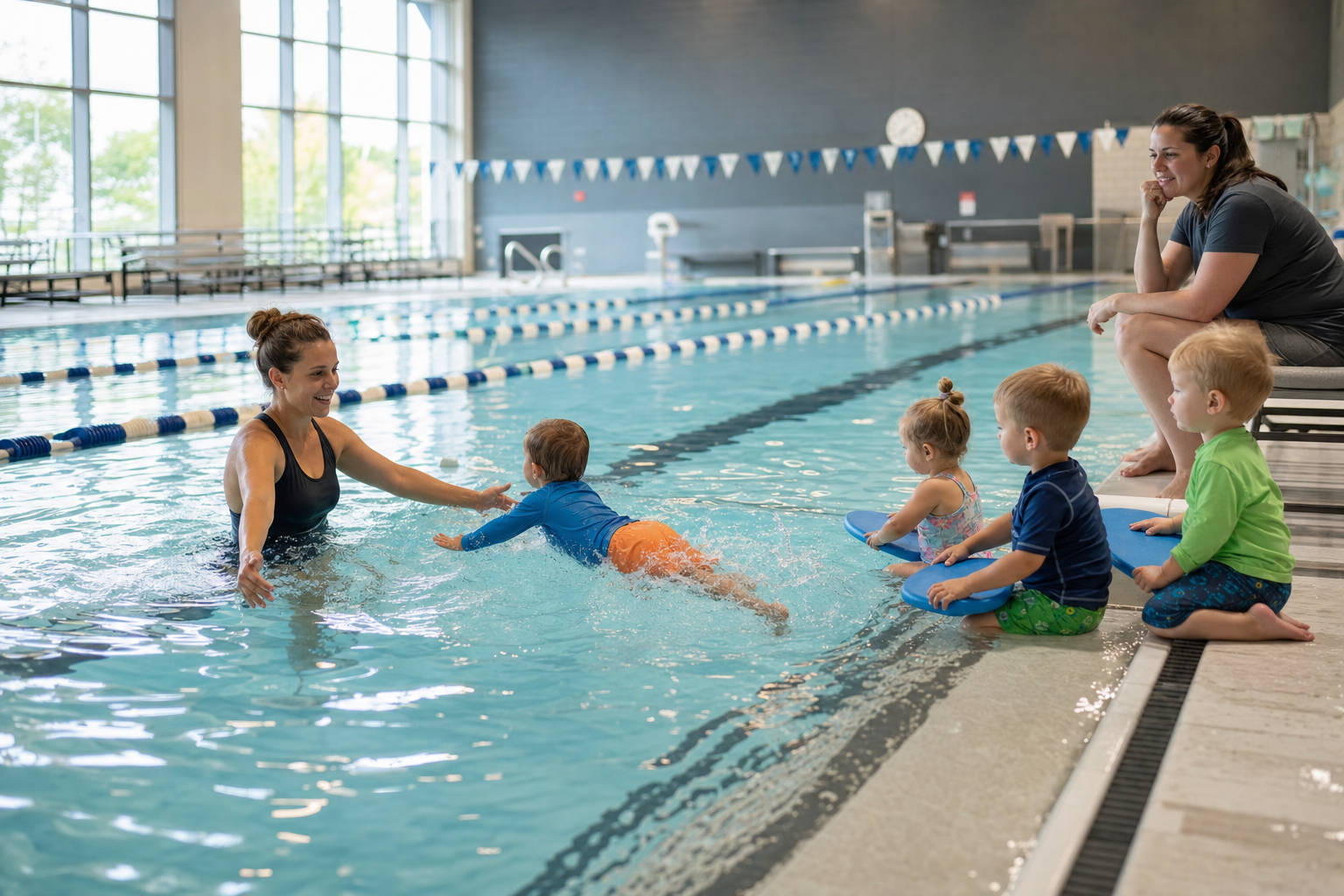
Wondering when to move from parent and child swim lessons to toddler swim classes with more space for independence? It’s not just about hitting a birthday. Look for specific readiness signs like your child following simple instructions, starting to show comfort being apart from you, kicking and floating with support. These behavioral clues mean your toddler (typically between 18–36 months) might be ready to transition gently—so they don’t get pushed before they are emotionally or physically prepared.
## Toddler Swim Lesson Levels: What’s Typical Around the World
Many swim schools or programs use levels to guide your toddler’s progression. Australia’s Carlile Swim designs levels for “Water Babies” from 4 months up to 3 years that build water confidence, safety awareness, and foundational swim skills. In Perth, Kirby Swim has cute level names like “Baby Dolphin,” “Jellyfish,” and “Turtle Transition,” starting parent-led sessions then gradually introducing more independence in the water.
In the US, Little Flippers Swim School offers toddler swim lessons Ages 6-35 months. Levels 1A and 1B feature parent participation in the water, with class ratios like 6-to-1, and in Level 2 parents stay on deck while toddlers do more skills independently.(littleflippersswim.com) Programs like Purdue University’s use “Parent-Child Lessons” for ages 6 months to 3 years, then move into small group preschool lessons once skills and confidence improve.(purdue.edu)
These levels show that programs recognize the gradual shift from caregiver-led support to more child autonomy in the pool. It’s smart to avoid switching only because of age instead of listening to mood, stamina, safety behavior, and emotional readiness.
## Key Signs Your Toddler is Ready for More Independence
Transitioning too soon can backfire. Use these expert indicators instead:
- Your child follows basic directions reliably (“blow bubbles,” “kick,” etc.).
- They tolerate short separations (e.g. parent watching from the poolside rather than in the water) without extreme stress.
- They’ve developed gross motor control: walking, pulling up, kicking legs straight rather than wildly flailing.
- Comfort with submersion: inviting splashes, putting face in water without panic.
- Showing interest in observing older kids swim, or desire to move without you.
The Sea Otter Swim Lessons program highlights traits like consistent arm and leg movement, assisted floats, being willing to jump in and get to the wall with little help—which may suggest they’re ready to transition out of Parent Tot.(seaotterswim.com)
If you want a structured way to build water confidence at home, the 10-Week Plan guides you step by step.
## What to Expect When You Make the Move
Once signs are there, the next stage likely includes toddler swim levels. These classes usually have more focus on safety skills—floating independently, rolling to breathe, standing or walking in water, maybe even simple floats or swim to teacher cues. Ratios tighten (often 4-to-1 or 5-to-1) to ensure each child gets consistent feedback. Lesson duration often stays around 30 minutes to match attention span.(littleflippersswim.com)
[[ctababy]]
In Australia’s models, Carlile’s toddler levels include skills like linking floating, breathing, and early stroke movement, combined with safety habits and responses around water. These gradually shift responsibility—less caregiver support, more personal ability.
You’ll find that swim schools and experts recommend short warming up, structured skill-building, plenty of water play and gentle encouragement rather than pressure. Also, many now reference tools like the 10-Week Plan from Swimy.org, which helps parents support water skills themselves week by week. That plan can reinforce lesson progress and help avoid rushed transitions.
## What to Ask and Check Before You Switch
Here are things to check so the switch is right and safe:
- Class ratios: How many toddlers per instructor (especially when parent participation ends)? USSSA suggests no more than 8 toddlers per instructor in Parent-and-Me classes; once parent steps out, smaller class sizes are safer.(usswimschools.org)
- Teacher qualification: Is the instructor trained specifically for infant/toddler swim education? Do they understand child development?(usswimschools.org)
- Warm water temperature: Lessons for children under 3 should ideally be in water between 87-94°F (30-34°C).(inspiredswim.com)
- Lesson length: Usually about 30 minutes; longer classes can exhaust toddlers.
- What about safety expectations: Can the child hold onto pool walls, go under water briefly, float with support, recover to standing? These are better indicators than age alone. Also ask how much separation (parent out of water) is anticipated.(purdue.edu)
## Safety Caution: Independence in Class ≠ Independence Near Water
Even when your toddler is doing more by themselves in class, you must still supervise closely before, after, and between lessons. Independence in lessons is about reduced reliance on caregiver inside pool during class—not about letting them swim unsupervised in a pool, lake, or bathtub. The American Academy of Pediatrics stresses that swim lessons are one layer of protection—constant supervision remains essential.(healthychildren.org)
Key Takeaway
“Parent and me swim transition” isn’t about a date on the calendar—it’s about readiness. Use emotional cues, motor skills, comfort around water, and safety behaviors as your guide. When your toddler is showing the green-lights—and the program offers toddler swim lesson levels with tighter ratios, warm water, well-trained instructors—you know it might be time. But keep your watchful eyes close even as their skills grow. That way you avoid common pitfalls, help your child gain confidence, and set them up for safe swim success in every lesson that follows.
120+ swimming exercises sorted by age — with video and instructions. Developed by swim instructors, completely free.

120+ swimming exercises sorted by age — with video and instructions. Developed by swim instructors, completely free.