How Long Should Baby Swim? Safe Swim Times by Age and Water Temp
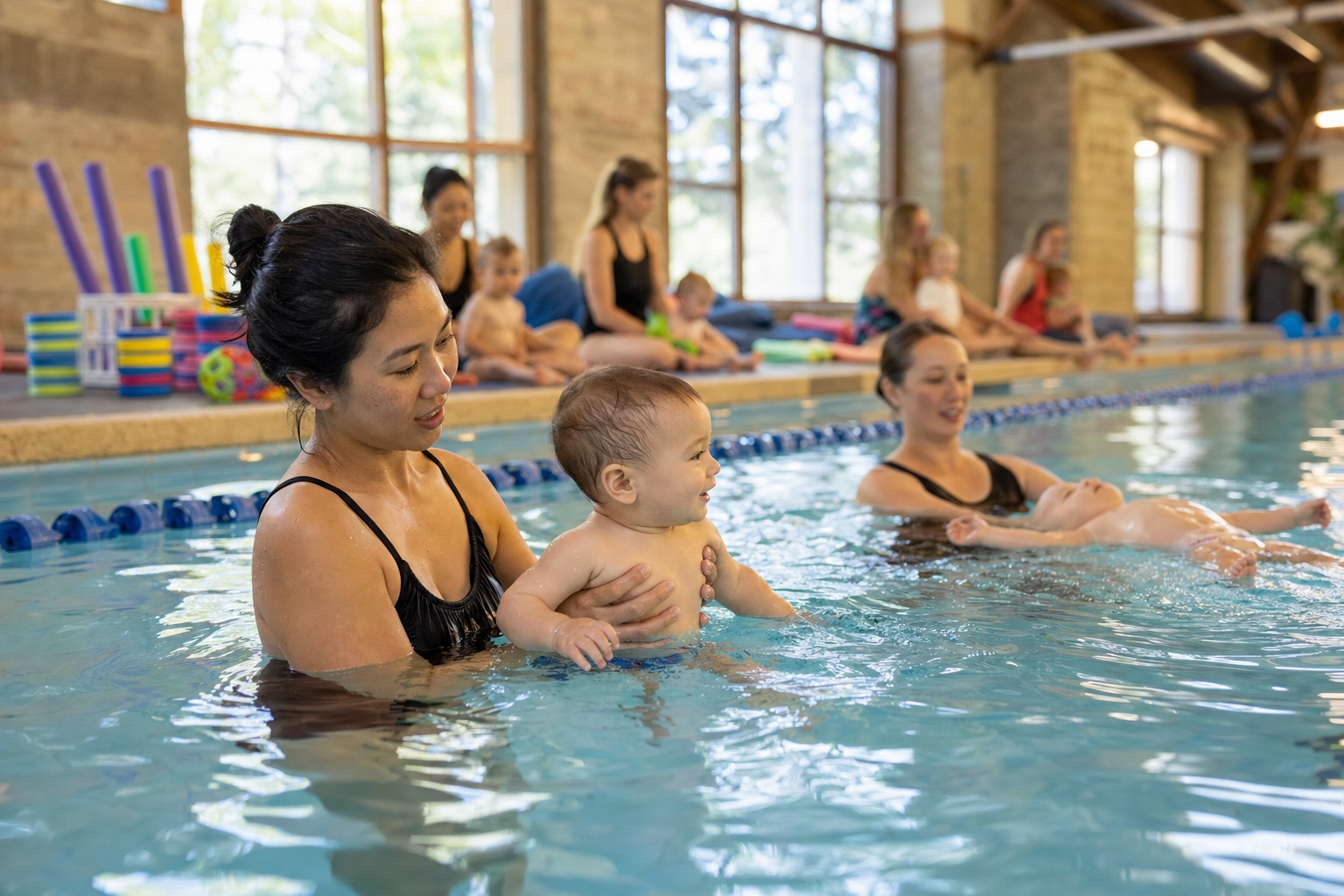
Babies wind up cold, tired, or overstimulated fast. For peaceful pool time and happy memories, you need to hit the sweet spot on swim duration. Parents often ask: how long can baby swim, baby swimming time limit, or how long in pool with baby. Here’s what experts say by age, stamina, and water conditions, plus how to read your baby’s signals so you know when to stop—even if the class isn’t over.
Realistic Swim Session Lengths by Age
Ages 0–6 Months
Very young babies lose body heat quickly and have limited stamina. Experts recommend very short sessions: start with 5 to 10 minutes in warm water, followed by rest out of the pool. For babies under one year, keep total in-water time under 30 minutes, even on warm pool days. Classes are mostly for bonding and water familiarization, not skill learning. (boystownpediatrics.org)
Ages 6–12 Months
By this age many babies have better head control, which helps with swimming and staying comfortable in water. Swim sessions of about 15 to 20 minutes in water heated to at least 89.6°F (32°C) are ideal. If your baby seems happy and warm, you can gradually increase by small increments, but keep sessions under 30 minutes in most settings. (boystownpediatrics.org)
Toddlers (12–36 Months)
Toddlers have more stamina, but also more activity in the pool which can make them tire out emotionally or physically quickly. Parent-child or toddler classes are often scheduled for 20 to 30 minutes of in-water time. If the water is especially warm and the child is used to swimming, 30-40 minute lessons may work—just watch for signs of discomfort. (speediswim.org)
Why Water Temperature and Exposure Matter
Pools that are too cool add risk of shivering, blue lips, and core cooling, especially in little ones. Public health guidelines suggest that water for infants and preschoolers stay in the high 80s°F (around 89-92°F or 32-33°C). If water drops below around 87°F, sessions should be very short, or fitted with wetsuits if outdoor/open. Always wrap baby warm afterward. (waterwisekids.com)
If you want a structured way to build water confidence at home, the 10-Week Plan guides you step by step.
Even when water is warm, each baby’s tolerance varies. Air temperature, wind, splash breaks, and time out of water back in towels all affect how quickly they cool down. If you feel any chill yourself, your baby likely feels it more.
Signs Baby Has Had Enough Swim Time
[[ctababy]]
Know the markers to tell it’s time to exit—even if the class hasn’t ended. Babies show subtle and obvious cues: teeth chattering, fine shivering, lips turning pale or bluish, skin blotchy or pale, fussiness, yawning, reduced activity or suddenly quiet, turning away from you, eyelids drooping. Overstimulation also presents with irritability, clinginess, or returning fuss after seeming okay. (healthline.com)
If you see those signs, believe them. Ending swim early is fine. Dry off, warm up, offer a feeding or nap, and plan shorter swim sessions next time.
Fitting It Into Classes Like First Swims or Parent-and-Baby
Parent-and-baby classes or first swims often have fixed times—some 30 minutes, some 45. But structured class length is not the same as swim time for your baby. Your babe might be in pool for less than 30 minutes total, considering prep, warm-ups, breaks, getting in/out. Some programs offer brief intense survival-style lessons of only 10 minutes for babies aged around 6-16 months (e.g. rollover-to-float survival swim), followed by rest. Longer classes are fine if your baby is warmed up, temperamentally okay, and water is warm. (boystownpediatrics.org)
If you're exploring a structured plan, swimy.org has a helpful 10-Week Plan that gradually builds water time, teaches parents to spot fatigue, and ensures each session is short, positive, and warm. Integrate its insights: you slowly lengthen time only as baby tolerates it.
Putting It All Together: Sample Guidelines
Here’s a summary you can adjust based on water, baby, and energy.
- 0–6 months: 5–10 minutes in water to start, max 20-30 minutes total if very warm and baby is settled.
- 6–12 months: Gradually build to 15-20 minutes in warm water, keep total-in-water under 30 minutes.
- 12–24 months: Most toddlers do well with 20-30 minute water time, maybe longer if showing strong comfort.
- 24–36 months: 30-40 minute swim time may be okay, but still watch for fatigue, cold, or overstimulation—stop early if needed.
Safety Caveats Every Parent Should Know
Always supervise with hands on. If baby is cold, sleepy, unusually quiet (not just not splashing), or distressed, end swim early. Keep water warm (ideally 89-92°F for infants). Shade and sunscreen matter outdoors. Go slow: increase swim time gradually as baby gets used to water. Don’t stay just because class is not over. Your baby’s well-being is more important than the clock.
Every baby is different. Trust your instincts, watch their cues, and keep swim experiences short, warm, and positive—so they love the water and don’t fear it.
120+ swimming exercises sorted by age — with video and instructions. Developed by swim instructors, completely free.

120+ swimming exercises sorted by age — with video and instructions. Developed by swim instructors, completely free.