Open-Water Sighting Drills for Kids: Pool Games to Keep Freestyle Rhythm While Looking Forward
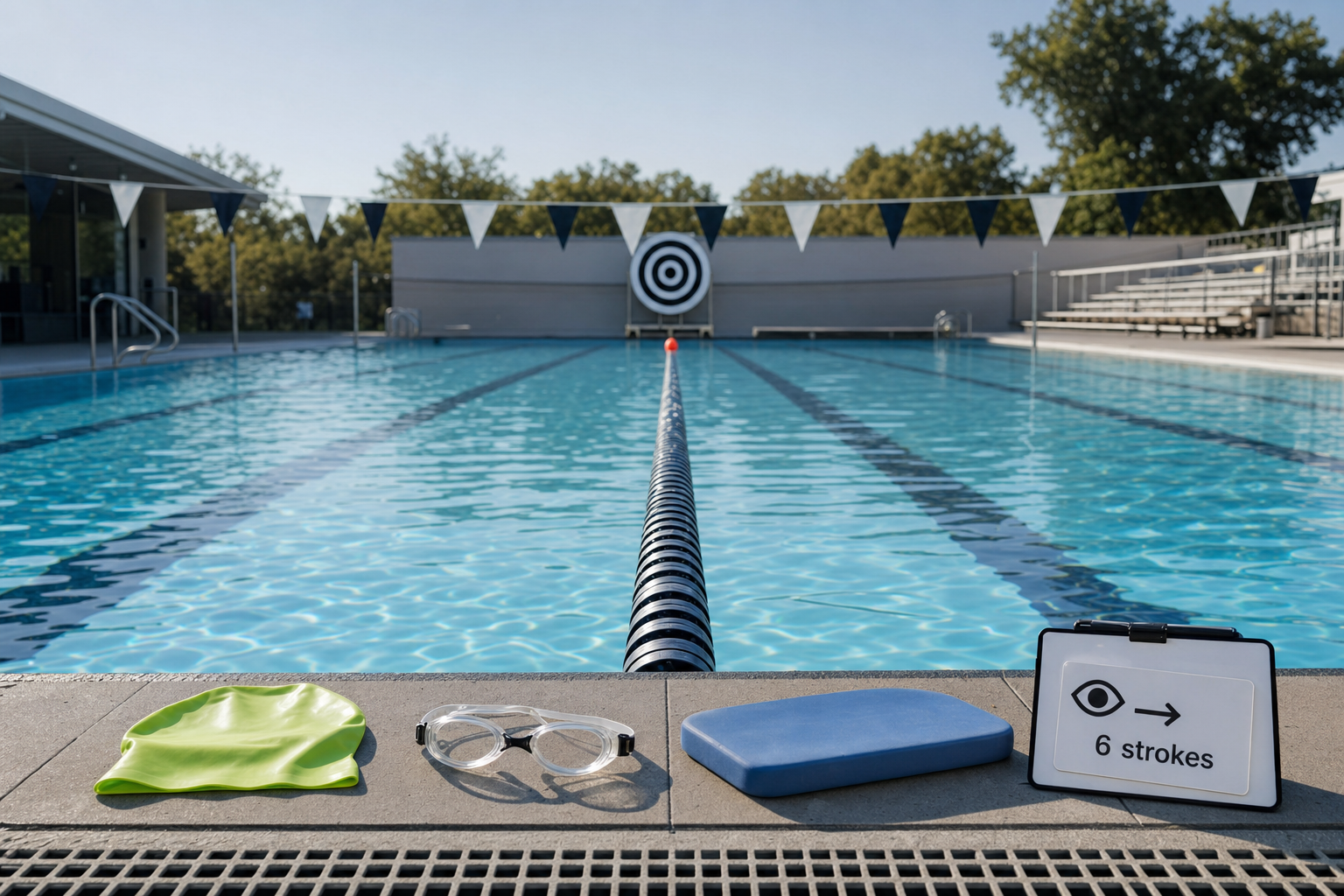
Freestyle swimmers ages 9-12 who can already swim 50-100 yards continuously often want to try open water but feel nervous that without lane lines they’ll drift, lift their head too much, or lose rhythm. Below are pool drills and games that build straight swimming and sighting skills—so when kids move to ponds or beaches (always lifeguarded venues), open water feels familiar, fun, and safe. Parents will get simple targets, stroke‐counts, and ways to progress smoothly.
Why Sighting and Swimming Straight Matter Early
Straight swimming means you swim less distance, stay aligned, and feel confident when courses aren’t marked. If kids breathe only to one side or lift their head too often, hips drop, legs sink, rhythm breaks. Research recommends practising balanced stroke and alternating breathing so arms pull evenly and body doesn’t bias left or right.(swimming.org) Also, good sighting keeps energy use efficient—lifting just enough to see ahead and lowering quickly helps keep hips up and body streamlined.(swimdesignspace.com)
Pool Drills to Practice Sighting Without Messing Up Freestyle
Sighting Every Few Strokes Game
On one end of the pool, pick a visible target like a flag, tree, or lane edge. Swim freestyle and every 6-8 strokes push your chin forward so your eyes break the surface and you spot the target. Lower your head right after. Keep breathing on your normal side (or alternate if learned). Make sure you don’t breathe at the same time you sight or look forward. This helps children learn to integrate sighting without breaking rhythm.(swimming.org)
Blind Swimming with Pop-Up Sighting
Kids swim with eyes closed (if applicable and safe) or looking down, counting the strokes as they go. After a set number—say 8—open eyes and sight the target, then continue. This builds awareness of direction and helps notice when stroke becomes unbalanced.(swimming.org)
Tarzan Drill (Head-Up Short Distances)
Swim a short length with head held high (eyes fully above water) like Tarzan, looking forward at all times. Then immediately switch to head-down sighting: look for a stable landmark with just eyes forward during the pull phase. This strengthens neck/core and teaches kids how little head lift they need for sighting.(swimdesignspace.com)
If you want a structured way to help your child progress at home, the 10-Week Plan guides you step by step.
The “One-Arm Sighting” Pattern
Choose one arm (left or right). After that arm enters the water, push your chin forward, sight, return head down, breathe two strokes later. Repeat every 4-8 strokes. Always breathe after head returns and make sure the arm movement remains strong and even. This drill keeps body alignment steady.(icanswimfast.com)
Around mid-season, consider using plans like the 10-Week Plan of swimy.org which introduce structured sighting drills and progressions from shallow practice in pools to safe open-water swims, building confidence and stroke control in a step-by-step way.
[[ctakid]]
Tips for Parents: Targets, Stroke Counts, Safe Progression
Choose targets that are large and easy to see—flags, trees, buoys. Don’t rely on tiny markers. For breaststroke or backstroke events, you can use your feet or stretch arms out to feel alignment, but our drills focus on freestyle.
Use stroke counts: decide together how many strokes your child swims before each sighting, for example every 6 strokes in calm pool water. In choppy or unclear open water, sight every 4-5 strokes temporarily. Gradually stretch that out, always checking that body form stays good. Alternating breathing (e.g. two strokes breathe left, two right) helps balance arms and reduce drift.(beginnertriathlete.com)
When you move to ponds or beaches, only do so where there is lifeguard supervision. Begin with short swims near shore, practise spotting familiar landmarks, and always have a safety plan (e.g. swim with partner, know exit points). Open water adds variables: waves, currents, glare. Remind kids sighting is occasionally needed but not constantly—over‐sighting breaks rhythm. Finding the balance is key.(swimming.org)
Common Pitfalls & How to Avoid Them
One mistake is lifting the head too high. If your child raises the whole head, shoulders lift too, hips sink, drag increases. The trick is to lift only the chin and eyes during the arm pull—not raising the chest. Keeping hips high keeps stroke efficient.(swimming.org)
Another is sighting too often. Every stroke sighting destroys rhythm and wastes energy. It’s better to swim several strokes with the head down, then lift just briefly. Trainers recommend every 6-10 strokes in calm conditions; in rough or unfamiliar water do a little more often until confidence builds.(swimming.org)
Finally, breathing only to one side can bias the stroke and veer off course. Encourage bilateral breathing or rotating breathing sides so arms alternate pulling evenly and children stay straight.(physicaleducationupdate.com)
When Pool Drills Are Ready for Open Water
Once children feel steady swimming 50-100 yards in the pool and can do drills that keep stroke balance, sighting every few strokes without losing rhythm for several lengths, it’s time to try open water (always lifeguarded).
Start by sighting a landmark on shore, swimming toward it, and practising the same stroke and breathing control as in the pool. Keep the first open water swims short. Watch how often they sight naturally, and encourage them to stretch those intervals gradually.
With fun games, clear targets, and structured progression, your child can swim straighter, feel more confident, and when summer opens splashes and heats up, open water won't feel scary—it’ll feel just like the pool, just freer.
By using these pool games and drills parents and kids gain real skills: how to sight well, how to swim straight, how to keep rhythm and form. The result is open water that feels familiar, safe, and exciting—ready for summer at lakes or beaches.
120+ swimming exercises sorted by age — with video and instructions. Developed by swim instructors, completely free.

120+ swimming exercises sorted by age — with video and instructions. Developed by swim instructors, completely free.