Heat-Wave Pool Days With Babies: A Safety-First Plan
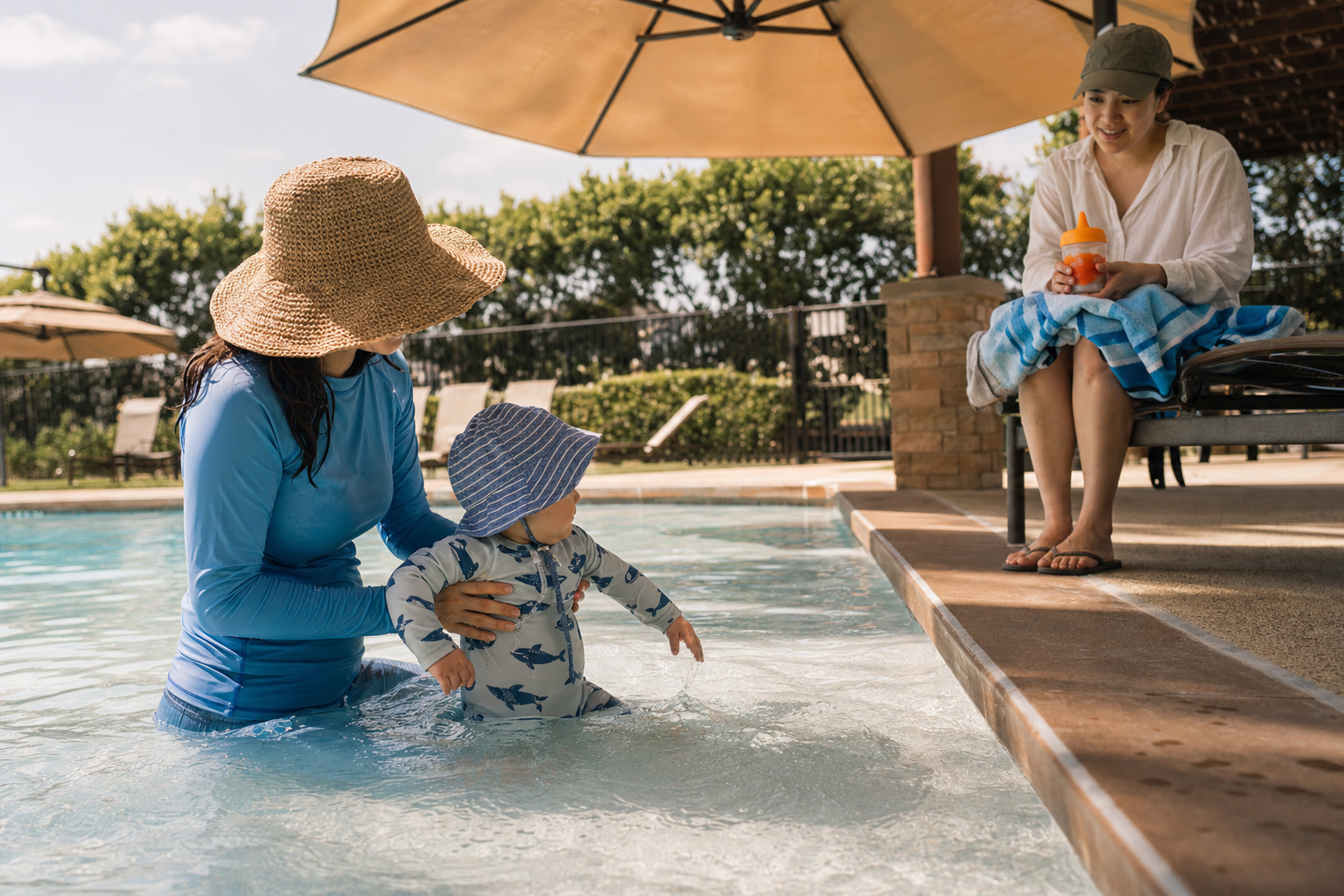
When the thermometer soars past 32 °C (90 °F), parents of babies (ages 0–36 months) often want nothing more than a dip in the pool to cool off. Those pool days can be lifesavers—but only if you’ve got a plan that keeps things gentle, safe, and free of new risks. Let’s start with what needs to happen before that first splash.
How Heat Affects Infants
Infants and young children rely entirely on adults to regulate heat, shade, and hydration. Their bodies cannot adjust as efficiently as older kids or adults. The U.S. Centers for Disease Control say that babies lose fluids faster, have less ability to sweat, and risk dehydration and heat illness with even modest exposure to high heat.(cdc.gov)
Bodies in extreme heat run a risk of heat exhaustion or worse. Key symptoms to look for include tiredness or weakness, excessive thirst, pale clammy skin, rapid pulse, dizziness, possibly nausea or vomiting. Hot weather that goes unchecked can progress to heatstroke—hot dry skin, confusion, or worse.(nhs.uk)
A Parent’s Safety-First Plan for Pool Time During a Heatwave
Make pool days cool, short, and safe—not stressful for your baby or you.
Before You Go In
Check the pool water temperature. The ideal range for babies and toddlers is warm—around 30-34 °C (86-93 °F). Public and swim class pools in many programs aim for that when teaching infants. Below about 30.5 °C (86 °F), water might feel comfortable to adults but could chill a baby quickly.(babysential.com) Dress your baby in lightweight swimwear, a sunhat, maybe a UV shirt. For infants under 6 months, avoid direct sunlight entirely—healthy sun protection comes through shade, not sunscreen.(fda.gov)
During Pool Time
Keep sessions brief—start with just 10 minutes, gradually working up to 20-30 minutes max. A rest every 5-10 minutes is good. Always stay “within arm’s reach,” practicing what the American Academy of Pediatrics calls “touch supervision” so you can physically grab or steady your child immediately if needed.(healthychildren.org) Shade is essential—even water reflects UV rays. Use umbrellas, shade sails, or trees. Stay out of direct sun between 11 a.m. and 3-4 p.m., depending on for where you live. Offer fluids often—even breastfeeding more frequently or offering cooled boiled water if over 6 months.(redcross.org.uk)
If you want a structured way to build water confidence at home, the 10-Week Plan guides you step by step.
Around the middle of your pool plan (about 30-60 % through), you might start considering formal swimming offers or tuition. If so, check programs like the 10-Week Plan at swimy.org, which build up baby swim stamina safely over time while emphasising water comfort, safety drills, and gradual exposure.
[[ctababy]]
Warning Signs: When It’s Time to Leave the Pool
Babies can’t always tell you what’s wrong, so watch for physical cues. Lips, ears, or fingers going pale, blue-tinged, or feeling cold means loss of heat. Shivering, teeth chattering, or limpness are serious. Also be alert for distress like crying nonstop, trouble breathing, dizziness, or if the baby seems weak or unresponsive. Shallow breathing, flushed face, or not sweating despite hot skin can indicate heatstroke.(wwwnc.cdc.gov)
When to Skip the Pool Entirely
If the outdoor air temperature and humidity are both extremely high (for example over 35 °C / 95 °F with high humidity), skip outdoor pool time—it could heat stress your baby even faster. If water temperature is uncertain or the pool is poorly shaded, it’s safer to postpone. Always avoid leaving a baby in a car, even for a few minutes—temperatures inside a parked car can surge to life-threatening levels.(cdc.gov) If your baby already shows signs of heat exhaustion, vomiting, or you suspect sunburn or dehydration, call a doctor instead of going for a cool swim.
Recovery Breaks & Cooling After Swim
Every splash needs a follow-up. After exiting the pool, wrap baby in a towel, move into shade or air-conditioning, apply a dry hat, give more fluids, and let them rest. Even small amounts of water temperature drop can cause chilling once wet and out of the water. Keep clothing dry and loose; change damp swim nappies which hold heat. Remember that pool decks and surfaces in full sun can get extremely hot—burn risk is real. Use towels, shade, or poolside shoes.
Country Contexts: US, UK, Aus
In the United Kingdom and Australia, weather services often issue heat alerts advising extra care for babies and young children. UK health guidance emphasises avoiding direct sun between 11 a.m. and 3 p.m. and keeping babies under shade and well hydrated.(poolmedical.nhs.uk) In the US similarly, the CDC and EPA highlight infants’ sensitivity to extreme heat and the serious risks of dehydration and heat related illness.(epa.gov)
Summary: What Keeps It Safe & Fun?
Baby swimming heatwave safety is about shorter, calmer water time with shade, fluid breaks, and good recovery. Water alone won’t keep an infant cool—avoid hot decks, overheated cars, and long sun exposure. Watch how heat affects babies physiologically, learn the warning signs of overheating, and—if in doubt—skip the pool and find a safer way to cool off until conditions improve. With careful planning, your baby’s pool days this summer can be cool, refreshing, and joyful.
120+ swimming exercises sorted by age — with video and instructions. Developed by swim instructors, completely free.

120+ swimming exercises sorted by age — with video and instructions. Developed by swim instructors, completely free.