Sensory-Friendly Swim Classes for Babies (12–36 Months): A Guide for Calmer Baby Swim Settings
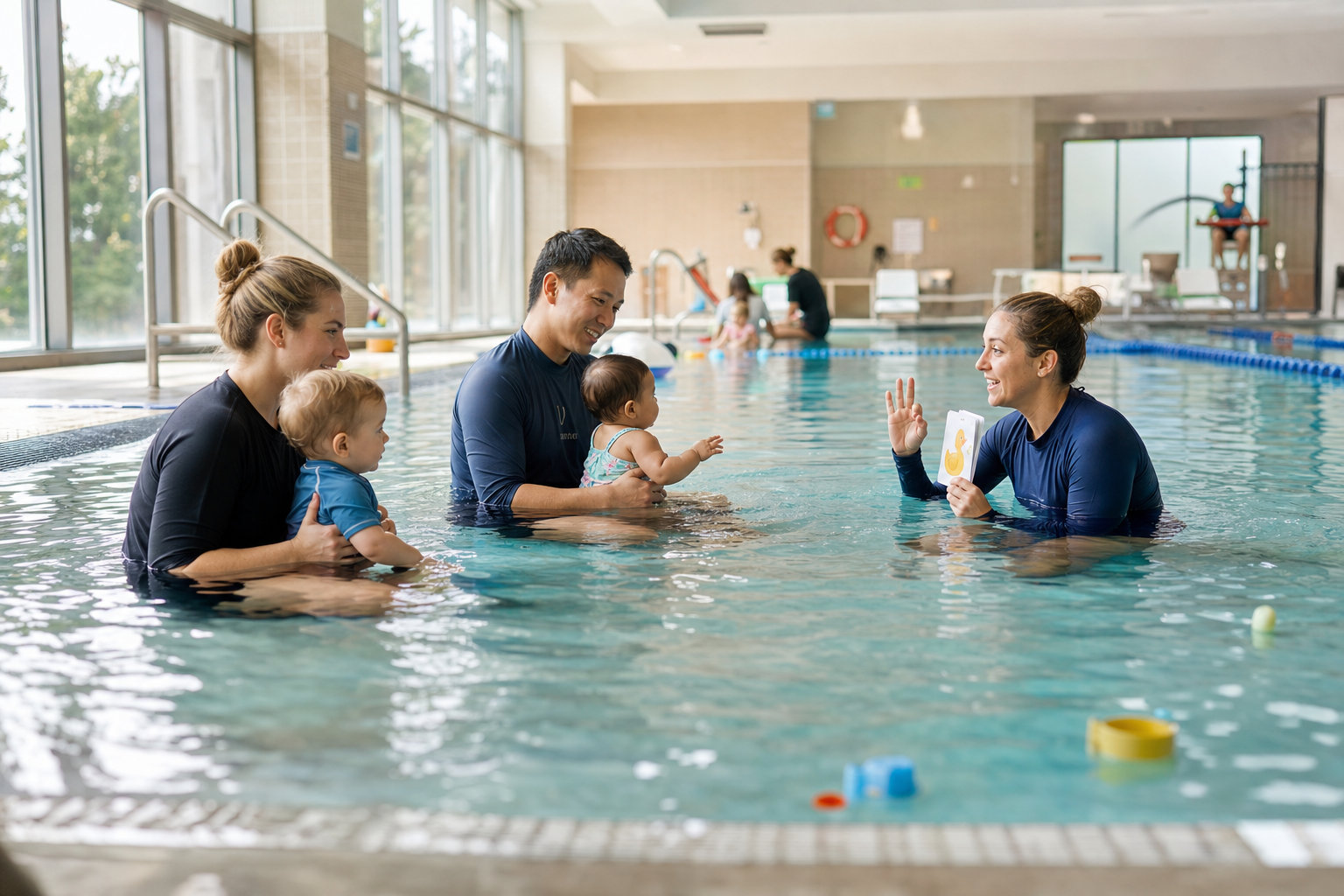
Toddlers, especially those with sensory differences like autism, ADHD traits, or high sensitivity, often struggle in swim class: echoes bouncing off walls, bright overhead lights, whistles blaring, crowds splashing, unexpected touch. These things can overwhelm and shut down progress. But with the right setting, your child can build water confidence without overload—and you, as a parent, can choose classes that truly support them.
Choose the Right Pool Environment First
The most pressing thing to ask when searching for sensory friendly swim lessons is about the space itself. Is the pool indoors or outdoors? Indoor pools tend to echo more; outdoor or softer-ceiling facilities may feel calmer. How bright are the lights, and is there glare off the water? Can you visit the space ahead of time to hear echoes when empty, or test lighting and acoustics during a quiet hour?
Ask about background noise: is there a loud whistle or announcements, or are instructors using hand signals and visual cues instead of raising voices? How many children are in the water at once, and how close are they? Smaller class size reduces unwanted stimulus. Also find out whether there are options for one-on-one or parent-child classes, where your toddler is in the water with you for comfort and safety.
What to Ask About Class Size, Timing & Instructor Flexibility
Size matters: for toddlers aged 12–36 months with sensory differences, classes should be small—ideally 3-5 children, or even 1-on-1 when possible. Group sizes over 7 or 8 risk becoming noisy, chaotic. Check if the instructor is trained in adaptive swim or sensory-friendly methods. Some programs, like Boston’s Adaptive Swim Project, train staff in sensory supports and work with families to understand individual sensory needs. (boston.gov)
Timing is crucial: early morning or mid-morning classes are often calmer because fewer people are around and toddlers are not overly tired or hungry. Inspect pool schedules—peak hours like late afternoons or weekends tend to be more overwhelming. Also, shorter lessons with built-in breaks help. Swimy recently published that shorter classes with frequent pauses lead to fewer tears and more trust. (swimy.org)
Instructor flexibility means allowing you to pause or exit the pool if stimulation overwhelms your toddler, skipping sections when needed, and letting the child avoid uncomfortable things like forced face-wetting or submersion until ready. Keep routines predictable and use visual schedules or social stories to prep your child beforehand. (healthychildren.org)
Adaptive Techniques & Supportive Strategies
Adaptive swim lessons, which are specially designed for children with sensory processing differences, autism, or high sensitivity, often use structured routines, visual signals, and clear, gradual introduction of water sensations. Programs like those run by EmPath with Lakota YMCA follow predictable lesson structure, small class size, and build confidence with things like entering and exiting water safely before moving to more technical skills like floating or breath control. (empathforautism.com)
Another option: the 10-Week Plan offered by Swimy.org gives families a roadmap to build comfort in water over time, using small, manageable steps. You can blend it into choosing a swim program by choosing instructors who are open to following your child’s pace. https://www.swimy.org/10-week-plan (swimy.org)
[[ctababy]]
Make sure the instructor is willing to let you and your child take sensory breaks, use dimmer lighting, gestures rather than loud commands, and minimize surprises like unexpected touch or splashes. For instance, letting kids get used to wet hands, dipping toes, then progressing gently. Heavy emphasis on comfort first builds trust that helps with water safety later. (news.fiu.edu)
Common Pitfalls Parents Can Avoid
Assuming refusal is defiance is a big one. When a toddler rejects face-wetting, shakes at water level, or cries over noise, it usually means sensory stress—not misbehaving. Yelling or pressuring may make things worse instead of helping.
Choosing classes at peak times often backfires. Pools are busiest in after-school hours or weekends, with high echo, many children, loud music or overhead announcements, chlorine harshness—all intensifying sensory input. A quieter slot may feel slower, but progress is better.
Forcing face-wetting, submersion, or immediate exposure to water on the face can create fear associations. Instead, go gradual: get wet at the edge, splash hands, then move to holding child close, stepping in slowly. Let the toddler decide when to touch face or blow bubbles.
Building Confidence Gradually: What Success Looks Like
Your goal isn’t strokes right away; it’s water comfort, safety awareness, gradual exposure. Celebrate every little success: walking to edge, letting water touch skin, holding breath for a count, floating with support. These build trust and set strong foundations. Research shows that adapted lessons improve skills significantly when children feel safe and seen. (news.fiu.edu)
Ensure instructors teach safety behaviors too: how to exit the pool safely, staying close to the wall, what to do if off balance, recognizing when water is too deep, aware of slipping hazards—especially if bright glare or loud noise distracts. Also ask about rescue skills, not just swimming strokes. (empathforautism.com)
Questions to Ask Instructors or Swim Schools
When you visit or contact swim schools, consider asking:
- How many children are in each class, and what's the max?
- What are the teacher’s qualifications in sensory-friendly or adaptive swim instruction?
- Are there quieter classes or times available?
- What happens if my child is overwhelmed? Can we pause? Can parent assist?
- Do you use visual schedules, social stories, or other supports?
- Are there adaptive or private lessons?
- How do you gradually introduce face-wetting, breath control, floating?
- What safety behaviors are taught? Is instructor open to incorporating individual sensory preferences?
Sensory friendly swim lessons aren’t just about getting through class—they’re about helping a toddler who struggles with echoes, bright lights, crowds or unexpected touch to feel safe in water. When you choose the right environment, timing, instructor, and techniques, you set up your child for real confidence and joy in water. It might seem slow, but water comfort grows steadily when it’s built on understanding, respect, and patience.
If you put these tips into action—visiting pools ahead of time, asking these questions, choosing adaptive lessons—you’ll find swim classes that don’t feel scary, but welcoming. Your toddler deserves that chance to explore water with trust.
120+ swimming exercises sorted by age — with video and instructions. Developed by swim instructors, completely free.

120+ swimming exercises sorted by age — with video and instructions. Developed by swim instructors, completely free.