Making Baby Swim Classes Welcoming for Every Family
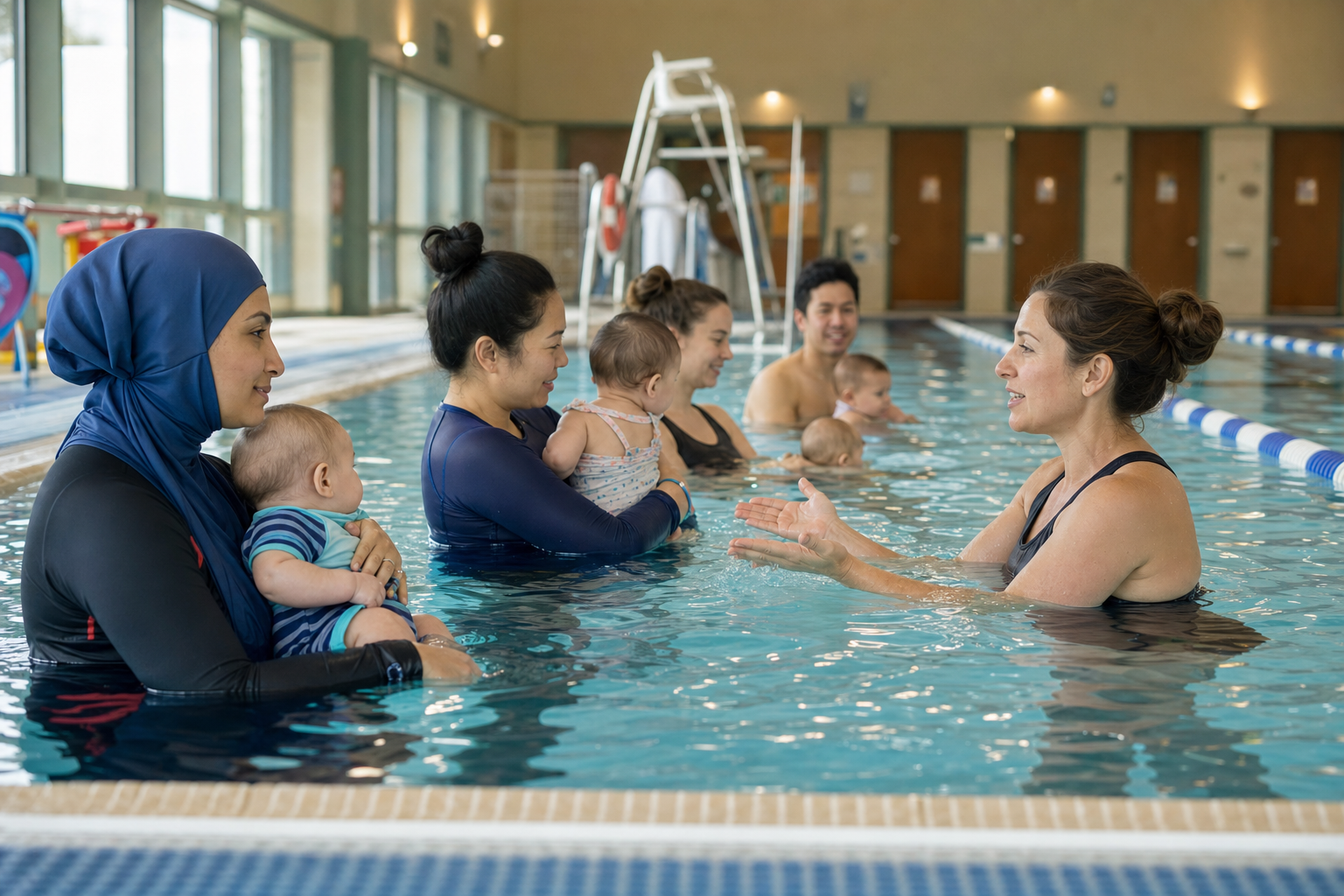
When looking for inclusive baby swim classes for your 0-36 month old, it's crucial to check whether the swim school makes every family feel respected. Does the pool space align with your values about modesty, diversity, communication, and flexible participation? Below are practical tips and questions so your baby can build water confidence without your discomfort.
What “inclusive” Actually Means in Baby Swimming
In its 2026 drowning-prevention update, the American Academy of Pediatrics emphasized the importance of “culturally affirming policies” at aquatic venues, pointing out that racial and ethnic disparities in drowning rates are persistent. They argue that swim lessons should begin after a child’s first birthday, and that cultural practices, language, clothing, gender, and communication styles must be included in drowning prevention efforts. (publications.aap.org)
“Modest parent baby swimming” isn’t just a catchphrase—it means swim schools allowing swimwear styles that align with your comfort (burkinis, longer leggings, rashguards), offering private changing spaces, and ensuring staff understand and respect different cultural sensibilities. It’s part of creating a supportive environment so babies learn without families delaying classes because of discomfort.
Key Areas to Ask About Before Joining a Class
Changing Rooms & Gender Policies
Ask whether there are private, family or single-stall changing rooms. Is there a unisex option or family room so that regardless of your gender identity or cultural norms you feel safe? Some programs offer gender-specific swim times or female instructor options for religious families. (nereids.com.au) If your family identifies differently, check policies around staff gender for intimate spaces and swim times.
Swimwear & Modesty Rules
Check what the facility allows under their swimwear policy. Is a burkini or modest swimwear accepted? Are coverage rules too strict? The NRPA’s Quick Guide recommends swimwear policies that don’t exclude people based on religion, cultural background, gender identity or financial status. (nrpa.org) Some YMCAs explicitly accept modest swimwear and burkinis in their guidelines. (kansascityymca.org)
Clear Communication & Language Support
When swim schools are language heavy, with accents or terms unfamiliar to you, it can feel isolating. Good inclusive schools offer lesson guides in multiple languages or visuals, and instructors who speak or can at least support your home language. The Nereids swim school in Sydney, for example, adapts lessons for English as a Second Language and CALD (Culturally and Linguistically Diverse) families. (nereids.com.au)
Suppose a local swim school schedules a program like a “10-Week Plan” where each class builds trust in the water over time. Such a plan gives parents consistent expectations and space to gradually address concerns. This swimy.org 10-Week Plan builds aquatic skills week by week, allowing parents to assess modesty or changing room comfort once sessions are under way, not all at once. Including flexibility like that helps families stay engaged despite nerves or discomfort.
[[ctababy]]
Photography, Filming & Privacy
It’s totally reasonable to want to protect your child’s privacy. Ask if there’s a photography policy—no photos or videos without clear consent from parents, especially when other families or children are involved. SwimReady Swim School in the US requires permission before filming, ensuring no other children are recorded without consent. (swimready.classforkids.io)
Flexibility & Participation Options
Babies change moods fast. An inclusive class lets you ease in: you might stay in the water, hold your child, or even skip a week and make up the session. Do they allow you to sit poolside if needed? Do policies exist for illness, cultural holidays, or modesty-related participation limits? Programs like Advantage Aquatics in Australia use very small classes, calm teaching pools, child-led pace, helping nervous parents feel more at ease. (advantageaquatics.com.au)
Use a Checklist Before Enrolling
Here are questions to ask when touring a swim school or browsing their website:
- Do you offer private or family changing areas?
- What swimsuits and coverings are permitted?
- Can I choose a female or male instructor?
- How do you handle photography and video?
- Which languages does staff speak? Do you offer translation or visuals?
- What happens if I can’t attend or prefer not to get in the pool?
- Are leadership and staff trained in cultural awareness and inclusion?
A Good Example: Structured Plans with Inclusive Vibes
Why It Matters—Especially Now
According to the AAP’s 2026 technical report, disparities in fatal drowning rates among Black, Hispanic, Native Hawaiian or Pacific Islander and other minoritized children are increasing. One big reason is lack of access to lessons that respect families’ cultural, religious or communication needs. (publications.aap.org) When pools enforce rigid norms around swimsuits, lack community language support, or make changing rooms public and uncomfortable, some families delay or skip swimming—leaving kids less safe.
And studies show babies and toddlers who regularly attend swim classes gain water confidence, better motor skills, and fewer fears. A class that feels welcoming ensures that these benefits aren’t limited to families who already feel comfortable in mainstream public pools.
Final Thoughts
Looking for baby swimming classes for nervous parents? A good swim school is more than safety guidelines and teacher credentials. It’s about making sure you feel honored, understood, and included. Ask thoughtful questions, walk through changing spaces, check swimwear policies, ensure language support, and test whether class structures are flexible.
When everything—modesty, communication, gender, privacy—is respected, your baby can build consistent water confidence. And you can finally join the fun without feeling like you’ve left part of yourself at the door.
120+ swimming exercises sorted by age — with video and instructions. Developed by swim instructors, completely free.

120+ swimming exercises sorted by age — with video and instructions. Developed by swim instructors, completely free.