Faster Kicks, Safely: Ankle Flexibility for Ages 6–12
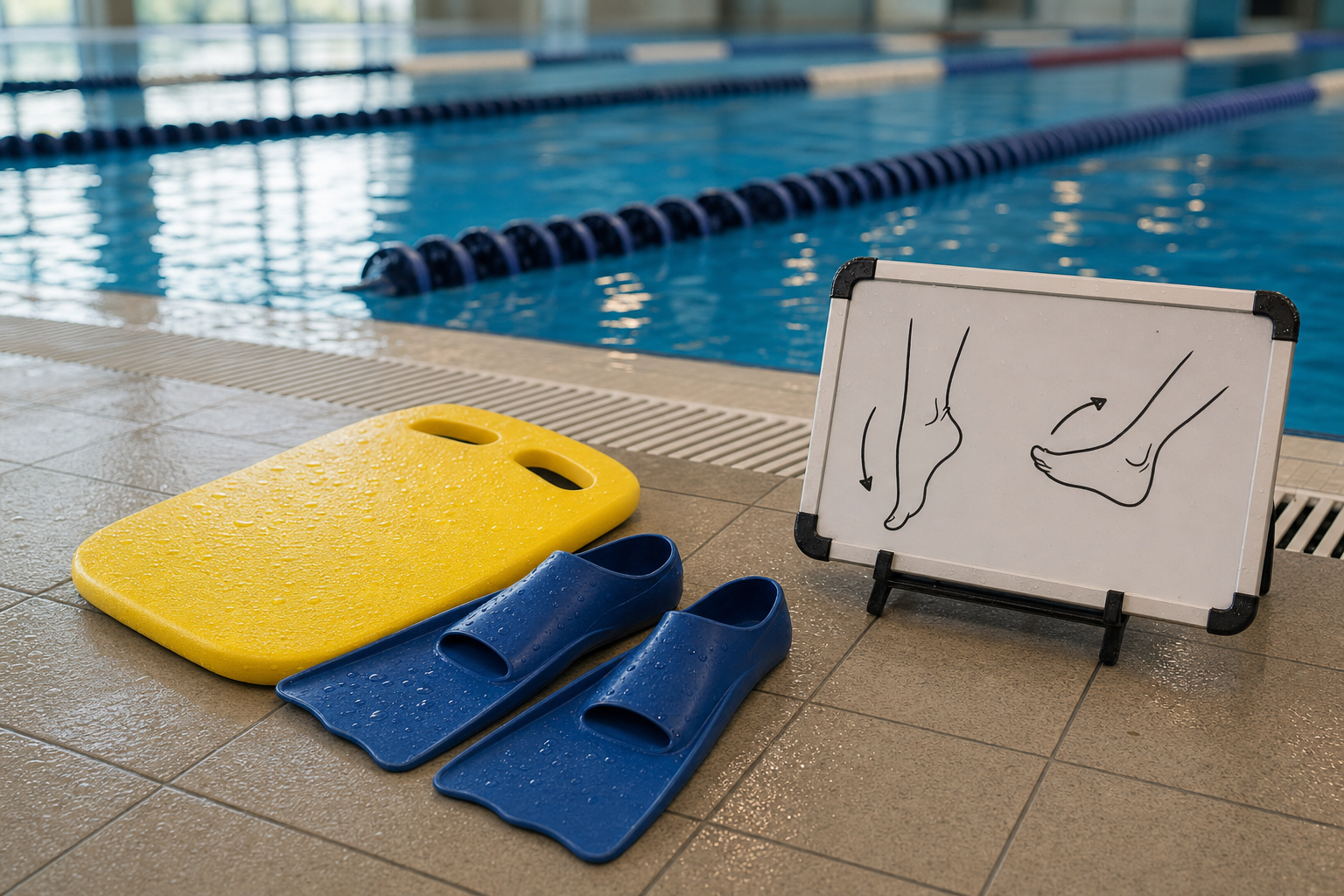
First things first: for better flutter and dolphin kicks, a long, relaxed ankle (good plantar-flexion) matters more than big muscles. Kids aged 6–12 can build that ankle mobility gently without forcing painful stretches—especially during growth spurts, when pushing too far can cause strain or injury. Let’s dive into kid-safe drills, what parents should do at home, and how tools like fins play a role without cutting corners.
Why Ankle Flexibility Matters for Swimmers Kids Ages 6-12
Ankle flexibility directly affects kick efficiency. Research shows that higher ankle plantar-flexion (pointing the toes down) improves body line, undulatory speed and reduces drag during dolphin and flutter kicks (pmc.ncbi.nlm.nih.gov). In youth swimmers, studies find that structured ankle mobility programs over several weeks can speed up kicking times in freestyle, especially when kicks come from hips with straight legs and pointed toes (digitalcommons.wku.edu). On the flip side, forcing your child’s ankle into extreme motion (static hold in impossible position, bouncing) causes pain, risks growth plate injury, and often hurts more than it helps (stlouischildrens.org).
So for ages 6-12: aim for slow improvements, mild tension only, avoid aggressive static stretches and be careful during rapid growth.
Kid-Safe Mobility & Kicking Drills to Build Plantar-Flexion
Here are simple drills that safely build ankle mobility, during dryland and in the pool. Do them 3-4 times per week depending on how often your swimmer trains.
Dryland Drills
First, always warm up—march, ankle circles, gentle calf swings—so muscles are loose. Then try:
“Toe-Point and Flex”: seated, legs straight, alternate pointing toes (plantar-flexion) and flexing toward the shin (dorsiflexion). Hold each for 5-10 seconds, repeat.
Ankle Circles: while seated or lying down, draw large circles with toes in both directions. Keeps joints loose, improves control.
“Kneeling Ankle Stretch” (kneel and sit back slightly toward heels): this gently stretches the front of the ankles without forcing. Hold 20-30 seconds each side once warmed up (goswimfast.com).
In-Water Drills
Flutter Kick with kickboard: push off the wall, hands on board, focus on long legs, pointed toes, ankles relaxed—not tight or flexed. Short sets of 15-25 yards/meters.
If you want a structured way to help your child progress at home, the 10-Week Plan guides you step by step.
Vertical Kicks: in shallow water, hands holding poolside; let legs hang loose and kick gently—uses gravity to help plantar-flexion.
Dolphin-Kick Unders: streamline position, use core and hips to produce body wave, feet together, long relaxed ankle. Size small fins can help exaggerate the flex—but only as an aid, not replacement for proper technique (swimy.org).
A 5-Minute Routine Parents Can Do at Home
[[ctakid]]
Pair this routine with swim practice. No forcing, just consistency. Encourage kid to breathe, relax, stop if there’s sharp pain or discomfort.
Warm-up (1 minute): light calf raises (rise onto toes, lower slowly), ankle circles.
Main (3 minutes): seated toe-point/flex (10 reps), kneeling ankle stretch (30 sec each side), standing wall ankle mobilization (heels down, toes up toward wall, knee over toes slowly); finish with one minute of fun—like walking on tip-toes, or “flamingo walk” (balance on one leg, alternate).
Cool-down (1 minute): legs out, gentle massage of calves; point toes while lying down, inhale and exhale to let ankle relax.
Over weeks—and months—you’ll see ankle line look more pointed, relaxed; kicks will feel snappier. Always reduce intensity or frequency if growth-spurt aches show up.
Using Fins the Right Way
Short-blade or junior swim fins help “feel” what a relaxed ankle should do. They exaggerate the motion and give feedback. But caution: using fins too often or with stiff ankles can cover up problems. If your child leans on fins instead of learning ankle line without them, the gains won’t translate to no-fin swimming (usms.org). Training aids should be about technique reinforcement, not crutches.
In session design, keeping swim fins or kickboard drills to about 20-25% of the total time helps balance strength and real skill work (swimy.org).
Pitfalls to Watch Out For
Any sign of pain that lingers or creeps back is a warning. Pain on top of the foot while pointing toes deep, heel pain, stiffness after activity—not fatigue but discomfort—may mean overstretching or strain. During growth spurts, growth plates are more fragile; avoid pressing hard into stretch positions. Never bounce or force into extreme plantar-flexion.
If kid complains about tenderness in heel or front ankle, stop static stretching and rest. Swap under-water drills or mobility work into recovery days. If changes in body rhythm or balance appear, consult a pediatric sports or aquatic physical therapist.
A Year-Round Approach for Steady Gains
This kind of ankle flexibility work isn’t a short sprint—it’s a long swim. Over months, you’ll see shifts: turns and underwater kicks become cleaner, flutter kick splashes less, dolphin kick feels smoother. Use a structured schedule—such as the swimy.org 10-Week Plan—to tie mobility, technique and swim drills together so your child progresses safely and consistently without piecing together random exercises.
Work these ankle mobility routines into warm-ups, pool drills, and dryland days. Adjust during rest phases and travel. Encourage your child’s awareness of relaxed/toes-pointed ankles rather than louder cues (“kick faster,” “point more”) because internal awareness transfers better than external pressure.
By building ankle flexibility with care—gentle stretches, targeted drills, smart use of fins and a short home routine—you’ll help your child swim faster with flutter and dolphin kicks, while protecting growing joints. Consistency, not intensity, wins in ages 6-12.
120+ swimming exercises sorted by age — with video and instructions. Developed by swim instructors, completely free.

120+ swimming exercises sorted by age — with video and instructions. Developed by swim instructors, completely free.