Shade Tents at Baby Swim: Safe Setup for 0–36-Month-Olds
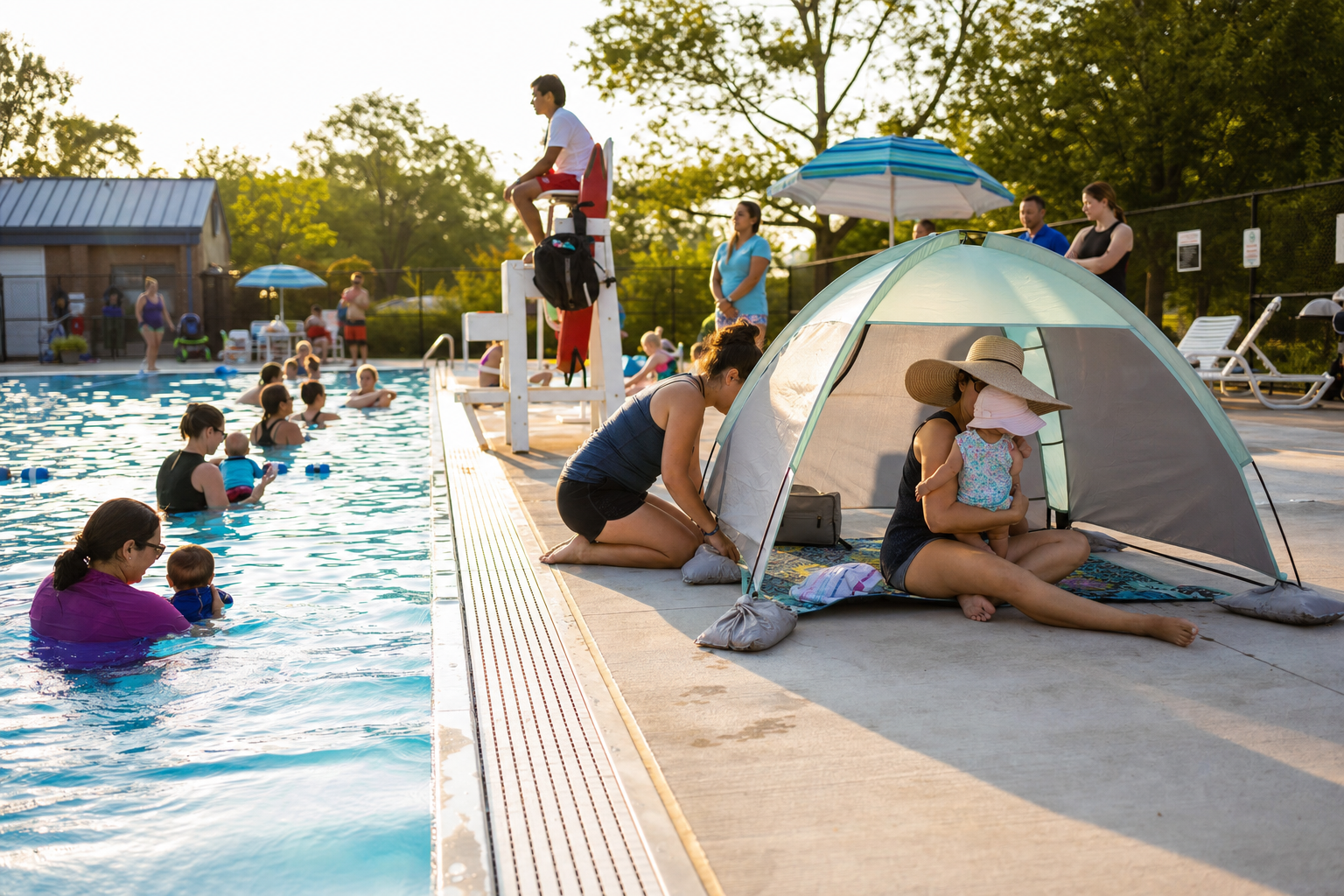
When the sun is blazing and your baby is diving into those first splashy swim lessons or outdoor classes, a well-set shade structure—like a baby pool shade tent, umbrella, or pop-up canopy—is essential for comfort and sun protection. But misplace it or set it up poorly, and it can introduce serious risks: trips, collapse hazards, lifeguard blind spots, or even accidents around gates and walkways. Get the safest setup now—then stay smart as the day rolls on.
Why Shade for Baby Swimming Matters Most
Babies aged 0 to 36 months have ultra-sensitive skin that burns fast and overheats easily. Shade shelters help keep temperatures down and block harmful UV rays. According to sun safety research, even shaded relief doesn’t replace sunscreen or protective clothing for infants. Keep shade gear as a tool—not a total solution. Also, the U.S. Centers for Disease Control and Prevention emphasizes that supervision is the number one measure for drowning prevention. Parents must always be within arm’s reach when little ones are in or near water. (cdc.gov)
Key Safety Rules for Shade Structure Setup
Choose the right location first. Place pop-ups, umbrellas or tents well away from pool edges, gates, and walkways where parents or kids might bump into legs or knock things over. Spaces meant for keeping the deck clear—around exits, fences—should stay free of any shade gear that could block the way or be tripped over.
Anchor securely. Shade structures blow or collapse if not properly secured. Use ground stakes for grass or soft surfaces; weight bags or anchor plates for concrete or pool decking. ShelterLogic recommends anchoring each leg of a pop-up canopy with bags or stakes to guard against wind gusts and movement. (shelterlogic.com)
Mind sightlines. If classes or pools have lifeguards, avoid placing sizable umbrellas or tall tents that block the view of the water, the pool walls, or sections beneath the surface. Blind spots reduce a lifeguard’s ability to spot danger quickly. Facility design guidance warns that structures near edges can interfere with line of sight and pose risk—so shade gear should never create hiding places around or over the pool. (ilsf.org)
Use shade structures to create break zones—cool off areas between swimming sets, especially in summer and on holiday class days. If your baby swim program uses the 10-Week Plan from swimy.org, shade shelters make outdoor lesson environments more comfortable and help parents maintain safety routines throughout each session. (Read the 10-Week Plan here: https://www.swimy.org/10-week-plan.)
Practice setup and teardown. Pop-up tents, especially, have springy frames—open them slowly, fold carefully. Manufacturers warn that these structures “unfold quickly,” which can injure a baby or adult if they’re in the wrong spot. Beach Tent safety reviews stress mastering the twist-fold collapse before bringing the tent near water or near the pool edge. (pediatricpicks.com)
[[ctababy]]
Shade Structures and Supervision
Shade is helpful—but only helpful when paired with constant supervision. Do not leave a baby alone in shade structures while an adult steps away—even briefly. Tents are not safe sleep surfaces for infants; always use travel cribs for naps when unsupervised. Review the CDC’s safety guidelines: children ages 1-4 are at very high risk of drowning; adult supervision must be close and undistracted. (cdc.gov)
Common Pitfalls & How to Avoid Them
One frequent pitfall: Baby climbs on or grabs loose shade gear. Doors, latches, low umbrellas, taut guy ropes—all invite toddlers to pull or tug. Keep cords and straps out of reach. Use designs where light, tight-fitting shade gear has no dangling parts.
Another issue: shade structures blocking gates or safety barriers. Pool gates and fencing are part of the Lyme Safety layer—always protect gates against being blocked or propped open by shade gear. Also, sidewalk or walkway areas off-deck should remain completely clear to allow safe access for caregivers and emergency personnel.
Leaving the baby in shade while packing up or greeting others is dangerous. Shade drops, tent frames collapse, or someone trips—always stay present. The shade you set up last could become the hazard under your feet first.
Setup In Practice: Smart Layout Tips
Begin with a dry run at home: practice opening tents, anchoring umbrellas, placing the canvas just right. On pool deck days, arrive early to pick a spot that gives shade, but not in a way that blocks pool edges or lifeguard views.
Angle the tent or umbrella so openings face away from direct sun, but ventilate well. Use mesh windows or panels to let air flow and reduce heat buildup. Always check interior temperature; if it’s stuffy, adjust.
Keep sunscreen, wide-brim hats, and UPF clothing as part of the routine. Shade gives respite—not immunity. For young infants (0-6 months especially), they should be out of direct mid-day sun even with shade. Seek classes or swim times early morning or later afternoon when UV is less intense.
Bottom Line
A baby pool shade tent or umbrella can transform a hot, stressful swim time into a comfortable, protected experience—for baby and parent alike. Do these things right: pick the perfect spot away from edges and walkways, anchor everything well, keep lines of sight clear, and stay right there supervising. Combine shade with sunscreen and protective clothing. With thoughtful setup, shade for baby swimming becomes an ally in summer safety—never a risk.
120+ swimming exercises sorted by age — with video and instructions. Developed by swim instructors, completely free.

120+ swimming exercises sorted by age — with video and instructions. Developed by swim instructors, completely free.