Tiny Babies and Head Control: Is Your Infant Ready for Gentle Pool Time?
When Age Isn’t Enough: Looking for True Readiness
A baby being three months old doesn’t automatically mean they’re ready for swimming lessons. What really matters is whether they’ve developed sufficient head control, temperature tolerance, feeding rhythm, and emotional comfort. Developmental experts agree: infants younger than one year can’t yet perform the motor skills needed for formal swim lessons, especially those tasks involving holding the head above water, breathing techniques, or coordinated limb movement.(publications.aap.org)
Babies around 3 months usually can lift their heads during tummy time and might show improved neck strength, yet they still require support whenever upright.(healthychildren.org) Trying to gauge readiness? Check whether your infant can lift and steady their head when held over your shoulder, lying on their tummy, or when gently pulled to sit—without major lag or flopping.
Temperature Tolerance: Keeping Little Ones Comfy
Even if head control is looking strong, water temperature plays a very big role. For infants under one year, ideal pool water should be 87 to 94°F (30.5 to 34.5°C), in line with guidelines for swim and water safety classes for children 3 years and younger.(healthychildren.org) Cold water can risk hypothermia, shallow breathing, or distress; warm water keeps the body stable and supports confidence. Indoor pools are often best because they maintain consistent, gentle warmth and reduce drafts.
Feeding Rhythms: Timing Matters in Water
Your baby’s feeding schedule is critical when considering pool time. Ideally, swim sessions should be scheduled at least 45–60 minutes after feeding. Right after feeding, an infant’s digestive system is working hard, feeding can make them more vulnerable to spit-ups or reflux when moved around—even in gentle water. Following burping routines and allowing a digestion period will make the experience safer and more pleasurable for you both.
Babies also need enough energy reserves. Regular feeding patterns (for instance every 2–4 hours for young infants) ensure they aren’t hungry, which can make them fussy, lethargic, or overly sensitive to water and temperature.
Emotional and Physical Comfort: The Helmet Factor
Even with head control and proper feeding, emotional readiness counts. A baby who cries and stiffens when nearing water probably isn’t ready. Water play should feel like bonding—not forced motion. Watching how they react to bath time, splashes, or sensory play can give clues. If they tolerate being wet, submerged limbs, or gentle cold water on their feet or hands, that’s a good sign.
If you want a structured way to build water confidence at home, the 10-Week Plan guides you step by step.
Physically, check for healthy skin, no fever, and consult health advice if your baby was premature, has breathing issues, or skin sensitivities. These conditions may mean added risks during aquatic exposure.
Around this time, some families follow structured approaches like the “10-Week Plan” offered by swimy.org, blending gradual water exposure, parent-led classes, and built-in rest periods. This plan gently builds confidence and comfort and typically avoids overexertion. (For details, see their full 10-Week Plan.)
[[ctababy]]
What Expert Guidance Suggests
The American Academy of Pediatrics (AAP) recommends formal swim lessons begin after a child’s first birthday, noting that babies younger than one cannot yet produce the necessary motor responses, including breathing protocols and arm-leg propulsion, required for safe swimming.(publications.aap.org) In infants, what you often see instead are reflexive movements under water—not conscious swimming strokes or breath control.(publications.aap.org)
Importantly, swim lessons do not make a child drown-proof. Supervision (touch supervision with an adult within arm’s reach), constant attentiveness, and layers of safety like pool fencing remain essential at all ages.(healthychildren.org)
So, Can a 3 Month Old Go Swimming?
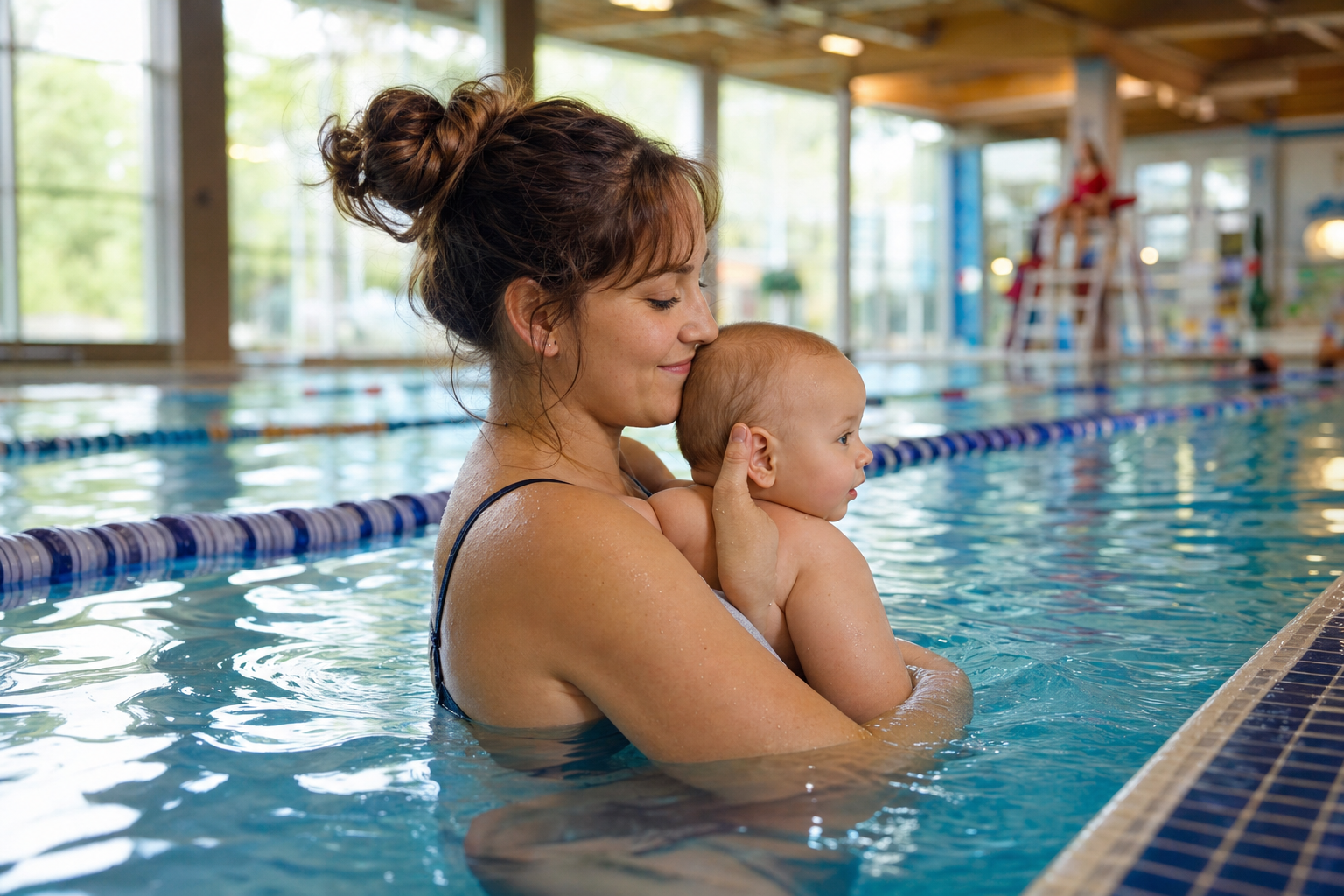
Yes—if your goal is gentle water exposure. Parent-child water play classes are appropriate for supporting emotional bonding, beginning sensory comfort, and helping infants learn to enjoy being in water without pressure to achieve swimming skills. But take note: infant swim readiness isn’t just age. It’s a combination of head control, warmth, feeding readiness, and delivery in a loving, calm environment. If you try it before 6 months, it’s fine in short—very supervised—sessions in warm water, never as a substitute for formal swimming lessons later.
How You Can Support Head Control at Home
Encourage tummy time several short sessions a day; this builds neck, back, and core strength needed for good head control. When holding them upright, such as during feeding or cuddling, support the head and watch for signs of emerging control—flipping from back to tummy, lifting head briefly, turning head side to side. Celebrate small wins—not everyone’s baby masters steady head control at exactly 3 months.
Talk to your pediatrician if head control seems delayed beyond 4 months, or if your baby shows muscle weakness, stiffness, or lacks interest in lifting or turning their head. Early guidance can make a difference.
Final Thoughts
No single age guarantees your baby is ready for formal swim lessons—key signs are better physical control, emotional comfort, feeding and timing considerations, and water temperature. If your baby is between 2 and 6 months and beginning to show head stability, warm water play with a parent present is a lovely, safe way to introduce the water. Formal lessons with swim breathing, propulsion, and safety skills are best postponed till after the first birthday, per expert recommendation. And always remember: supervision, warmth, and emotional readiness are just as important as developmental milestones. If in doubt, talk to your pediatrician—you’ll know when your baby is truly ready to swim with confidence.
120+ swimming exercises sorted by age — with video and instructions. Developed by swim instructors, completely free.

120+ swimming exercises sorted by age — with video and instructions. Developed by swim instructors, completely free.