Sibling Swim Games for Mixed Levels (Ages 3–12): 3 Cooperative Ideas for Comfort and Skills
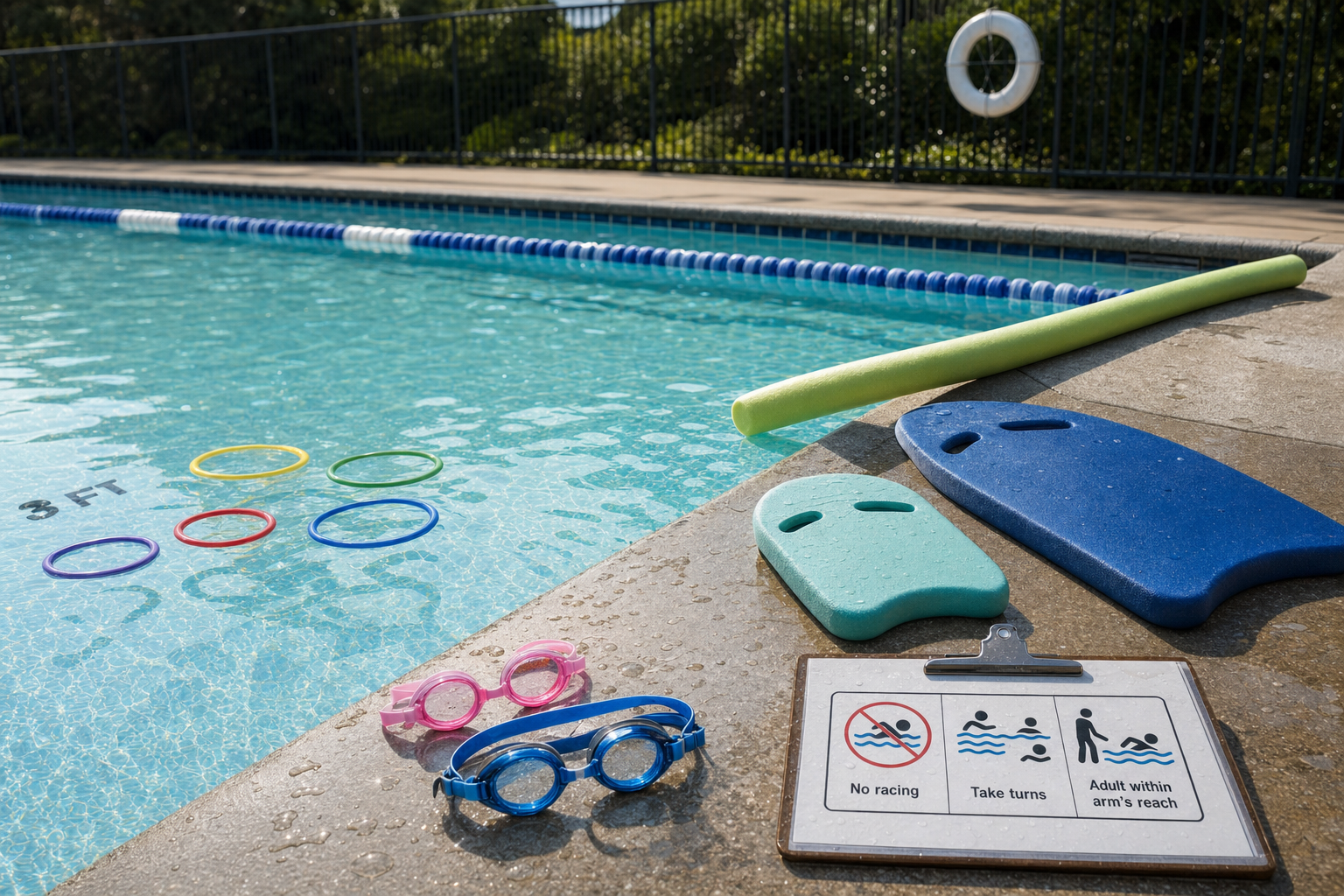
It’s tough when one child is splashing confidently across the pool while the younger sibling is just finding their feet. To avoid tears, you need games that let both kids play, both kids learn, and both feel good. These cooperative swim games will help young swimmers build comfort and basics while older siblings sharpen control, pacing, and sighting—all without turning every pool day into a competition.
Game 1: Treasure Hunt Relay & Assist
This game works beautifully when one child is just learning to float or kick (ages 3–6), and the other is more confident. Scatter safely weighted dive rings or waterproof toys in the shallow end. The beginner is within arm’s reach of an adult; the older sibling is further back, helping fetch and count items. The goal isn’t speed but teamwork: the older sibling encourages the younger one to reach, kick, and retrieve. As the beginner improves, the older one can coach breathing rhythm or help with submersions. Because there’s no racing, both kids stay relaxed and play together. Teaching basic skills this way mirroring what’s suggested in “Developmental Pool Activities for Fun” from the American Red Cross.(files.eric.ed.gov)
Game 2: Sighting Play for Older Swimmer, Support Role for Younger
Ages 9–12 are old enough for sighting and straight-line swimming practice. One game outlined in “Open-Water Sighting Drills for Kids” lets stronger swimmers practice lifting their gaze every few strokes to spot targets on the pool wall or deck, then return their head underwater without breaking rhythm.(swimy.org) Meanwhile, the younger sibling practices floating, kicking, or gentle gliding nearby. The older one might count strokes and shout out colour or number of targets seen—making it fun, not a race. By including both children in roles suited to their ability, this mixed ability pool game builds skills and confidence for both.
Game 3: Buddy Paddle & Rhythm Count
Older siblings often swim much faster. To bring them together, try a buddy system: the older child swims at their own pace along a set route in shallow or deeper end depending on their level. The younger child paddles or moves toward the older at shorter distances—maybe along the wall or on a float. The older sibling pauses at set points and encourages the younger, helping with stroke timing or counting glides. This works well during relaxed weekends or holidays when you have time to slow down and really focus on quality rather than distance. It helps older kids sharpen pacing and rhythm, while younger ones build basic propulsion and comfort. No racing, just connection.
If you want a structured way to help your child progress at home, the 10-Week Plan guides you step by step.
Safety & Structure: Rules That Prevent Tears and Trouble
Safety always comes first. For ages 3–6, stick to shallow water where they can stand with their head well above water. An adult should be within arm’s reach—“touch supervision”—so the younger child is never alone.(healthychildren.org) Pre-set rules: no pushing, everyone takes turns, no diving in shallow zones, listen to the adult’s directions. Before you start, agree with both kids what counts as fair play. If someone wants to turn a cooperative game into a race, pause, reset, emphasize cooperation. These boundaries make pool time safe and reduce tears.
[[ctakid]]
Using Structured Learning to Support Playful Practice
If you’re working with swim lessons or training outside family swim time, combining games with structured progression can work wonders. For example, Swimy.org’s “10-Week Plan” lays out a gradual build—water confidence, kicking technique, stroke fundamentals. Integrating these games into that plan helps older and younger siblings each follow their path while still doing something together. The older child might master freestyle pacing by week six while helping their younger sibling with basic floats, mirroring that structure. This avoids frustration and keeps the younger one from feeling left behind.(sentosaswimming.sg)
Season & Setting: Timing Your Swim Games Right
Weekends and holidays often offer the time you need to fully engage in mixed ability pool games. Public pools may be quieter early morning; private pools could even be yours for a few hours. Whatever the summer or UK/AU season, choose pools with clear water, marked depth zones, and ideally lifeguards. Make sure each child has appropriate gear—goggles, floats, maybe even a life jacket for the younger beginner—to help them feel safe.
Common Pitfalls & How to Avoid Them
One big pitfall is turning games into races. Even subtle gestures—“who can collect the most rings?”—create competition. If you value effort, counting strokes, or giving praise for helping the younger sibling, you’ll emphasize cooperation. Another common issue: leaving one child unsupervised during setup or transition. While you hang decorations or place targets, both kids need to be watched. Structure setup so no child is alone or tempted to run toward the pool edge. And make sure both siblings feel involved—give the younger one a role like fetching something light or counting out loud.
Final Takeaway
Swim games for siblings of mixed ability don’t have to be stressful. Cooperative games like treasure hunts, sighting play, and buddy paddles allow both children—age 3 to 12—to build confidence, skills, control, and pacing while staying safe and cheerful. Use these ideas alongside solid water safety rules: shallow water for the youngest, adult nearby, pre-set boundaries. With weekends and holidays as your playground, these family swim ideas will enrich memories, reduce tears, and grow great swimmers—with both siblings supporting one another every splash of the way.
120+ swimming exercises sorted by age — with video and instructions. Developed by swim instructors, completely free.

120+ swimming exercises sorted by age — with video and instructions. Developed by swim instructors, completely free.