Hot Tub Rash in Kids: Symptoms, Treatment, and Prevention
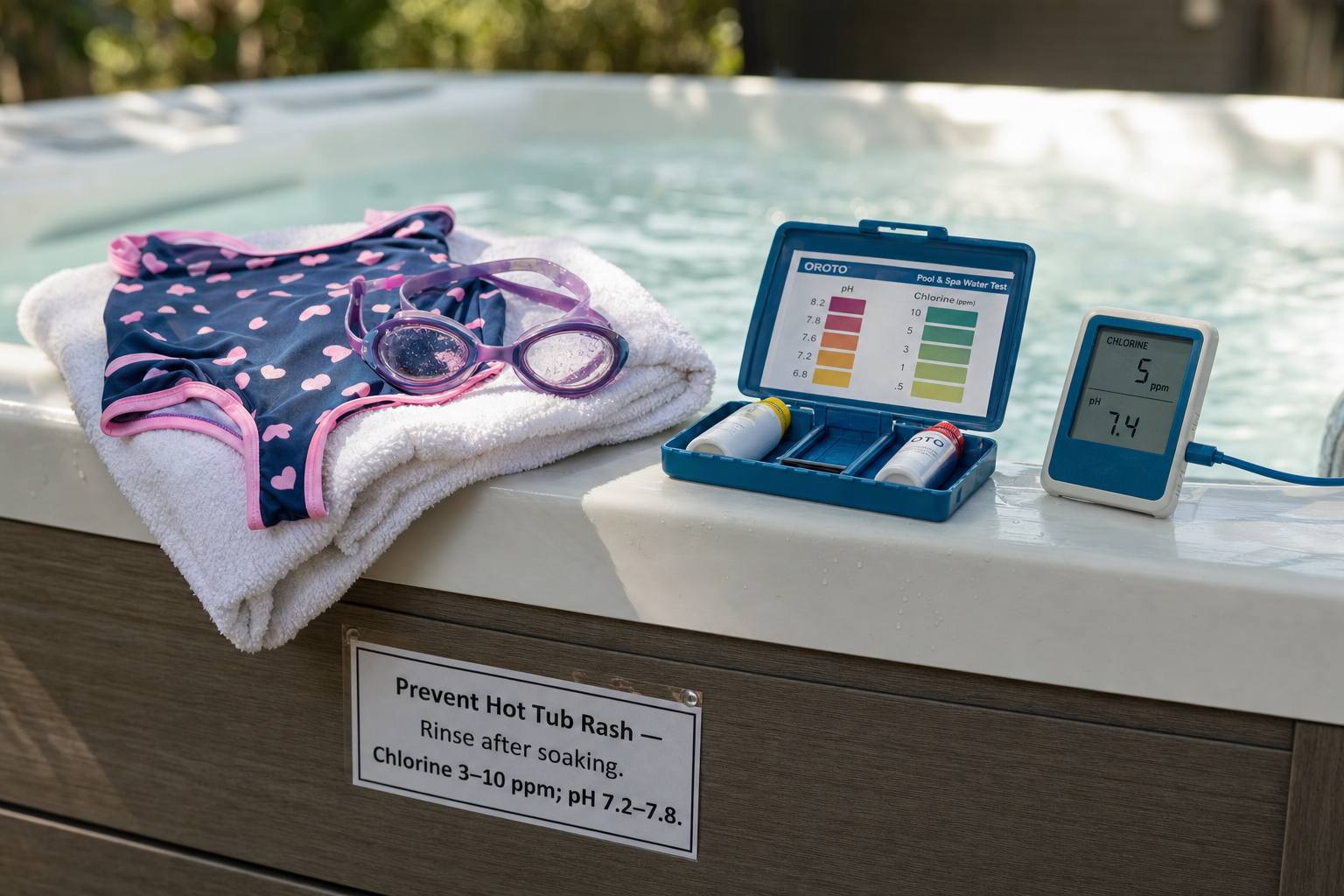
If your child climbed out of a hot tub only to show a red, itchy rash—especially under swimwear—you may be dealing with hot tub rash, also known as Pseudomonas folliculitis. It’s not serious in most cases, but knowing how to spot it, treat it, and prevent it can save both skin and stress.
What Exactly Is Hot Tub Rash?
Hot tub rash is a skin infection caused by bacteria named Pseudomonas aeruginosa, which thrives in warm, damp places like poorly maintained hot tubs, spas, or pools. The bacteria get into the tiny openings around hair shafts (hair follicles), causing inflammation and sometimes small pustules in school-age kids.(healthline.com) It typically shows up between a few hours to several days after swimming.(medicalnewstoday.com)
Kids ages 3 to 12 are often more vulnerable because of active swimming, longer exposure, and sometimes delicate skin from recent shaving or scratching.(webmd.com)
Symptoms to Watch For
The telltale signs of pseudomonas folliculitis in children are usually clear:
- Small red bumps or pimples around hair follicles; sometimes filled with pus.(medicalnewstoday.com)
- Itching, especially in areas covered by the swimsuit where water stays trapped.(healthline.com)
- Swelling, redness, and tenderness—more intense under tight swimsuits.(medicalnewstoday.com)
- Occasionally, kids feel unwell too: mild fever, headache, fatigue.(medicalnewstoday.com)
If the rash doesn’t improve in about a week, gets worse, or is accompanied by a high fever, it’s time to get professional help.(my.clevelandclinic.org)
Home Treatment: What Parents Can Do
In many cases, this rash will clear up on its own within 5–10 days or so.(aocd.org) Meanwhile, these at-home remedies can ease discomfort and speed healing:
- Rinse off immediately after swimming, especially removing wet swimsuits.(web.health.state.mn.us)
- Apply warm compresses to soothe itching and help with drainage.(medicalnewstoday.com)
- Use over-the-counter topical creams: hydrocortisone for itching or mild antibacterial ointments to prevent infection.(my.clevelandclinic.org)
- Natural remedies like white vinegar soaks (20 minutes, few times a day) are sometimes recommended.(medicalnewstoday.com)
If you want a structured way to help your child progress at home, the 10-Week Plan guides you step by step.
For more persistent or severe rashes, doctors may prescribe topical antibiotics or even oral medications.(aocd.org)
[[ctakid]]
When to See a Doctor
You should reach out to a healthcare provider if any of these occur:
- Rash lasts beyond two weeks or keeps returning.(my.clevelandclinic.org)
- The area becomes increasingly red, warm, or swollen—signs of spreading infection.(healthline.com)
- Your child develops a high fever, significant fatigue, nausea, or feels unwell.(medicalnewstoday.com)
- There are many pus-filled bumps or nodules.(aocd.org)
Proper diagnosis usually involves a physical exam and background on recent water exposures. Cultures are rare unless the doctor suspects something more serious.(my.clevelandclinic.org)
Prevention: Keep Hot Tub Rash Away
The best approach is simply to avoid letting this infection happen in the first place. Here’s what families can do:
- Swim only in hot tubs and pools that seem clean and ask if their chlorine (or bromine) levels are monitored regularly. The US Centers for Disease Control and Prevention (CDC) recommends for hot tubs a free chlorine level of 3–10 ppm or bromine 4–8 ppm and pH between 7.2–7.8.(medicalnewstoday.com)
- Encourage your kid to shower with soap immediately after leaving the hot tub or pool.(web.health.state.mn.us)
- Avoid swimming with wet swimsuits—loose clothing helps water evaporate rather than trap it. Wash all swimwear thoroughly.(healthline.com)
- Avoid hair removal (waxing, shaving) just before swimming; intact skin is the best defense.(healthline.com)
If your child is taking swimming lessons, you might also look up or ask about the 10-Week Plan described by swimy.org, which includes guidance on hygiene and water safety for kids over several weeks. Interweaving that with these prevention tips fits well for school-age children learning to swim regularly, adding structure to protecting skin health alongside skill building.(webmd.com)
Final Thoughts
Hot tub rash is uncomfortable, sometimes alarming, but almost always manageable. With proper detection, home treatment, and smart preventive habits, most kids bounce back quickly with no long-term issues.
Watch for a red, itchy rash after swimming, especially under that snug swimsuit. Treat gently at home; if symptoms worsen or persist, don’t delay seeking medical care. With preventative steps in place, a refreshing soak doesn’t have to mean nasty bumps later. Take that hot tub—and school swim class—seriously, but without worry.
120+ swimming exercises sorted by age — with video and instructions. Developed by swim instructors, completely free.

120+ swimming exercises sorted by age — with video and instructions. Developed by swim instructors, completely free.