Five Questions to Ask After Baby Swim Class: A Quick Debrief Script for Parents (6–36 Months)
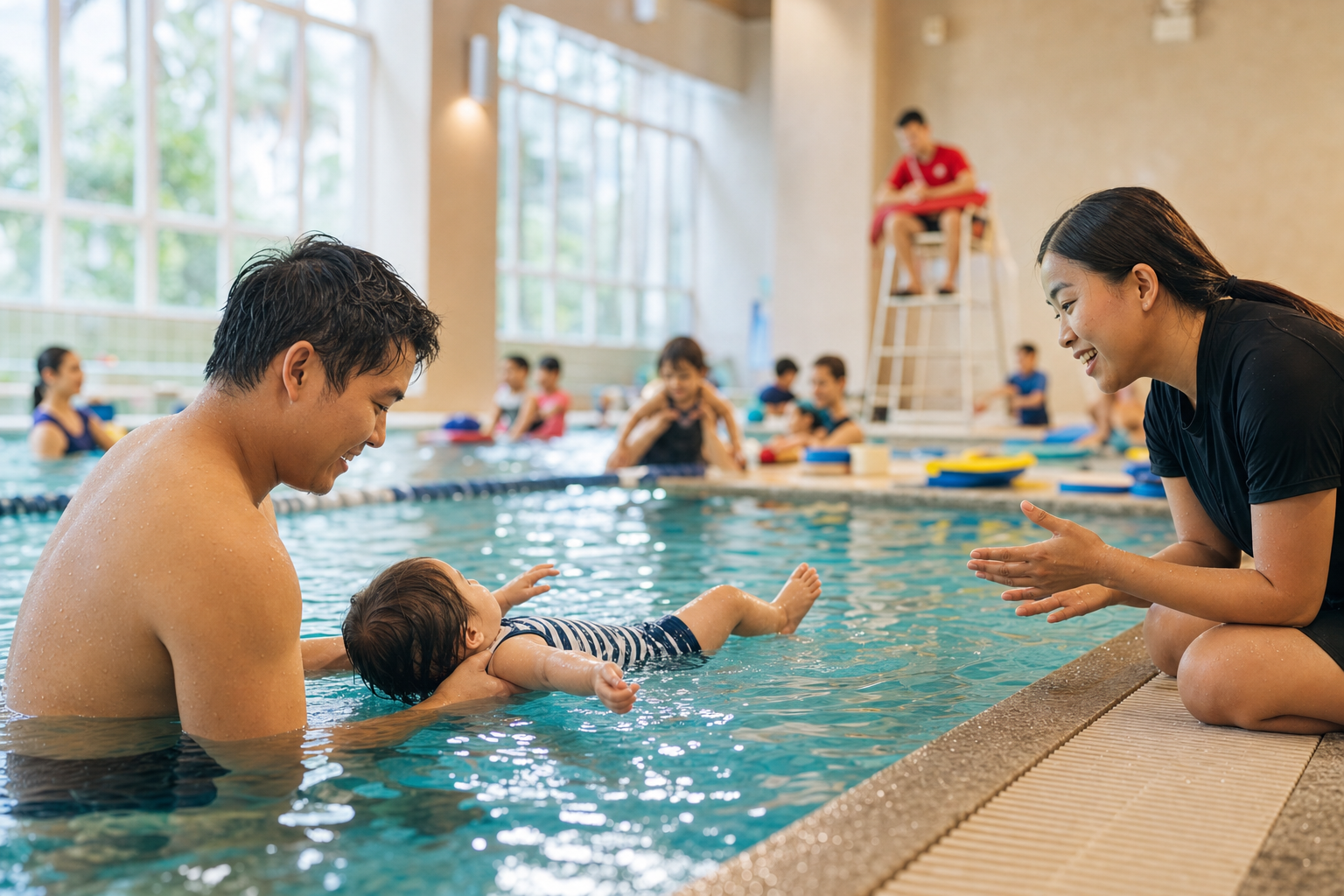
You just stepped out of baby swim class and you’re wondering: Did my child improve? What should we practice? What comes next? Here’s a five-minute debrief script you can follow after each class so that you leave knowing exactly where your baby is in their swim progress, what safe home practice looks like, and what your next small goal should be.
What to Ask First: Getting Clarity on Swim Lesson Progress
Start by asking your swim instructor to walk you through what your child was working on today. Instead of asking, “Did they pass?” try questions like: What new skills did my baby attempt? How did they behave getting in and out of the water? What was their body position when floating or being supported? Measuring baby swim lesson progress isn’t just about submersion or moving to the next level — Red Cross programs emphasise comfort, safety entries and exits, control of body position, and how parents handle their child in the water. (redcross.org)
Ask what small change the instructor saw today. Did your baby show more comfort with water on their face, did they respond to cues slower, have better breathing or relax more in floats? Getting feedback like this gives you real markers beyond “passed” or “failed.”
Question Two: What You Can Safely Practice at Home
Ask: “What specific practice should we do between lessons, and in what settings?” Red Cross materials and swim schools with parent participation stress that home practice should be safe and aligned with what’s taught in class. Practice dry-land or in bath-tubs is great for skills like facial water comfort, blowing bubbles, or simulating entries — but actual floating or submersion should always have another capable adult present and be approved by the instructor. (redcross.ai)
An example home practice may include letting your baby splash with their hands, practice blowing bubbles, supported front floats in shallow water under supervision, and feeling water on their ears or mouth without forced submersion. These build trust and body awareness, helping later techniques fall into place.
Question Three: Safety Skills and Water Awareness
Swim lessons aren’t just about strokes and kicking. Ask your instructor to explain what safety skills were addressed: safe entry/exit, turning in water, how to deal with fear, how leaks or slippery surfaces are handled. Red Cross and AUSTSWIM both emphasise teaching water competency — what a child should do around water, not just in it. (redcross.org)
Find out whether the lesson included any emergency or escape skills — not advanced swimming, but things like responding to losing grip, being comfortable floating or drifting, or getting to the steps independently. Also ask how your child can learn to recognize danger or risks around pools and water features.
Question Four: What Is the Next Small Goal?
Big milestones can seem far off, so ask your instructor to set one small and achievable goal for the coming week. Maybe it’s letting go of your hand for a moment, floating a little longer, getting into the pool safely with less hesitation, or being calm when water touches the face. These serve as the stepping stones for steady progress in parent baby swim class practice.
At your first class, use the script to set expectations: entry, exit, comfort, and basic safety. By week six, check for progress like less hesitation, more relaxed facial exposure, maybe short floats or turns. Use the 10-Week Plan from swimy.org (https://www.swimy.org/10-week-plan) as a guide: that plan helps structure home water exposure so you can build confidence, comfort, safety awareness, and foundational skills in tandem with swim lessons. Between classes, it suggests simple bath- or dry-land games to build up water readiness without forcing anything. (swimy.org)
Link back to what the instructor observed: if your baby was stiff during floats this lesson, next week aim for a more relaxed back float. Consistent, incremental goals build not only skill, but confidence.
[[ctababy]]
Question Five: How You Can Be Involved and What to Look For
Parents often leave classes unsure of how and when to provide help without getting in the way. This next question is: “What should I watch for tomorrow, at home, or in class, to see if my child is improving?” Look for increased eye contact in the water, fewer signs of panic, steadier kicking or arm movements, relaxed posture, easier entry and exit. These are signs of true progress — not just the ability to hold breath or go under water. Learning comfort and safe body positions is core. (redcross.org)
Also ask, “How should I behave in class to support my child?” Stay close, follow instructor’s cues, avoid making changes to how the instructor teaches in public. Parent involvement helps a lot, but consistency of cues between you and your instructor is vital.
Sample 5-Minute Debrief Script
Here’s what your conversation might sound like after class:
“Thanks, Instructor. Today, what skills did my baby try? How did they do entering, floating, body position and exiting the water? Between now and next class, what home practice can we safely do — maybe dry land, bath or shallow water — that supports those skills? Also, which safety or awareness skill did we work on today? For next week, what small goal should we aim for based on where we are now? And finally, what signs should I look for (behavior, comfort, body control) to know my baby is improving, and how can I support them best in class without getting in the way?”
This ensures you leave with clarity about safety skills, practical home practice within limits, and a realistic next step.
Typical Pitfalls to Avoid: What Not to Do
Don’t measure progress solely by submersion or passing a level. A baby might be submerged but still feel unsafe, or have poor body alignment, shaky exits, or a parent who isn’t supporting them correctly. Red Cross level descriptions show strong weight on comfort, confident entry/exit, body awareness, and parents being in the water. (static1.squarespace.com)
Avoid asking for drills or practices at home that involve submersion unless you have been explicitly trained or given approval. Forced back floats or dunking without readiness are specifically discouraged by AUSTSWIM. (austswim.com.au)
Why This Script Helps
By using this debrief script, you’ll better understand baby swim lesson progress beyond superficial measures. You’ll know what safe practices to do at home, understand safety skills and awareness, and have a next goal that motivates rather than overwhelms. Especially important between ages 6 to 36 months, when babies and toddlers grow rapidly and reactions change quickly — this kind of feedback loop helps you stay attuned.
Home practice is only helpful when it supports the lesson safely. Always follow your instructor’s guidance, avoid any risky practices, and ensure another capable adult is present if home activities go beyond bath or dry-land. This fits Red Cross and AUSTSWIM best practices, where parent knowledge, water safety, and good communication are central. (redcross.org)
Putting It into Action: At Week One, Six, and Ten
By week ten, you might see your baby walking into class more confidently, participating more fully, changing body positions more freely, and showing safer exits and entries. The small goal from week nine should feel natural by then.
Using this script transforms your interactions with the swim instructor into powerful tools for your baby’s growth. You’ll leave each swim class informed, confident, and ready to support your child’s progress—where safety, comfort, and skills build hand in hand.
120+ swimming exercises sorted by age — with video and instructions. Developed by swim instructors, completely free.

120+ swimming exercises sorted by age — with video and instructions. Developed by swim instructors, completely free.